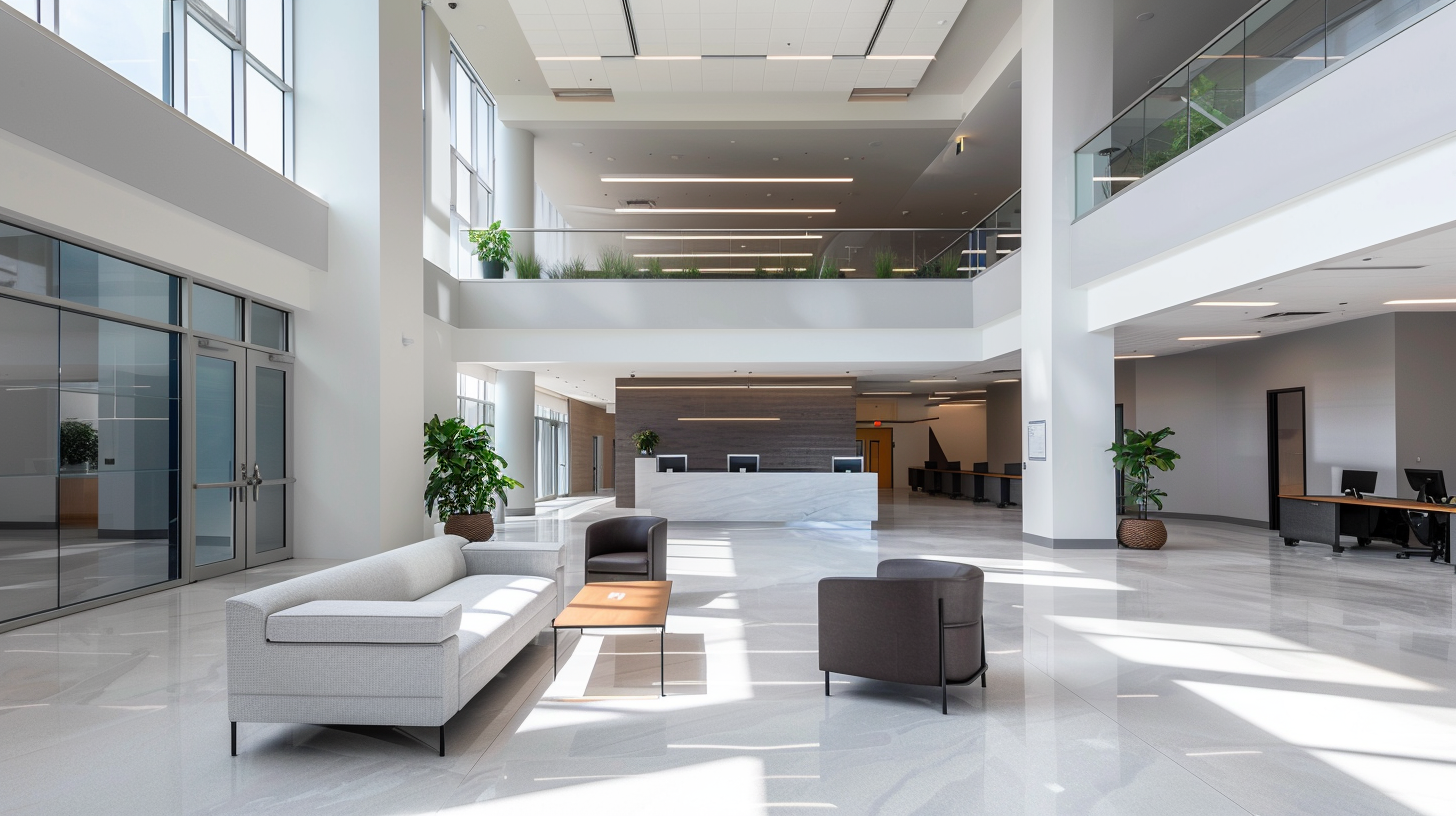
As we design for 2026 and beyond, technology cannot be an afterthought; it must be integrated into the architectural DNA of the space.
Seamless Integration
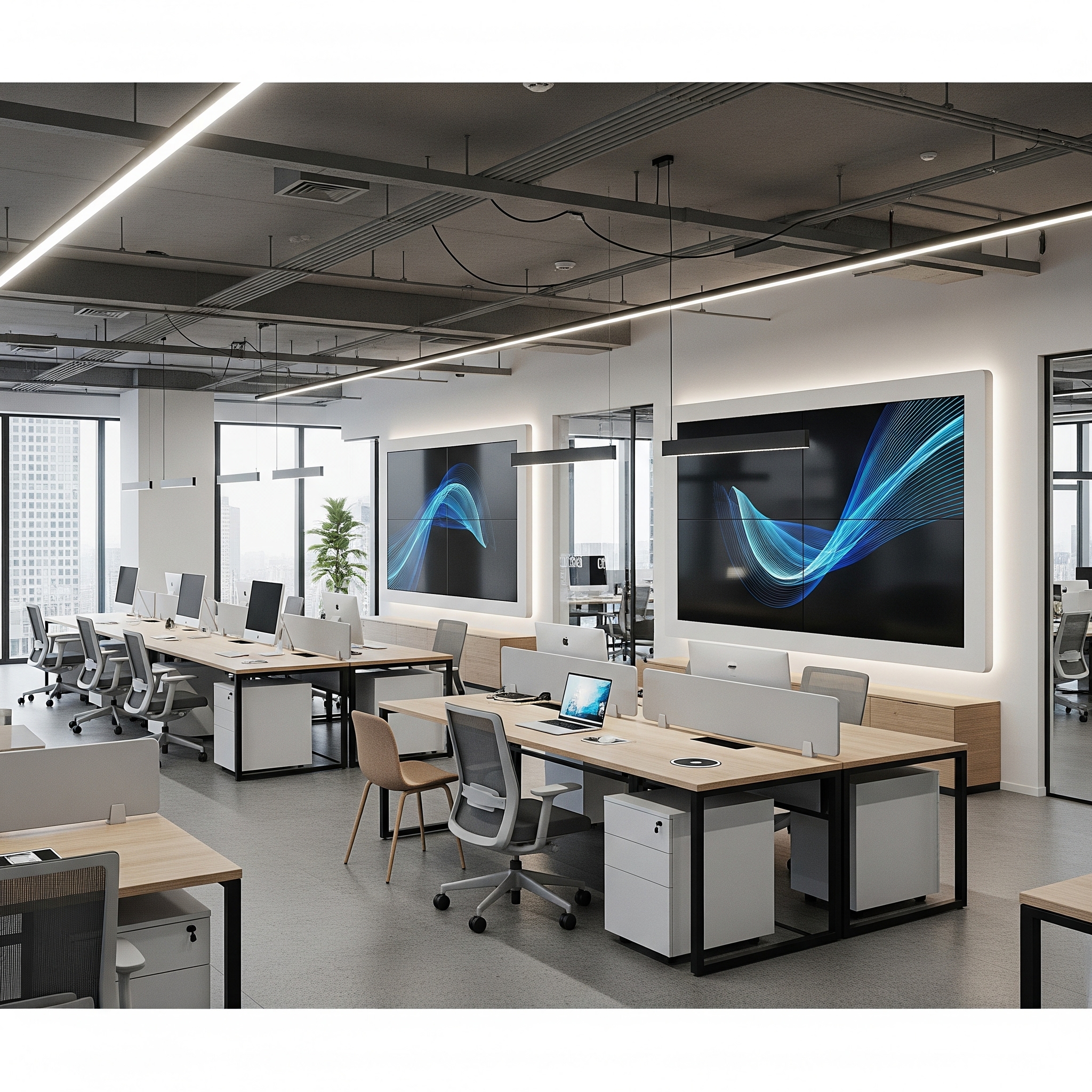
“Smart” design is not just about gadgets; it is about infrastructure. It involves coordinating with electrical engineers to ensure floor cores are positioned for powered furniture. It involves selecting window treatments that interface with building management systems for daylight harvesting.
Future-Proofing with Construction Documents
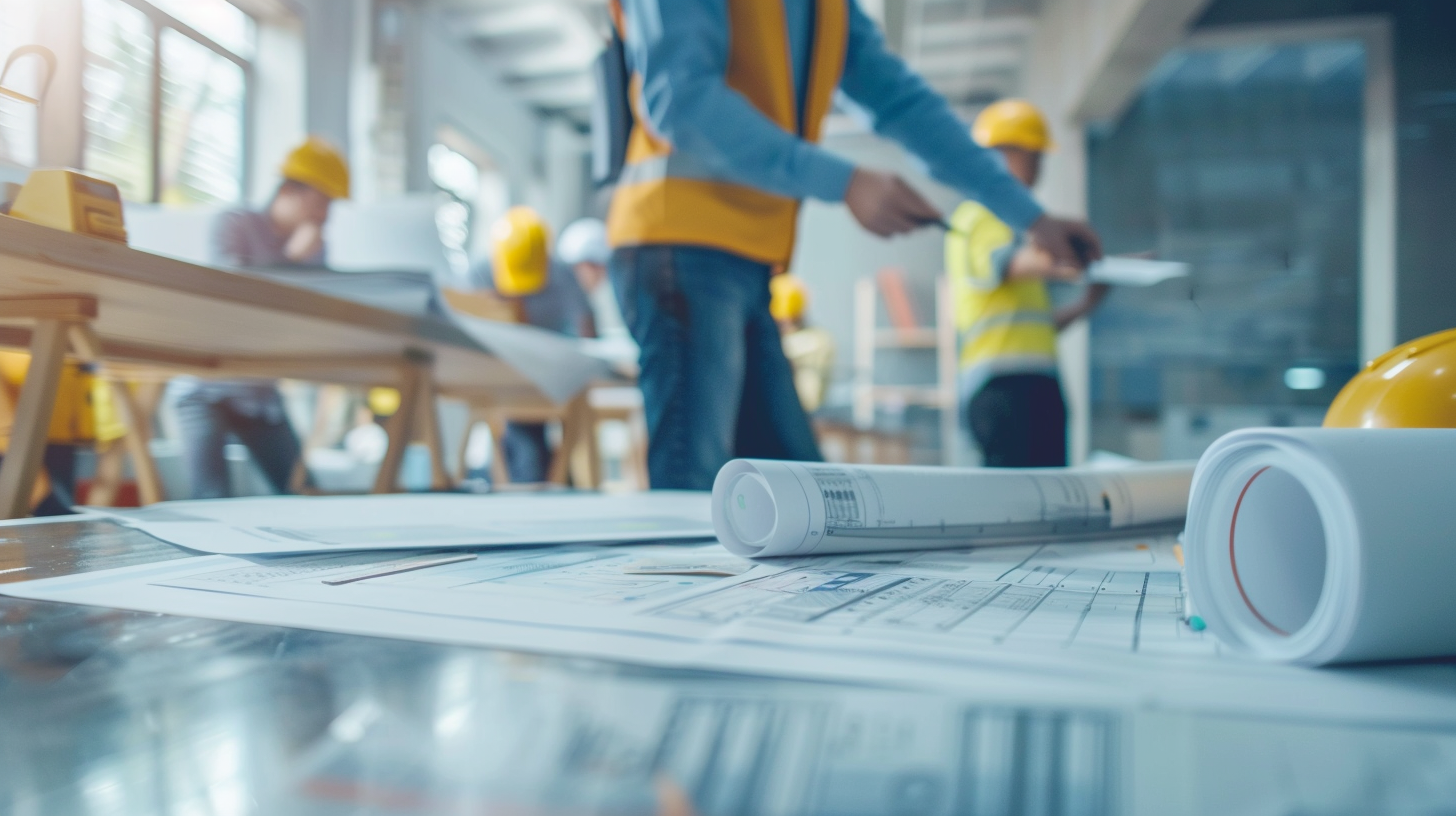
At DIG, our “Construction Documents” account for the cabling and infrastructure required for current and future tech needs. We ensure that conference rooms are video-conference ready and that “Executive Offices” have the connectivity required for global business, all while maintaining a sleek, wire-free aesthetic.
Brand Integration
Technology is also an extension of your marketing strategy. From digital signage to integrated audio-visual systems, every element must align with the brand guidelines. A mismatch between a brand’s digital presence and its physical environment creates cognitive dissonance for the customer.
The DIG Approach
We analyze the customer journey from the lease line to the point of sale. Using lighting hierarchies and material transitions, we guide the customer through the space. This is evident in our hospitality work, such as Tabernacle Steakhouse, where the brand narrative is woven into the architecture itself. When Design + Implementation are aligned, technology enhances the experience rather than distracting from it.