Behavioral health environments operate under a different set of expectations than most healthcare facilities. Safety is critical, but so is dignity. Spaces need to protect patients and staff while also supporting recovery, reducing stress, and maintaining a sense of normalcy. Balancing those priorities is where these projects become complex.
What makes behavioral health design particularly challenging is that the risks are not always visible. They’re embedded in details—hardware, furniture, room configuration, and even circulation. At the same time, overcorrecting for safety can create environments that feel institutional, which works against the therapeutic goals of the space.
The projects that perform well are the ones that manage both sides of that equation from the beginning, rather than trying to layer safety or experience in after the fact.
Safety Is Non-Negotiable—But It’s Often Misapplied
Ligature risk is one of the primary drivers in behavioral health design, and for good reason. Fixtures, hardware, and furniture all need to be evaluated through that lens. But where projects often go wrong is in treating safety as a checklist rather than a system.
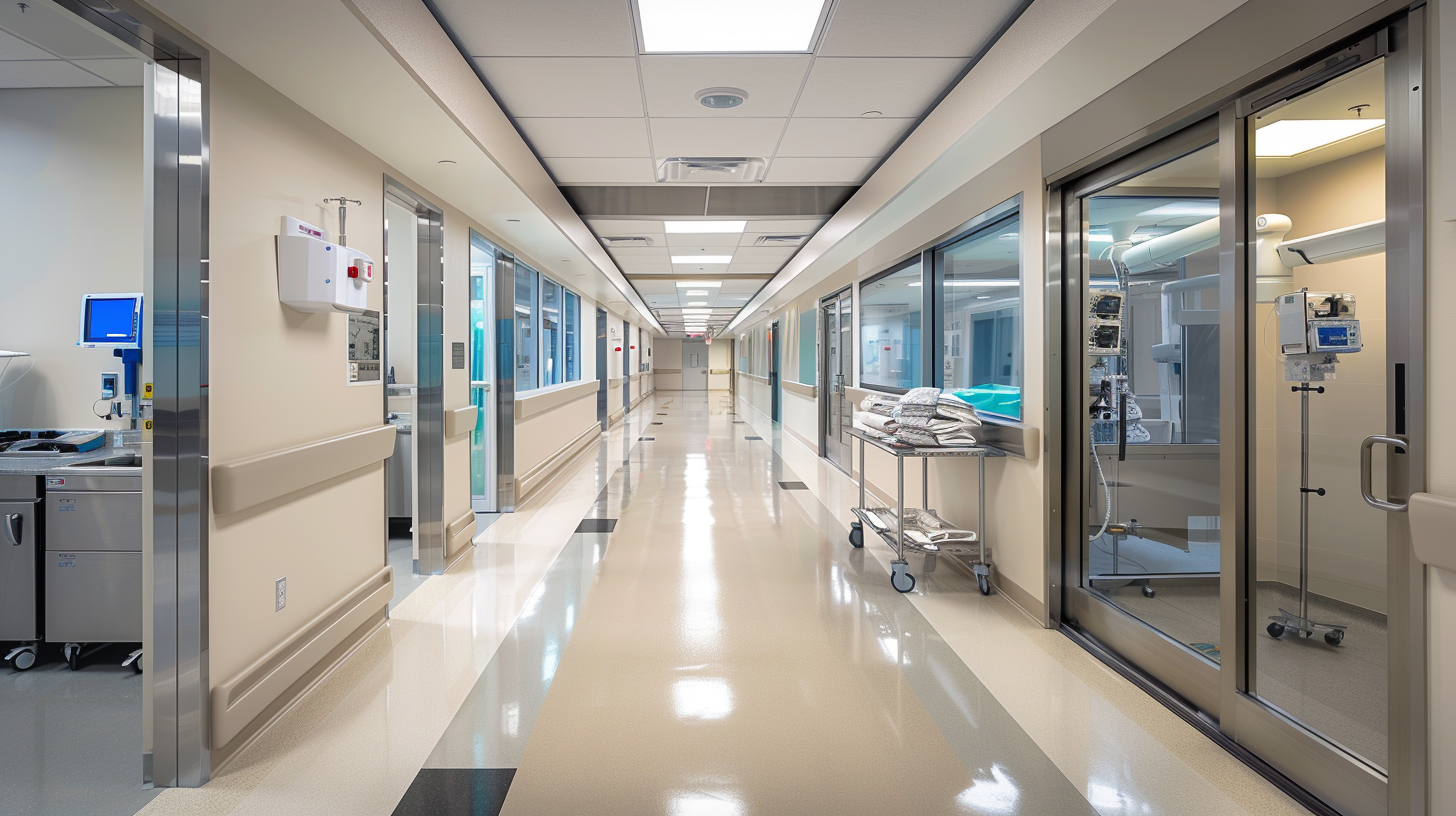
Specifying ligature-resistant products is necessary, but it’s not sufficient. Risk is also shaped by how spaces are configured. Door locations, sightlines, and room adjacencies all influence how safely a space can be monitored and managed.
We often see environments where compliant products are used, but blind spots in layout create supervision challenges. That’s where risk re-enters the space—not through individual elements, but through how the environment functions as a whole.
Safety in these settings isn’t about eliminating every possible risk. It’s about reducing risk to a manageable level while maintaining an environment that can be effectively supervised.
Observation and Visibility Drive Both Safety and Operations
Staff visibility is one of the most important—and often underestimated—components of behavioral health design. The ability to observe patients without creating a sense of constant surveillance requires careful planning.
Where layouts tend to break down is in circulation and zoning. If staff cannot maintain clear sightlines to patient areas, they rely on increased movement and staffing to compensate. That introduces inefficiencies and increases operational strain.
Centralized observation points, clear corridors, and strategic placement of patient rooms help reduce those challenges. At the same time, visibility needs to be balanced with privacy. Patients should feel supported, not exposed.
This balance is not achieved through a single design move—it’s the result of how the entire space is organized.
Calming Environments Are Not Just Aesthetic
There is a tendency to treat calming environments as a design overlay—color palettes, finishes, and lighting layered onto a fundamentally institutional layout. In practice, the layout itself has a greater impact on how a space feels.
Noise levels, crowding, and circulation patterns all influence stress. Spaces that feel chaotic or overstimulating can escalate behavior, regardless of how well they are finished.
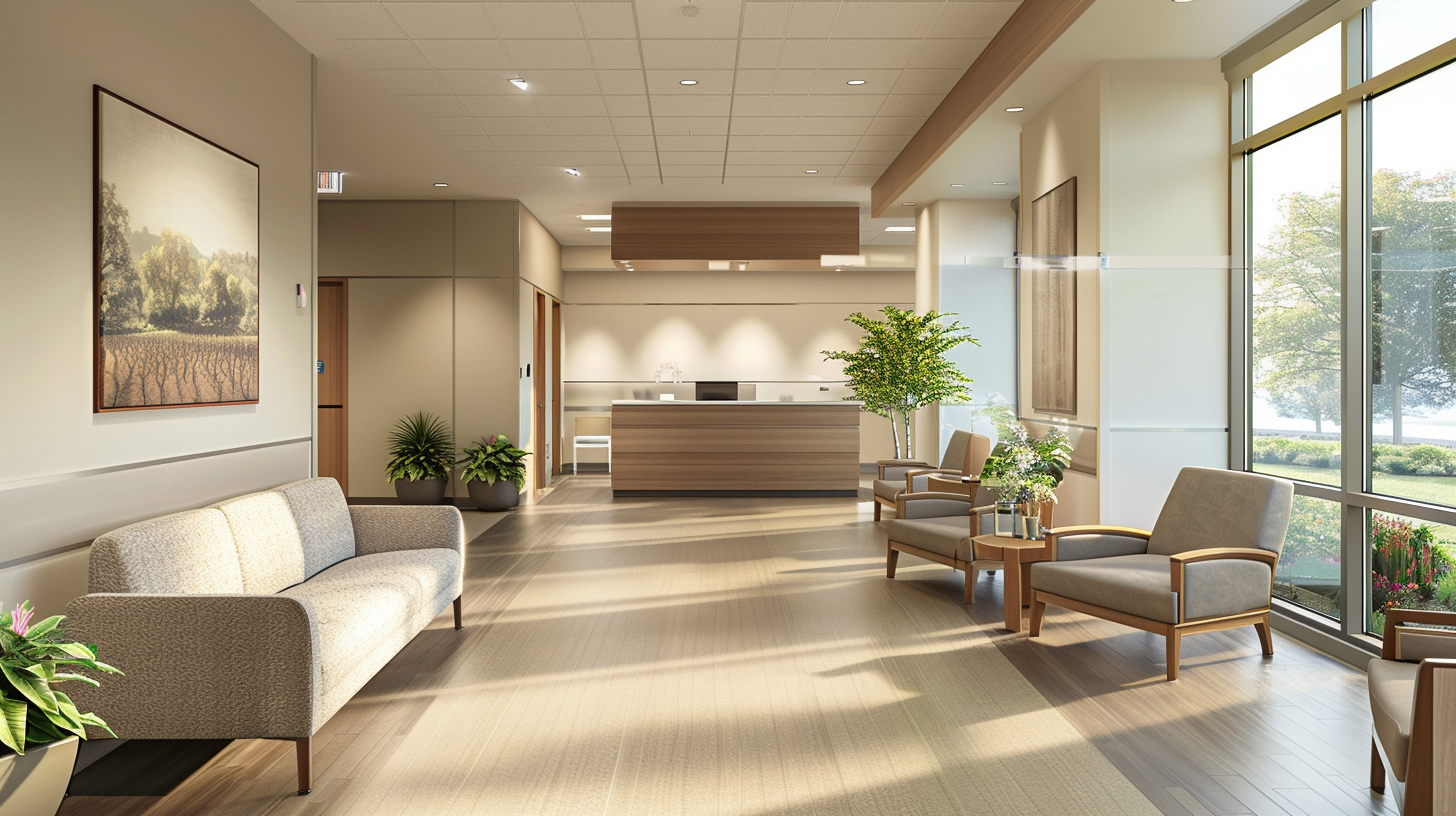
We see this most clearly in waiting and common areas. If these spaces are undersized or poorly organized, they become points of tension. Patients, families, and staff all feel that pressure.
Calm is created through predictability and clarity. Clear wayfinding, defined zones, and controlled movement patterns reduce uncertainty. Material choices and lighting then reinforce that foundation, rather than trying to compensate for it.
Flexibility Is What Keeps These Facilities Relevant
Behavioral health needs are not static. Patient populations shift, care models evolve, and facilities are often asked to adapt over time. Designing for a single, fixed use can limit how effectively a space functions in the future.
This is where flexibility becomes critical. Rooms that can support multiple levels of care, adaptable common areas, and infrastructure that allows for reconfiguration all contribute to long-term usability.
However, flexibility cannot come at the expense of safety. The challenge is designing spaces that can evolve without introducing new risks. That often requires careful coordination between layout, infrastructure, and product selection.
Projects that overlook this tend to require physical modifications when needs change—often at a higher cost and with greater disruption.
Materials and Durability Are Part of the Safety Strategy
Material selection in behavioral health environments is often viewed through the lens of durability, but it also plays a role in safety and perception.
Surfaces need to withstand heavy use and frequent cleaning, but they also need to avoid creating an overly institutional feel. Hard, reflective, or overly clinical materials can increase stress and discomfort.
At the same time, durability failures create their own risks. Damaged materials can introduce safety concerns and require ongoing maintenance that disrupts operations.
The goal is to select materials that perform under pressure while contributing to a more normalized environment. This is less about specific products and more about how those products are used within the space.
Coordination Is Where These Projects Succeed or Fail
Behavioral health projects involve a high level of coordination between clinical teams, designers, engineers, and operators. Each decision—whether related to layout, products, or systems—has implications for both safety and daily operations.
Where projects tend to fall short is when these decisions are made in isolation. A product may meet safety criteria, but conflict with operational needs. A layout may support flow, but introduce supervision challenges.
Early coordination is what resolves these conflicts. Aligning clinical requirements, safety standards, and operational workflows ensures that the space functions as intended.
Without that alignment, issues tend to surface after occupancy—when they are more difficult to address.
Balancing Priorities From the Start
Behavioral health design is not about choosing between safety, dignity, and flexibility. It’s about balancing all three from the outset.
Projects that prioritize one at the expense of the others tend to underperform. Overly restrictive environments can feel institutional and counterproductive. Overly open environments can introduce risk. Inflexible spaces struggle to adapt.
The most effective facilities are the ones where these priorities are integrated early—where safety is embedded in the layout, dignity is reflected in how the space feels, and flexibility is built into how it can evolve.
That balance doesn’t happen by accident. It’s the result of deliberate coordination and a clear understanding of how these environments function over time.