Biophilic Design in Healthcare: Beyond Plants
By: Healthcare Environment Specialist | Evidence-Based Design
For the modern healthcare administrator or facility manager, the term “biophilia” often evokes images of maintenance-heavy atrium gardens or dusty silk plants in a waiting room. However, the technical reality of biophilic design is far more sophisticated. It is a rigorous, evidence-based discipline that utilizes evolutionary biology and environmental psychology to engineer clinical environments that actively promote healing. When we discuss biophilic design in healthcare benefits, we are not discussing aesthetics; we are discussing physiological regulation, decreased length of stay, and optimized staff performance.
True biophilic design is an integration of multi-sensory experiences. It is the strategic application of natural patterns, lighting cycles, and materiality that aligns with the human central nervous system. In high-acuity environments, where stress is a constant variable, biophilia serves as a non-pharmacological intervention that can measurably improve patient outcomes.
Defining Biophilia in Clinical Spaces
Biophilia, a term popularized by E.O. Wilson, suggests that humans possess an innate tendency to seek connections with nature and other forms of life. In the context of a hospital, this connection is often severed by sterile, windowless corridors and the hum of medical machinery. To bridge this gap, designers use the “14 Patterns of Biophilic Design,” categorized into three main groups: Nature in the Space, Natural Analogues, and Nature of the Space.
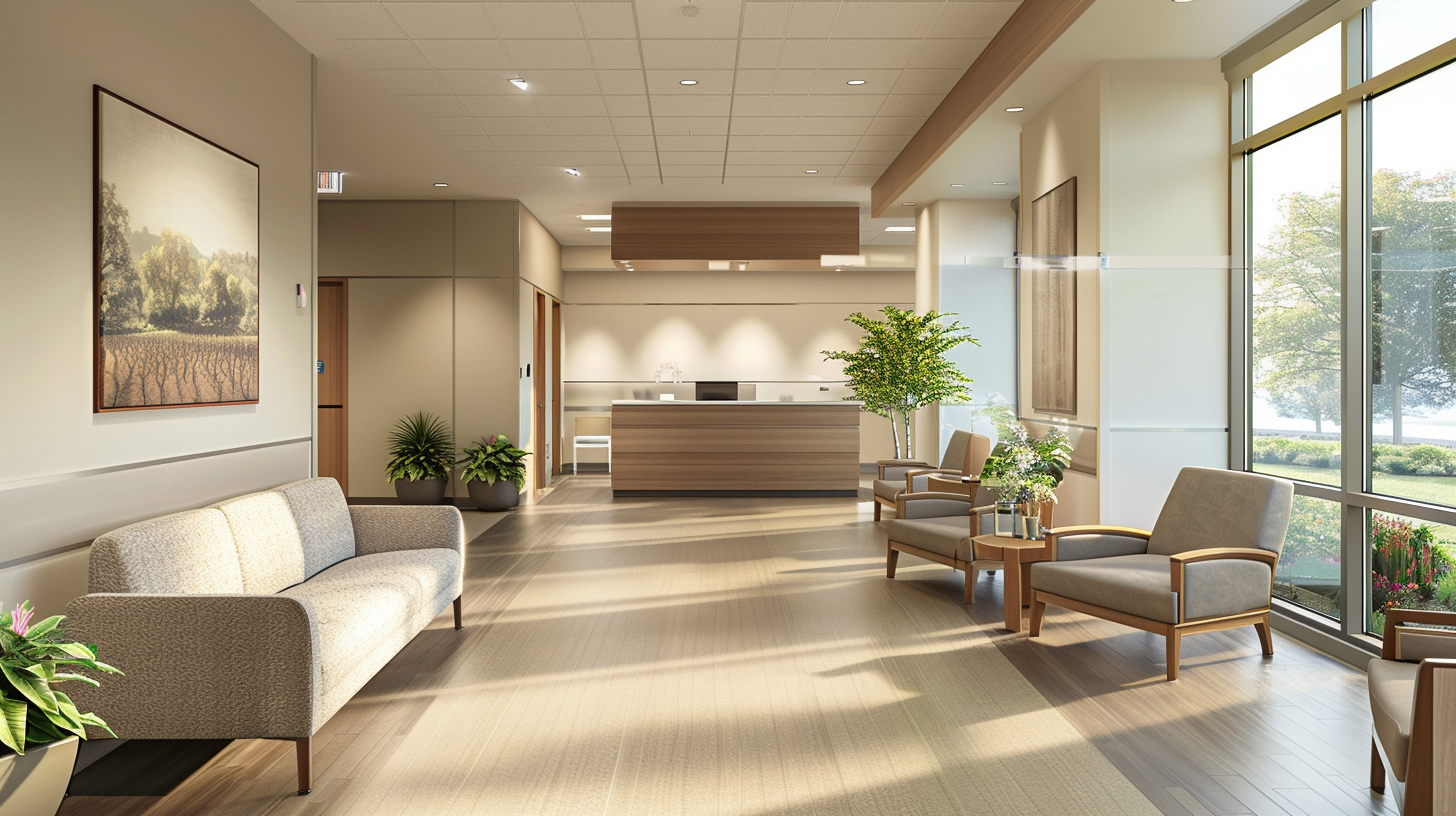
While “Nature in the Space” includes direct presence like plants or water features, the most effective clinical applications often fall under “Natural Analogues.” These are organic representations—the use of wood-grain textures, fractal patterns in upholstery, and stone-like finishes. For a facility manager, these elements are preferable because they provide the psychological benefits of nature without the infection control risks associated with soil, standing water, or organic decay. Incorporating these elements into a medical center design ensures that the environment supports well-being while maintaining the highest standards of hygiene.
Beyond Visual Stimuli
Biophilia is not purely visual. It encompasses haptic (touch) and acoustic experiences. Research suggests that “non-rhythmic sensory stimuli,” such as the gentle movement of grasses in the wind or the dappled light of leaves, can capture “soft fascination.” This allows the prefrontal cortex—the part of the brain exhausted by the stress of a hospital visit—to rest and recover.
The Science of Stress Reduction
The core of the business case for biophilic design in healthcare benefits lies in the reduction of the “fight or flight” response. When patients are exposed to nature-based stimuli, their sympathetic nervous system (SNS) activity decreases, and their parasympathetic nervous system (PNS) activity increases. This transition results in lower heart rates, reduced blood pressure, and lower levels of cortisol.
One of the most significant breakthroughs in this field is the study of “fractals.” Fractals are self-repeating patterns found everywhere in nature—from the branching of trees to the veins in a leaf. Studies have shown that viewing fractal patterns with a specific dimension (a D-value between 1.3 and 1.5) can induce a state of “wakeful relaxation” in the brain. This is why abstract art in hospitals often fails where nature-based fractal art succeeds; the human brain is hard-wired to process these specific geometries with minimal effort.
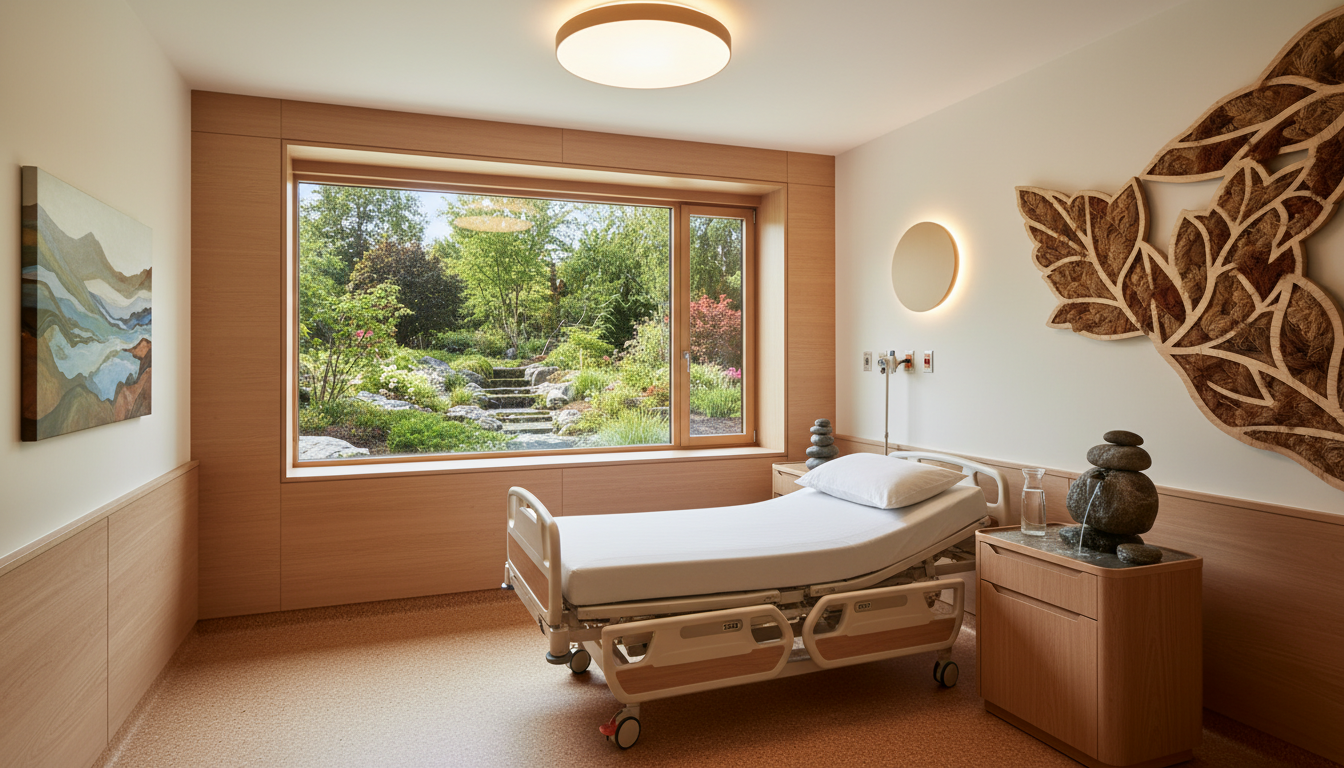
The landmark 1984 study by Roger Ulrich remains the gold standard in this discussion. Ulrich found that surgical patients with a view of a natural landscape recovered 8.5% faster and required significantly less potent pain medication than those staring at a brick wall. For an administrator, that 8.5% represents a tangible reduction in bed-days and an increase in patient throughput.
Circadian Lighting Systems
Lighting is arguably the most powerful biophilic tool available to facility managers today. In many traditional hospitals, patients are subjected to static, high-CRI (Color Rendering Index) fluorescent lighting 24 hours a day. This disrupts the circadian rhythm—the internal 24-hour clock that regulates sleep-wake cycles, hormone release, and cellular repair.
Dynamic Lighting for Patient Recovery
Modern circadian lighting systems mimic the solar cycle. In the morning, the system provides high-intensity, “cool” blue-spectrum light (approx. 5000K–6500K) to suppress melatonin and promote alertness. As the day progresses, the light shifts to a “warmer,” amber-toned spectrum (approx. 2700K) with lower intensity, signaling the body to begin melatonin production. This is particularly vital in Intensive Care Units (ICUs), where “ICU Delirium” is a common and costly complication. By maintaining a natural light-dark cycle, hospitals can reduce the duration of delirium episodes and improve patient orientation.
Supporting Staff Alertness
Facility managers must also consider the biophilic needs of the staff. Healthcare professionals working 12-hour shifts, often during the night, suffer from circadian misalignment. Implementing dynamic lighting in staff breakrooms and nursing stations can help manage fatigue. Exposure to high-intensity blue-enriched light during specific intervals can improve cognitive performance and reduce medical errors, directly impacting the safety profile of the facility.
Material Selection: Wood vs. Wood-Look
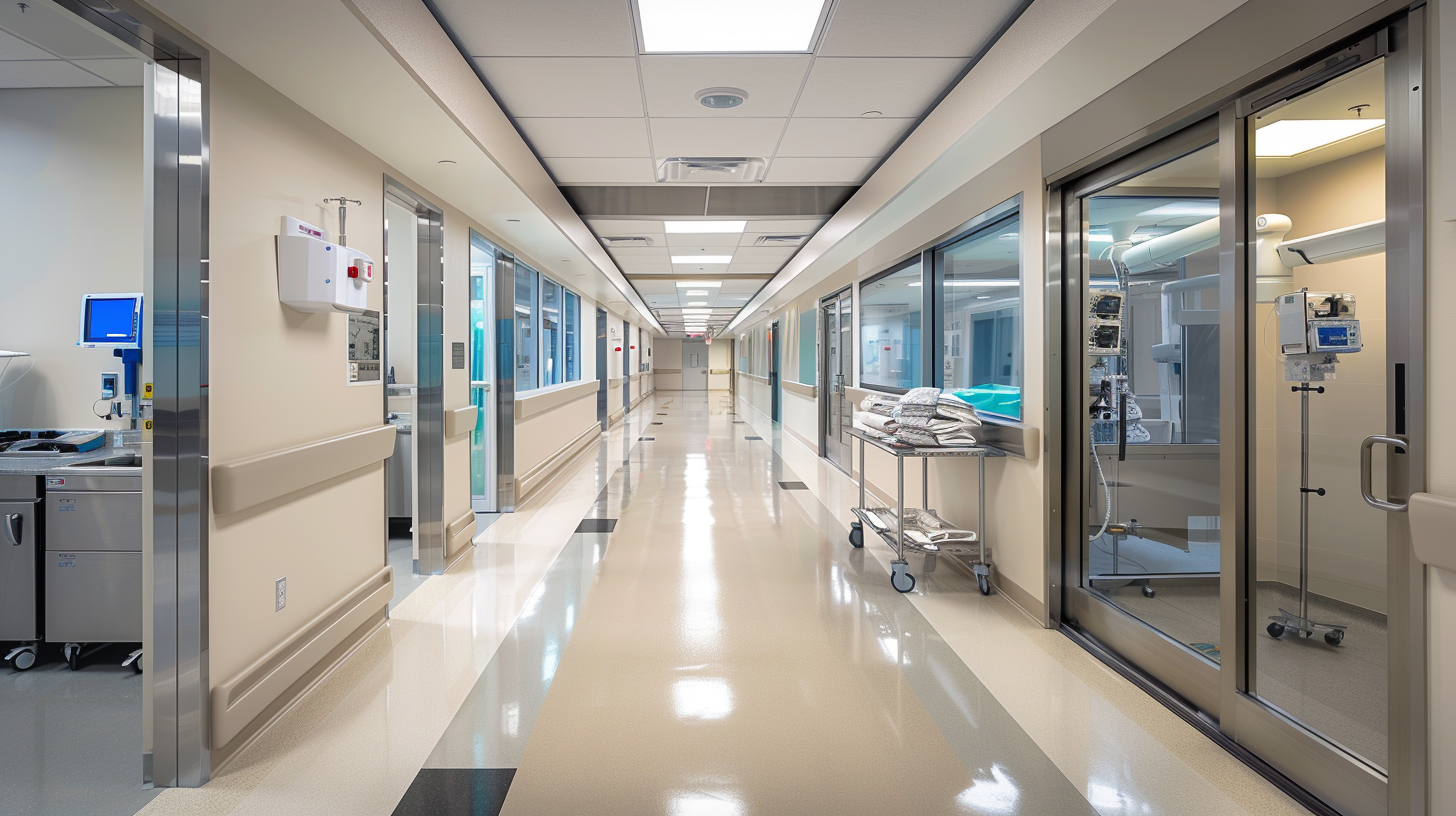
In a clinical environment, the tension between “warmth” and “washability” is constant. While raw timber is biophilic, it is porous and difficult to disinfect. This is where high-performance “Natural Analogues” become essential.
Current material science allows for wood-grain laminates, luxury vinyl tiles (LVT), and thermal-fused resins that are virtually indistinguishable from natural wood to the naked eye. These materials offer several advantages for facility managers:
- Durability: High-traffic corridors require materials that can withstand heavy rolling loads and caustic cleaning agents. Modern wood-look laminates are rated for extreme durability.
- Acoustics: Hard, sterile surfaces (like white tile) reflect sound, contributing to the “clatter” that keeps patients awake. Biophilic-inspired materials, such as felt-like acoustic panels or rubber-backed LVT, can absorb decibels and lower the ambient noise floor.
- Perception: Using wood-look surfaces on patient headwalls or in corridors reduces the “institutional feel” of the hospital, lowering patient anxiety upon entry.
Comparison of Biophilic Elements and Outcomes
| Element | Application | Clinical Outcome |
|---|---|---|
| Natural Light | Patient Rooms | Reduced pain med usage |
| Fractal Art | Waiting Areas | Lowered blood pressure |
| Wood-Look Surfaces | Corridors | Reduced institutional feel |
Implementing Biophilia in Urban Settings
Not every hospital has the luxury of being surrounded by a forest or a healing garden. Urban, land-locked facilities face significant challenges in providing direct nature access. In these environments, biophilic design must be “simulated” through technological and creative interventions.
Digital Nature and Virtual Windows
For windowless rooms, such as those in radiology or underground labs, digital nature views are a viable solution. High-definition LED screens that display slow-moving, high-resolution footage of nature (a “virtual window”) can provide the same stress-reduction benefits as a real view. These systems often include synchronized lighting that changes with the actual local time, further reinforcing the circadian connection.
Biophilic Wayfinding
Large facilities can be disorienting, adding to the stress of patients and visitors. Biophilic wayfinding uses natural landmarks—such as a “living wall” at a major junction or distinct floor patterns inspired by stone or water—to help people navigate intuitively. This reduces the cognitive load required to find one’s way, which in turn reduces the overall stress level of the hospital environment.
Furthermore, the use of organic shapes in furniture and architectural curves (rather than sharp, 90-degree angles) mimics the “edge” conditions found in nature, which the human brain perceives as safer and more welcoming. This strategy is particularly effective in pediatric and behavioral health units, where the environment’s “threat level” must be kept as low as possible.
Conclusion: The ROI of Design
Biophilic design is not a luxury; it is a strategic investment in the facility’s performance. By reducing patient length of stay, lowering the need for pain medication, and improving staff retention through a better work environment, biophilic interventions pay for themselves. For healthcare administrators, the goal is to create an “ecosystem of care” where every surface, light fixture, and floor pattern contributes to the clinical mission.
Frequently Asked Questions
Q: Can biophilic design save money?
A: Yes, by reducing patient length of stay and improving staff retention rates. Even a small percentage reduction in recovery time across thousands of patients results in significant operational savings.
Q: Is biophilic design harder to clean?
A: Not necessarily. By using “Natural Analogues” (like wood-grain laminates or fractal-patterned vinyl) instead of live organic material, facility managers can achieve biophilic benefits while using standard EPA-registered disinfectants.
Ready to transform your facility?
Discover how evidence-based design can improve your clinical outcomes and patient satisfaction scores.