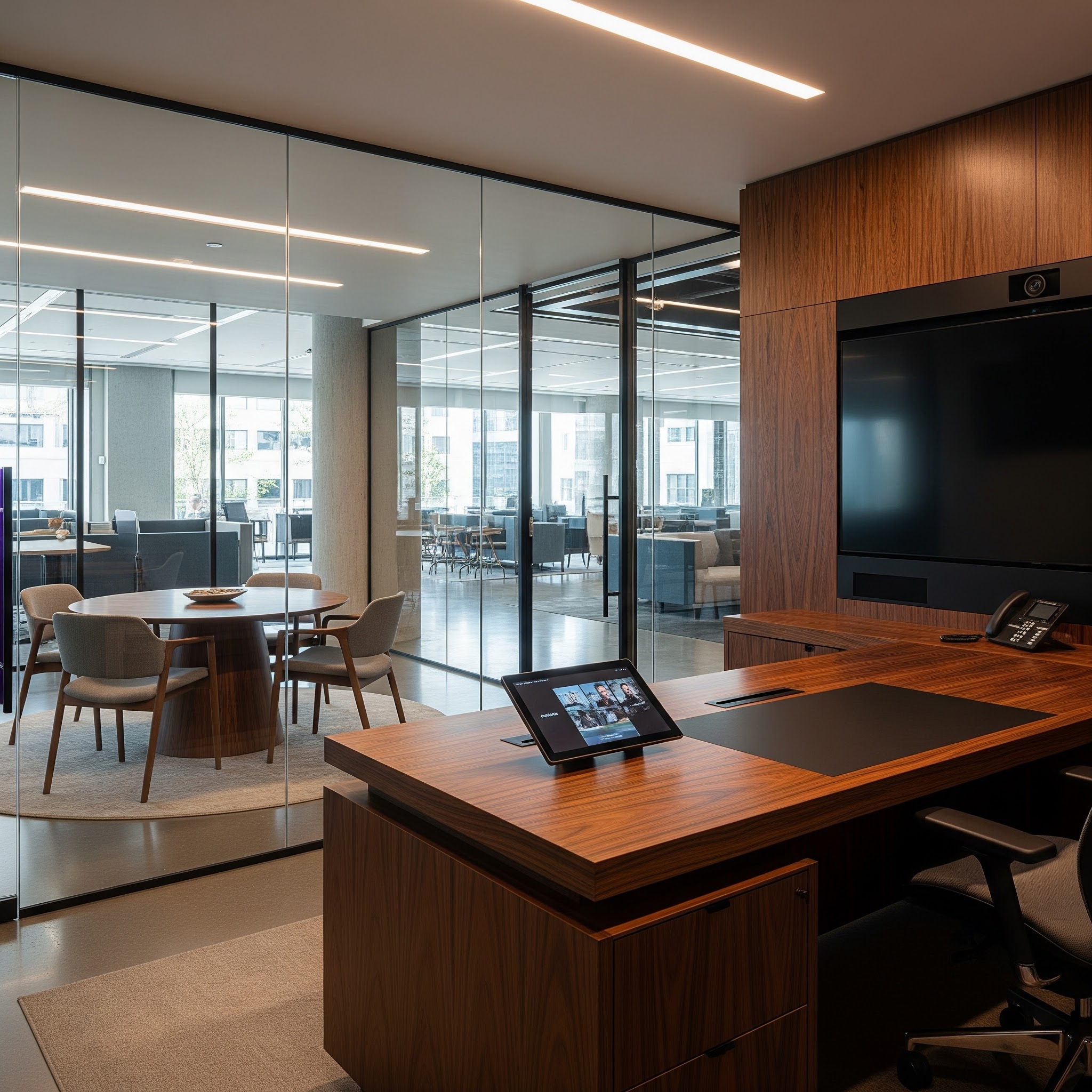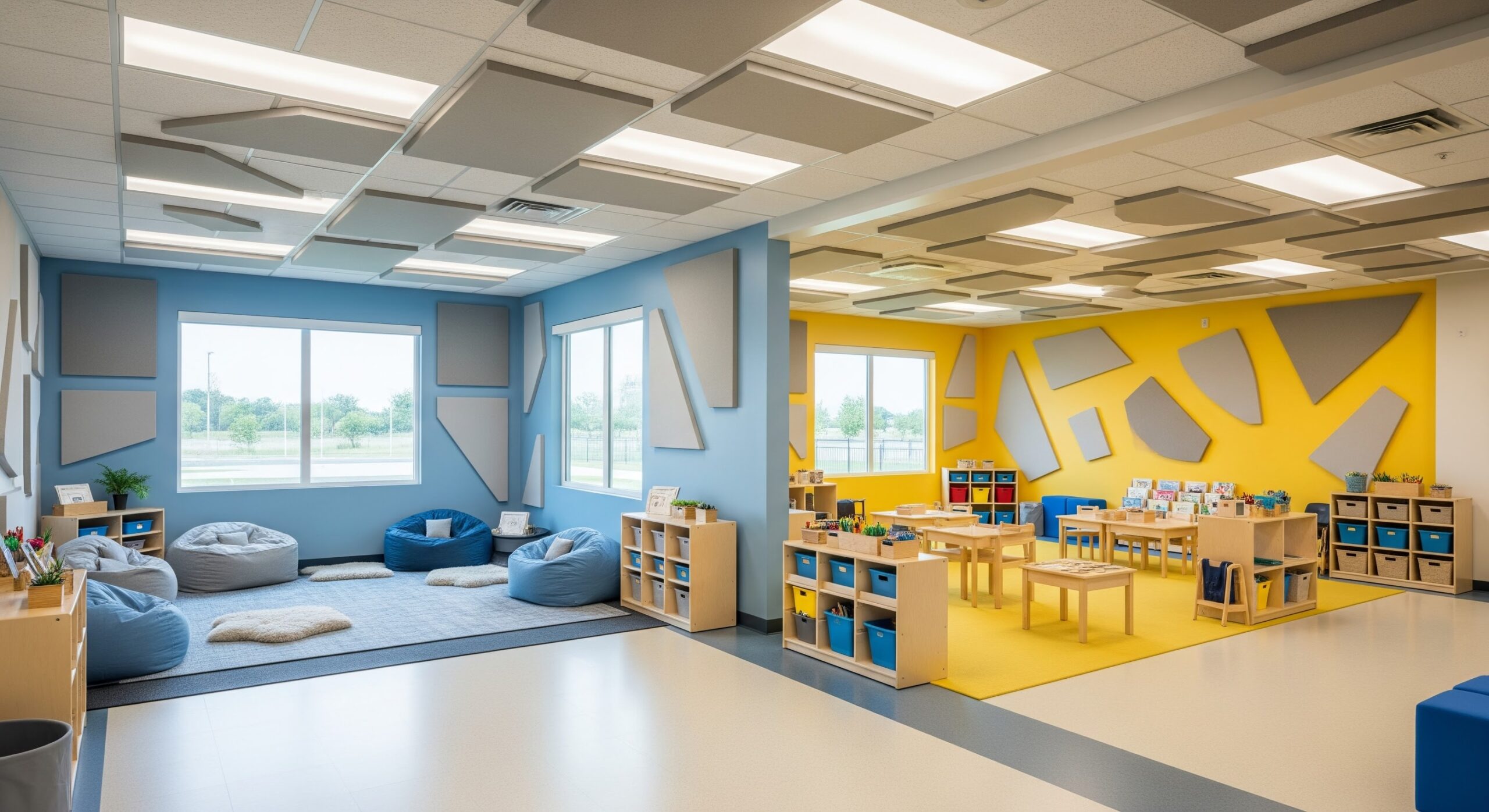
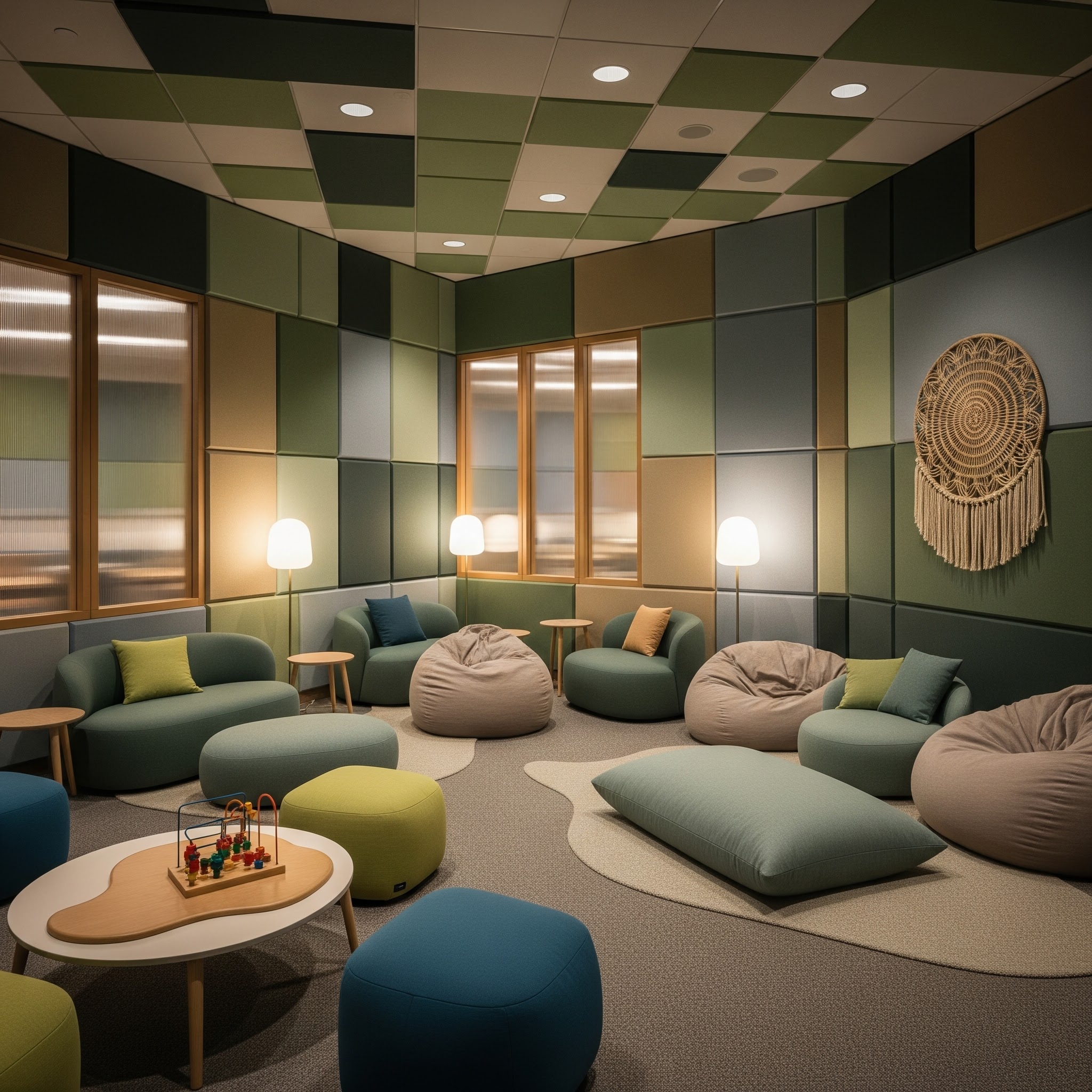
Designing for behavioral health, particularly for Autism Spectrum Disorder (ASD) and ABA (Applied Behavior Analysis) clinics, requires a specialized approach that prioritizes safety and sensory regulation. DIG’s portfolio in this sector demonstrates our commitment to “Designing for Dignity.”
Safety First: Ligature-Resistant Design
In behavioral health environments, patient safety is paramount. Our Implementation team works closely with manufacturers to procure ligature-resistant hardware, fixtures, and furniture. This includes:
- Specialized door handles and hinges.
- Weighted furniture that cannot be easily thrown or weaponized.
- Impact-resistant drywall and finishes.
Sensory Regulation
Beyond safety, the environment must support therapy. Overstimulation is a common challenge for neurodivergent individuals.
- Lighting: We utilize dimmable, tunable LED lighting to avoid the harsh flicker of standard fluorescents, which can be triggering.
- Acoustics: High-NRC materials are essential to dampen echoes and sudden noises.
- Palette: We avoid aggressive patterns or overly bright primary colors, favoring calming, nature-inspired hues that reduce visual noise.
The Therapy Center Layout
Layouts must balance observation with privacy. We design clear sightlines for staff monitoring while creating “cool-down” zones where patients can retreat if overwhelmed. By merging clinical requirements with therapeutic aesthetics, we create spaces that respect the humanity of every patient.