FF&E Procurement Strategies for 2026: Mitigating Supply Chain Risk
By: Technical Project Manager | 10+ Years FF&E Logistics
For Commercial Real Estate (CRE) developers, the margin for error in project delivery has never been slimmer. As we look toward 2026, the landscape of Furniture, Fixtures, and Equipment (FF&E) has shifted from a secondary interior design concern to a primary risk management pillar. The days of “Just-in-Time” delivery have been replaced by a “Just-in-Case” philosophy, necessitated by persistent geopolitical volatility, fluctuating fuel surcharges, and a labor market that remains stretched thin across the logistics sector.
Navigating the FF&E procurement process in this climate requires more than just an aesthetic eye; it demands technical precision in supply chain management. In 2026, successful developers are those who view FF&E as a critical path item on par with structural steel or MEP systems. A delay in a custom sofa or a specific lighting fixture may seem minor, but if it prevents the issuance of a Certificate of Occupancy or delays a grand opening, the carrying costs can be catastrophic.
The State of Global Supply Chain: 2026 Outlook
Entering 2026, the global supply chain has reached a “new normal” characterized by fragmentation. While the extreme bottlenecks of the early 2020s have subsided, they have been replaced by localized disruptions. Shipping lanes through the Red Sea and the Panama Canal continue to face environmental and geopolitical pressures, adding unpredictable transit days to international orders. For a developer, this means that the FF&E procurement process must account for a 12-16 week buffer on all custom or overseas items.
Furthermore, raw material scarcity—particularly in high-grade architectural metals and sustainable foams—has led to manufacturing “stuttering.” Factories are no longer holding vast inventories of components; they produce in batches once a minimum order quantity (MOQ) is met. This makes early specification and deposit placement non-negotiable. If you aren’t on the production schedule by Q1, you cannot expect a Q3 delivery.
Freight costs also remain a volatile line item. While ocean freight has stabilized, “last-mile” delivery and white-glove installation services have seen a 15-20% increase in cost due to the shortage of specialized labor. Integrated procurement strategies, such as those utilized by DIG, saved clients an average of 12% on freight costs in 2024 by consolidating shipments and utilizing regional warehousing hubs to “meter” deliveries into the job site.
What is FF&E in Commercial Design?
In the context of high-stakes commercial development, FF&E refers to Furniture, Fixtures, and Equipment—the movable objects that have no permanent connection to the structure of the building. This includes everything from task chairs and modular lounge seating to decorative lighting, window treatments, and artwork. It is distinct from OS&E (Operating Supplies and Equipment), which covers consumable items like linens or kitchenware in hospitality settings.
The technical distinction is vital because FF&E is often the “bridge” between the architectural shell and the end-user experience. From a developer’s financial perspective, FF&E is typically depreciated over a shorter lifespan than the building itself, making it a critical component of the project’s tax strategy (MACRS). However, because these items are “movable,” they are often the first to be value-engineered when construction costs overrun. This is a tactical error; poor FF&E procurement can compromise the entire brand value of a $100M development for the sake of a $500,000 savings.
The Procurement Lifecycle: From Specification to Installation
A sophisticated FF&E procurement process is broken down into distinct phases. Understanding the nuances of these phases—and the 2026 timelines—is the difference between a project that opens on time and one that languishes.
1. Specification and Documentation
This is where the Interior Designer defines the “Spec.” It includes the manufacturer, model number, finish, and fabric (COM – Customer’s Own Material). In the 2026 landscape, we recommend “double-specifying.” This involves selecting a primary item and a pre-approved “Quick-Ship” domestic alternative. This mitigates the risk if the primary manufacturer announces a sudden 20-week delay.
2. Agent-Based vs. Dealer-Based Procurement
One of the most critical decisions for a developer is the procurement model:
- The Dealer Model: The dealer acts as a middleman, buying the furniture at a discount and selling it to the developer at a markup. While this can simplify the transaction, it often lacks transparency in pricing and freight costs.
- The Agent Model (Preferred): An FF&E procurement officer acts as an extension of the developer’s team for a fixed fee. This model offers “net-plus” pricing, where the developer sees the actual invoice from the manufacturer. This transparency is crucial for managing “Overage” and “Freight” line items accurately.
3. The 2026 Timeline Table
To avoid installation bottlenecks, the procurement schedule must be pulled forward. The following table illustrates the shift from legacy timelines to the current requirements for 2026.
| Procurement Phase | Traditional Timeline | Recommended 2026 Timeline |
|---|---|---|
| Specification | Weeks 1-4 | Weeks 1-2 |
| Ordering/Deposit | Week 8 | Week 4 |
| Manufacturing | 8-10 Weeks | 12-14 Weeks |
| Installation | Post-Construction | Integrated with Finish Schedule |
4. Order Tracking and Logistics Management
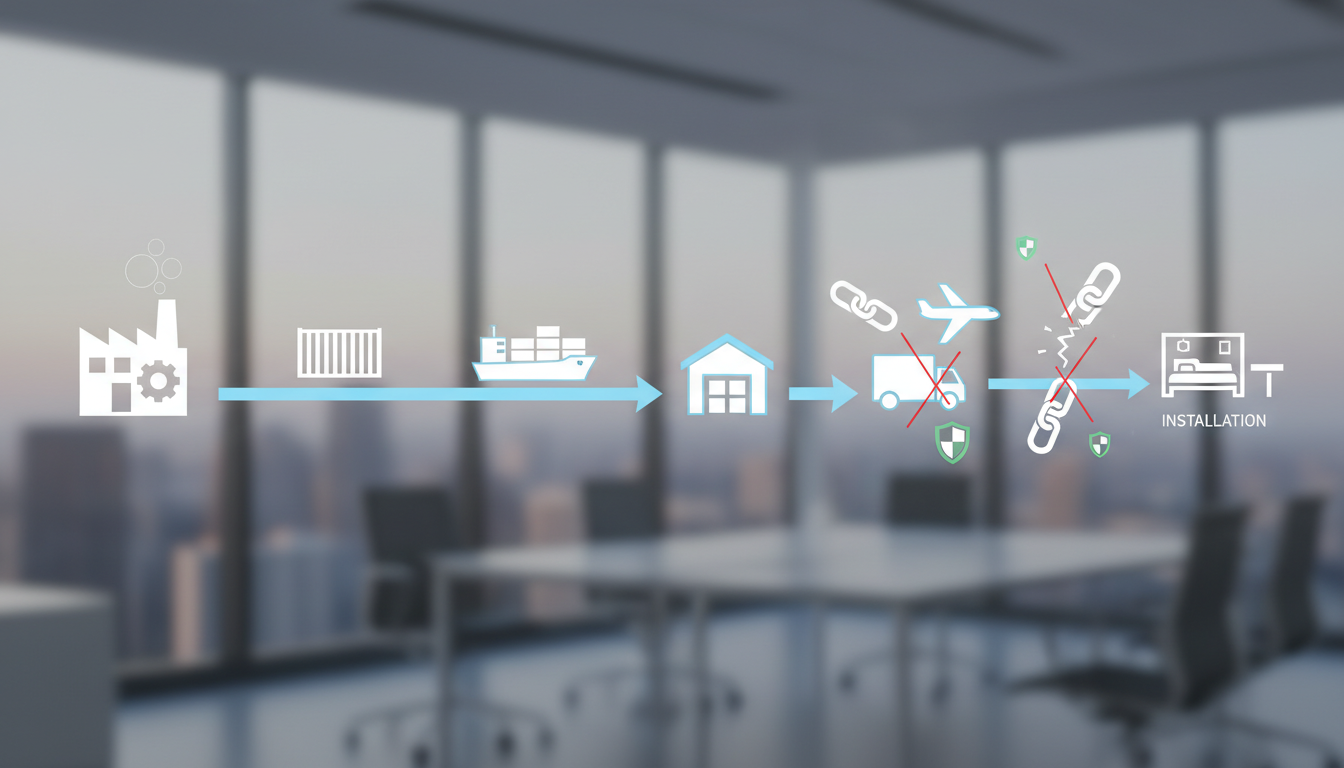
Once Purchase Orders (POs) are issued and deposits are paid, the “tracking” phase begins. In 2026, this requires a digital-first approach. Developers should demand a live procurement dashboard that tracks “Estimated Time of Departure” (ETD) and “Estimated Time of Arrival” (ETA) in real-time. This phase must also manage “Freight” and “Overage.” Freight is no longer a flat 10% estimate; it must be calculated based on current cubic volume and fuel indices.
5. Warehousing and “The Last Mile”
In 2026, you cannot ship directly from a factory in Vietnam to a construction site in Dallas and expect it to arrive exactly when the carpets are laid. Strategic procurement involves “staging” or warehousing. By receiving items at a regional bonded warehouse 30 days before they are needed, you de-risk the project from transit delays. You can then “meter” the furniture into the building floor by floor, synchronized with the General Contractor’s finish schedule.
Domestic vs. International Sourcing: A Risk-Adjusted Approach
The 2026 FF&E procurement process leans heavily into a “Hybrid Sourcing” model. While international sourcing (primarily Asia and Eastern Europe) offers significant cost savings on large-scale case goods and custom millwork, domestic sourcing provides the agility needed for modern project timelines.
The Case for International (Cost Efficiency)
For high-volume projects—such as multi-family developments or 500+ room hotels—international sourcing remains the only way to meet certain budget thresholds. However, the “hidden costs” must be factored in: customs duties, port fees, and the risk of damage during trans-oceanic shipping. We recommend international sourcing only for items with a lead time of 24+ weeks and where the volume justifies the logistical complexity.
The Case for Domestic (Risk Mitigation)
Domestic (US-based) manufacturers have adapted to the volatile market by offering “Quick-Ship” programs. These are essential for 2026. If a custom light fixture from Italy is held up in customs, having a domestic lighting partner who can ship a similar aesthetic in 4 weeks is a project-saver. Furthermore, domestic sourcing reduces the carbon footprint of the project—a key factor for developers pursuing LEED or WELL certifications.
DIG’s Integrated Procurement Model: Reducing Volatility
At DIG, we recognize that procurement is not a clerical task; it is a technical discipline. Our integrated model collapses the silos between the interior designer, the procurement officer, and the general contractor. By involving our procurement team during the schematic design phase, we identify potential supply chain “red flags” before they are baked into the budget.
Our methodology focuses on three core pillars:
- Price Locking: We utilize our volume-buying power to lock in pricing at the time of specification, protecting developers from the mid-year price increases that have become common in 2026.
- Logistics Consolidation: As mentioned, our strategies saved clients 12% on freight in 2024. We achieve this by consolidating LTL (Less-than-Truckload) shipments into full containers at regional hubs.
- Installation Oversight: We don’t just ship boxes; we manage the installation. Our project managers work alongside the GC to ensure that the FF&E installation does not conflict with final punch-list items, avoiding the costly “double-handling” of furniture.
The “Overage” line item is another area where our technical expertise shines. Most developers set aside a 5% contingency for FF&E. Through our rigorous tracking and pre-negotiated freight rates, we often return 2-3% of that overage back to the project’s bottom line by the time of completion.
Key Takeaways for Developers
- Agent-Based is More Transparent: For complex commercial projects, the agent-based model provides better visibility into the actual cost of goods versus the dealer-based markup model.
- Early Specifying is Essential: Lock in manufacturing slots and pricing by Week 4 of the procurement cycle, rather than the traditional Week 8.
- Manage Freight as a Variable: Treat freight and overage as dynamic line items that require active management to avoid 15-20% budget overruns.
Frequently Asked Questions
Q: What does FF&E stand for?
A: Furniture, Fixtures, and Equipment—moveable furniture that has no permanent connection to the structure.
Q: Why has the manufacturing lead time increased for 2026?
A: Lead times have expanded due to “batch manufacturing” processes and the need for a 12-16 week buffer to account for global shipping lane disruptions and labor shortages in specialized finishing.
Q: How can I reduce my project’s freight costs?
A: Consolidating shipments at regional warehouses and utilizing an integrated procurement model can save an average of 12% on freight by reducing LTL shipments and avoiding site-delivery delays.
Ready to De-Risk Your Next Project?
Don’t let supply chain volatility derail your grand opening. Leverage our technical expertise to ensure your FF&E is on time and on budget.