Healthcare interior design is not primarily about aesthetics. It is about outcomes — patient anxiety levels, recovery times, staff error rates, and infection control. The built environment in a clinical setting has measurable effects on each of these variables, and evidence-based design has produced a body of research that directly informs how high-performing healthcare facilities are designed today.
What evidence-based healthcare design means
Evidence-based design (EBD) applies research on the relationship between physical environments and health outcomes to design decisions. The core finding from decades of research: the physical environment affects patient stress and anxiety; stress affects clinical outcomes; therefore, design that reduces stress produces better clinical outcomes. This connection validates investments in design elements — natural light, acoustic control, single-patient rooms, view access — that might otherwise be dismissed as amenities.
Natural light and circadian rhythm
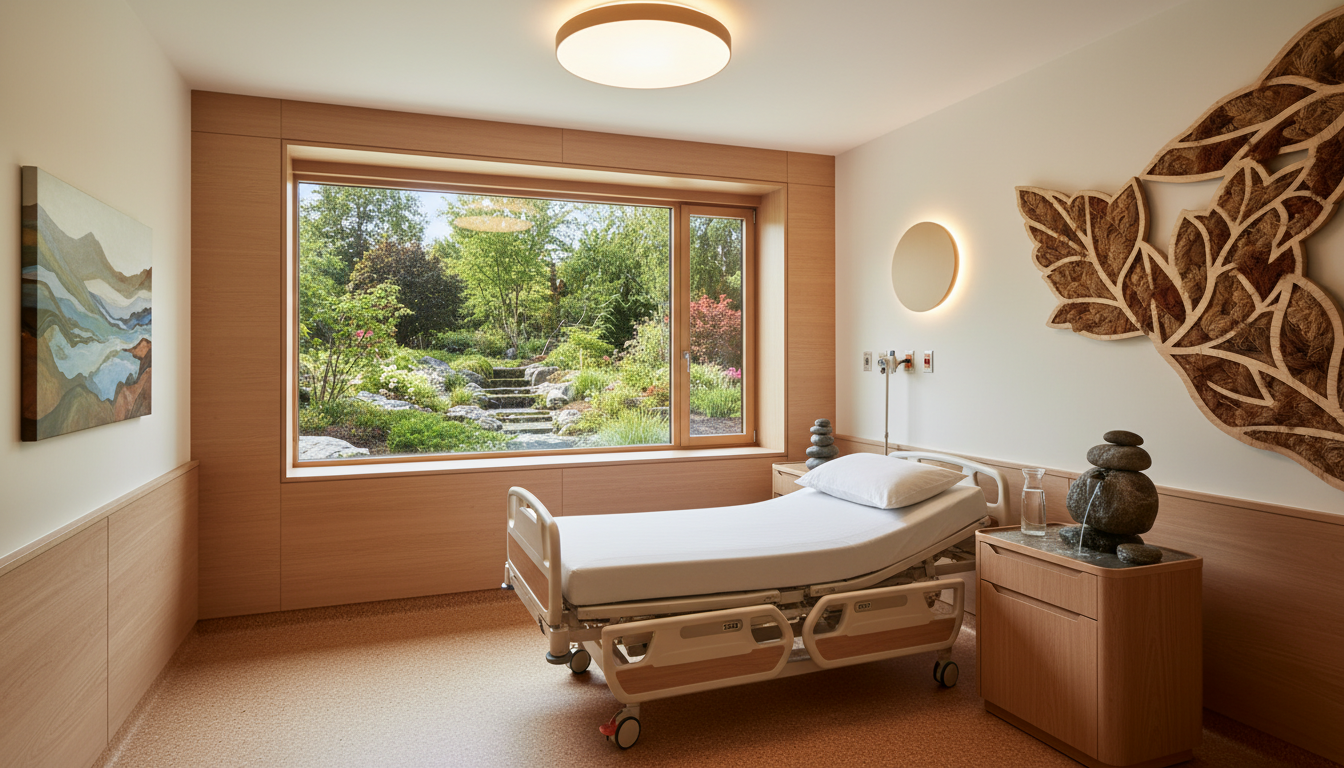
Natural light access is one of the most consistently supported design variables in healthcare research. Patients in rooms with window views and natural light report lower pain levels, use less analgesic medication, and have shorter average lengths of stay. The mechanism is partly psychological (reduced stress) and partly physiological (circadian rhythm support affects sleep quality and immune function). Healthcare facility design that prioritizes natural light access for patient rooms — and for staff work areas — produces measurable returns.
Acoustic environment
Hospital noise is consistently cited as a top source of patient dissatisfaction and a contributor to sleep deprivation during recovery. The acoustic design challenge in healthcare is particularly complex: hard surfaces for infection control create reflective environments; equipment alarms and staff communication are operationally necessary but acoustically disruptive. Solutions include acoustic ceiling treatments, sound-masking systems, careful zoning of noisy equipment and circulation, and single-patient room configurations that reduce cross-patient noise exposure.
Wayfinding and patient anxiety
Disorientation in a healthcare setting elevates anxiety before a patient has even interacted with clinical staff. Clear, well-designed wayfinding — legible signage systems, intuitive circulation paths, landmark elements that help patients orient themselves — reduces pre-appointment stress and produces better first impressions of the facility. Healthcare environments that are confusing to navigate communicate, unintentionally, that the organization is not well-run.
DIG Interior Design Solutions designs healthcare facilities including medical offices, outpatient clinics, and specialty care environments in New York and New Jersey. Contact us to discuss your project.