Working from home can be a dream — or a daily discomfort.
If your desk chair hurts your back, your lighting’s off, or your Zoom background stresses you out, your layout might be working against you.
At DIG, we believe great design should support how you think, move, and focus. That starts with ergonomics — and smart layout planning.
Here are 5 ergonomic home office layouts to help you reclaim energy, posture, and productivity.
🧱 1. The Wall-Focus Layout
Best for: Deep work, minimal distractions
Setup: Desk faces the wall or a large built-in panel
Why it works:
- Keeps sightlines clean
- Reduces visual noise
- Ideal for heads-down work like writing, coding, or strategy
Tip: Add soft vertical storage to the sides (like shelves or pinboards) to keep tools close but out of the way.
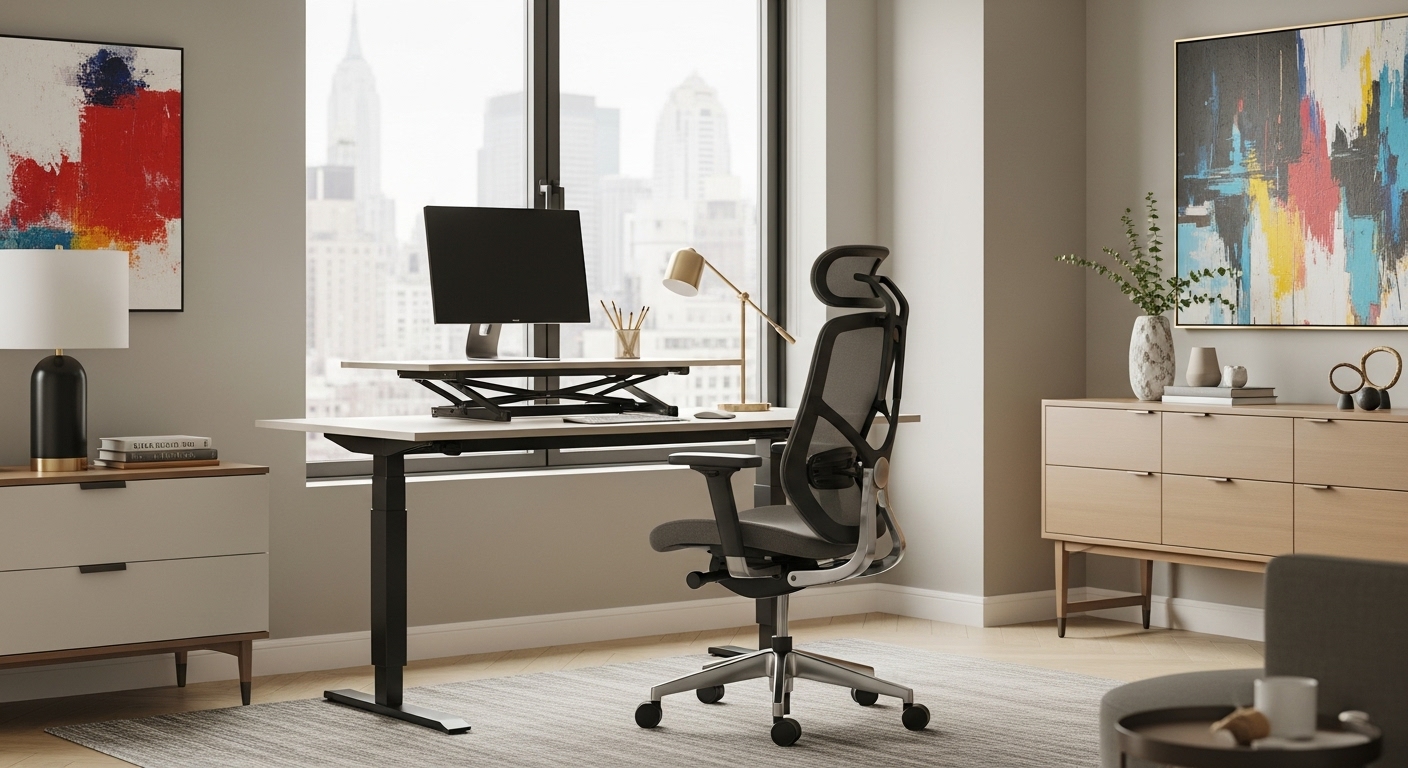
🌞 2. The Window-Facing Layout
Best for: Natural light, creative flow
Setup: Desk faces the window, with side storage and task lighting
Why it works:
- Supports circadian rhythm and focus
- Boosts mood and reduces eye strain
- Encourages mid-day gaze breaks (a key ergonomic move)
Tip: Use sheer curtains to diffuse glare during peak daylight hours.
💻 3. The L-Shape Layout
Best for: Multitaskers with multiple zones
Setup: Desk extends into an L with one side for computer work, one for writing or meeting prep
Why it works:
- Separates digital and analog tasks
- Supports fluid movement
- Allows quick posture shifts during long days
Tip: Anchor the L with task lighting on one end and ambient lighting on the other for visual balance.
🪑 4. The Floating Desk Layout
Best for: Small spaces or integrated home-office areas
Setup: Desk floats away from the wall, facing the room
Why it works:
- Turns the desk into a sculptural element
- Great for open-concept areas or live/work studios
- Allows for better airflow and lighting flexibility
Tip: Hide wires through floor outlets or slim cable management trays under the desk.
🧘 5. The Biophilic Corner Layout
Best for: Wellness-first workers
Setup: Desk positioned near greenery, soft lighting, and acoustic control
Why it works:
- Lowers stress and increases focus
- Supports mental reset zones
- Great for therapists, creatives, or anyone managing long call days
Tip: Include soft textures underfoot and in arm’s reach to reduce tension buildup.
DIG’s Ergonomic Ethos
We design for function and feeling.
That means making sure your workspace fits your body, your rhythms, and your goals — not just your square footage.
From sit-stand desks to soft sightlines and storage you don’t have to reach for, every choice supports the bigger picture: work that flows better because your space does too.
A better home office starts with better design. Let’s build one that works as hard (and as smart) as you do.