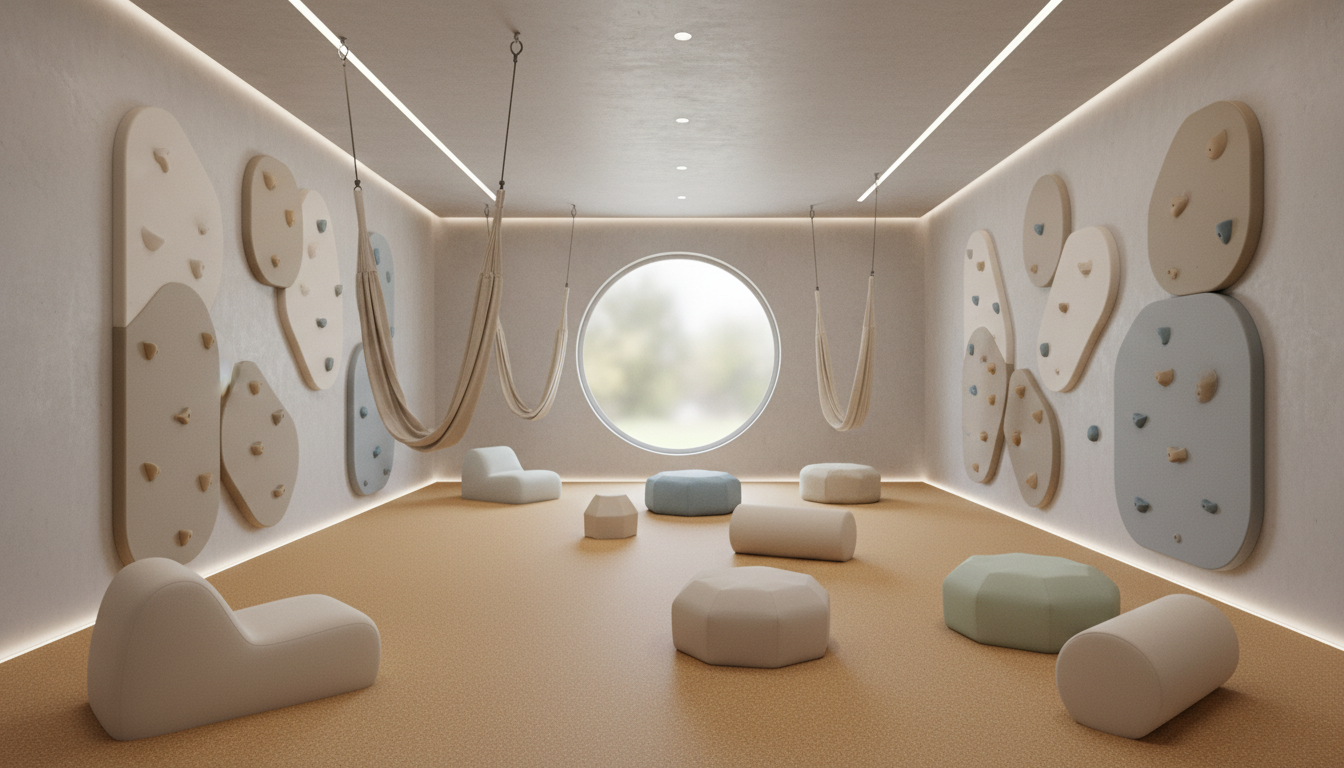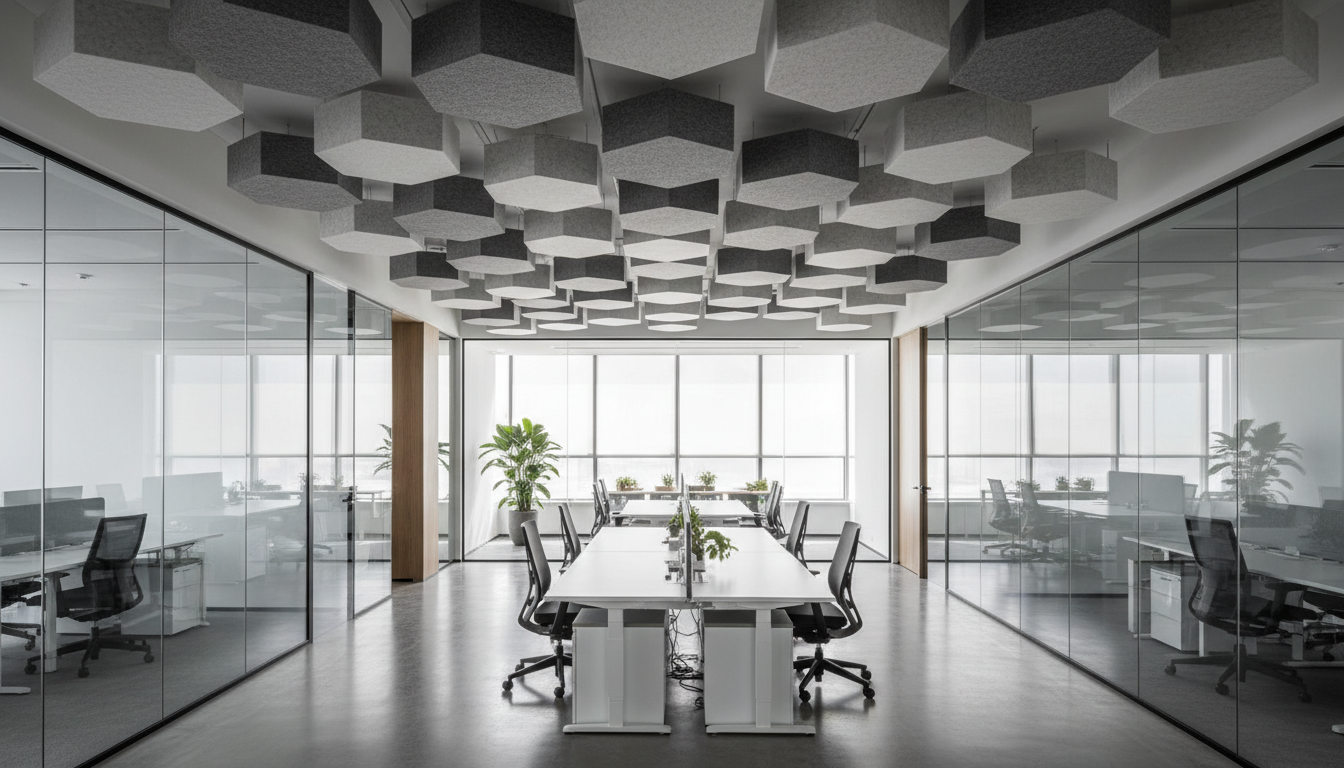
The claim that physical environment affects employee performance used to be supported primarily by intuition. It is now supported by a substantial body of research. The effects are real, measurable, and large enough to justify meaningful investment in design quality. Here is what the research shows.
Thermal comfort and cognitive performance
Temperature is the most consistently documented environmental variable affecting cognitive performance. Research across multiple study designs finds a clear relationship: performance on tasks requiring concentration peaks at approximately 22°C (71.6°F) and declines at both higher and lower temperatures. Individual variation exists, but the aggregate effect is significant. HVAC systems that allow zone-level temperature control in office environments produce measurable productivity returns relative to single-zone systems where temperature is a daily complaint.
Natural light and circadian rhythm
Natural light access affects sleep quality, mood, and energy levels through circadian rhythm regulation. Employees with access to natural light report better sleep, less fatigue, and higher wellbeing scores than those working primarily under artificial light. These effects show up in productivity measures. The most important design implication: workstation placement relative to windows matters, and office layouts that prioritize perimeter offices for executives while placing workstations in windowless interior zones invert the productivity logic.
Variety of space types and autonomy
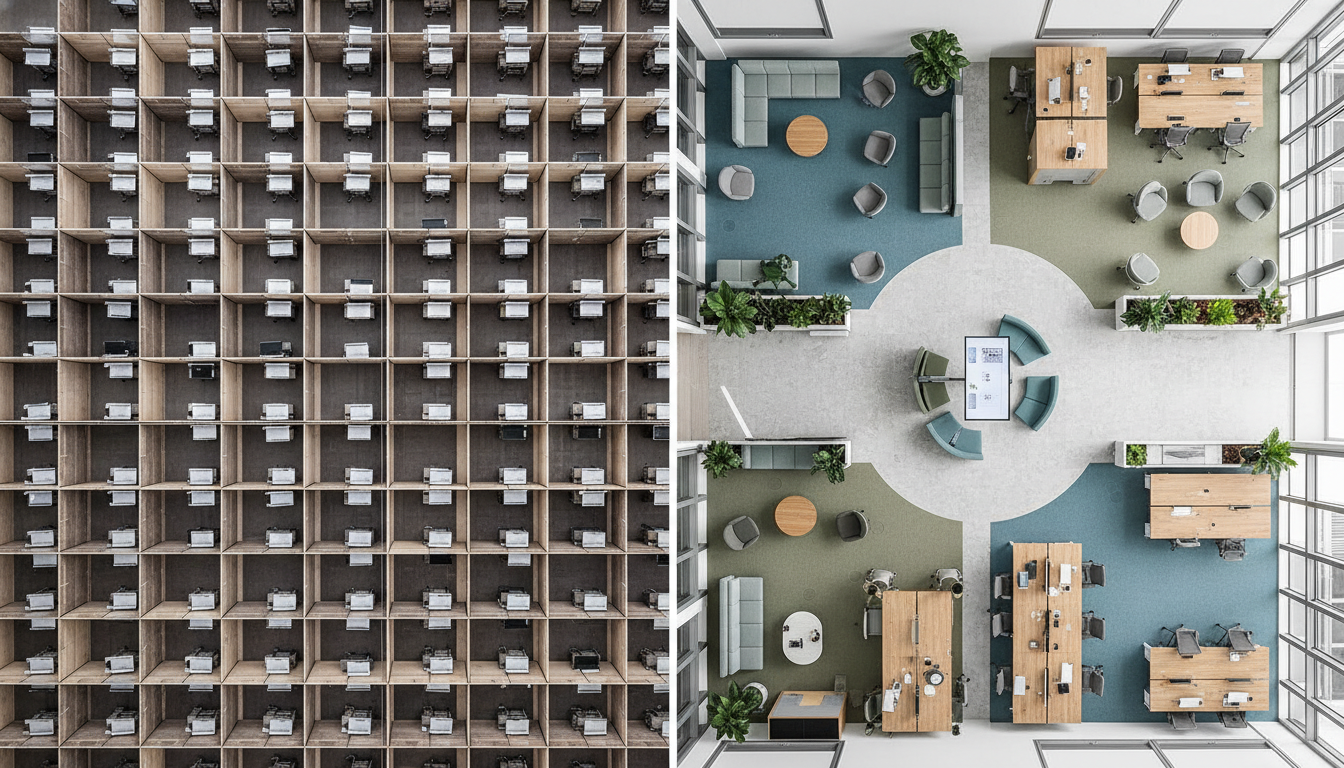
Environments that offer employees a choice of where to work — quiet focus areas, collaborative zones, social spaces, private spaces — produce higher productivity and satisfaction than environments where all work happens at a single workstation type. The mechanism is autonomy: the ability to match the physical environment to the cognitive demands of the work at hand. Design that provides that choice is investing in the worker’s ability to self-regulate their environment, which research consistently associates with higher performance.
DIG Interior Design Solutions designs commercial workplaces in New York and New Jersey grounded in how people actually work. Start a project conversation.