Retail interior design is one of the most data-rich design disciplines. The relationship between physical environment and purchasing behavior has been studied extensively, and the findings translate directly into design decisions. Here is what the research shows about store layout and how it applies to retail spaces of various types.
The decompression zone
Customers entering a retail space need a brief physical and psychological transition — a decompression zone — before they begin engaging with merchandise. The first few feet inside the entrance are transitional space. Products placed immediately inside the entrance are consistently underperformed because customers are still orienting, removing coats, adjusting to the lighting, and making their initial read of the environment. This zone should be clear, welcoming, and visually communicative of the brand, not merchandised to maximum density.
Circulation and the right turn tendency
In most Western countries, customers entering a retail space tend to turn right. This is a consistent behavioral pattern that informs where high-margin or high-priority merchandise should be positioned. The perimeter path — the wall-following route that many customers follow naturally — determines what they see if they browse without a specific destination. Understanding the natural circulation path of your specific space, and designing merchandise presentation and department sequencing around it, consistently outperforms layouts designed from a supply-side perspective.
Lighting and merchandise presentation
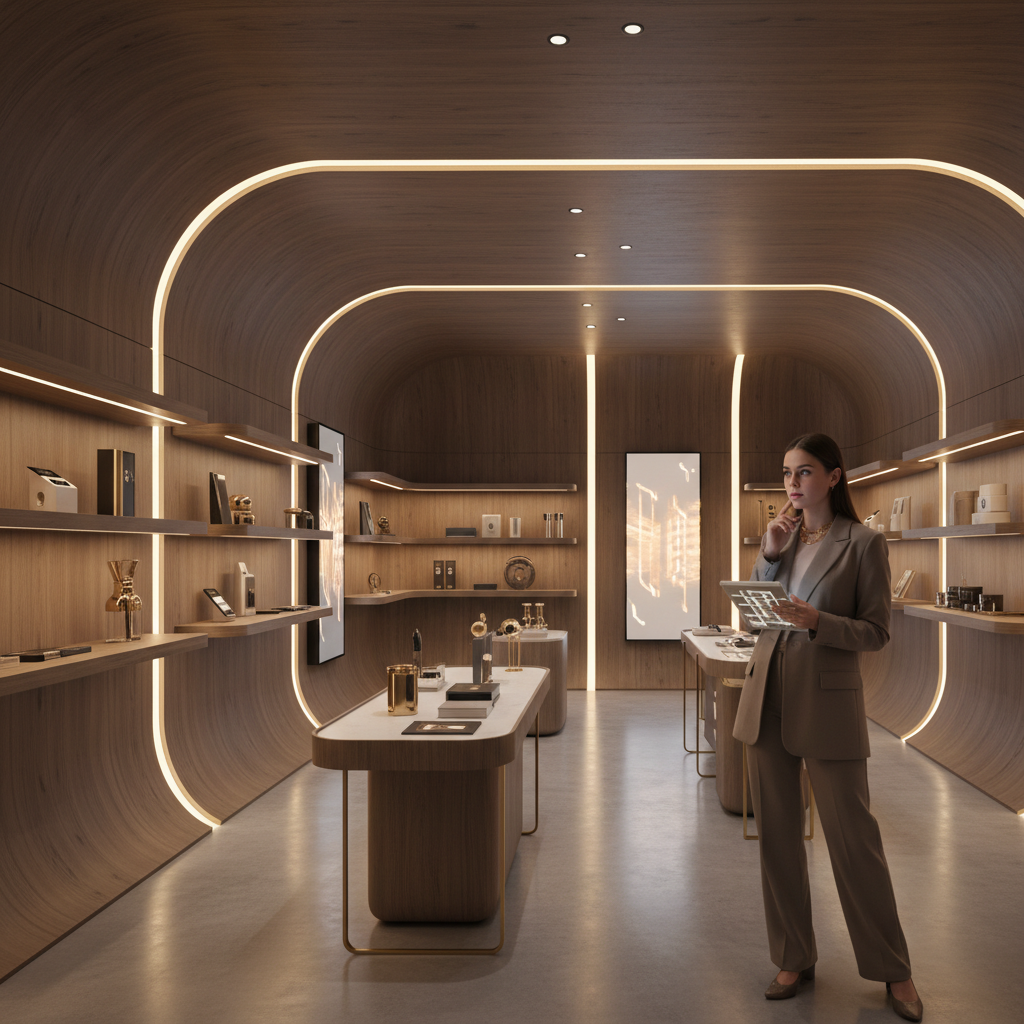
Accent lighting on merchandise increases perceived quality and value. The mechanism is partly perceptual — well-lit objects look better — and partly attentional: lighting draws the eye, and the eye triggers engagement. Track lighting directed at product displays, showcase lighting in display cases, and table-level lighting for featured products all increase dwell time and interaction with the items being highlighted. Ambient-only retail lighting is operationally functional but commercially underperforming.
DIG Interior Design Solutions designs commercial retail environments in New York and New Jersey. Contact us to discuss your project.