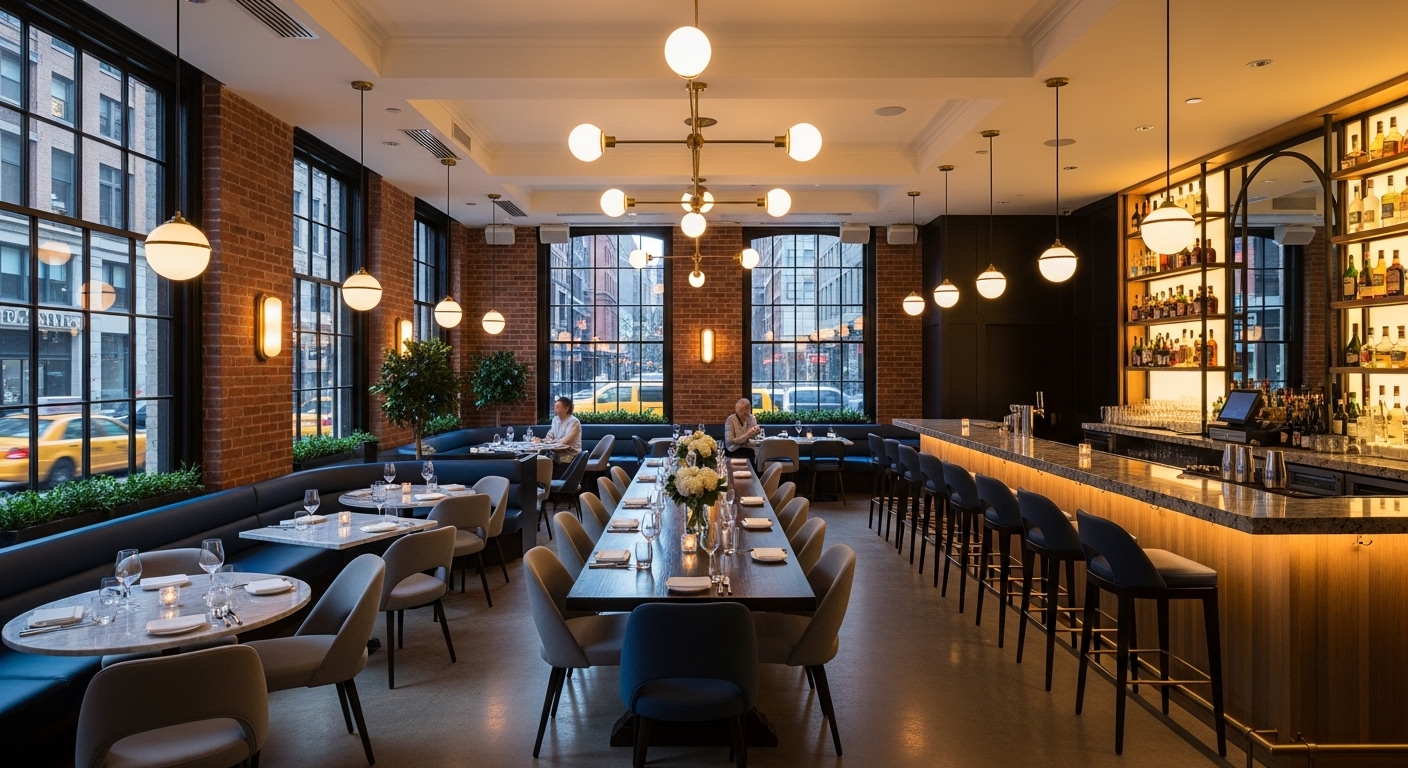
In the world of restaurant design, lighting is the silent artist. It’s an element so powerful it can single-handedly define a space’s character, guide a guest’s emotions, and transform a meal into an experience. Effective restaurant lighting design is far more than just illumination; it’s about creating a mood, sculpting a space, and crafting an ambiance that complements the culinary vision. The right lighting makes food look more appetizing, guests feel more attractive, and a room feel more intimate and inviting.
Many restaurateurs focus intensely on the menu and the decor, only to treat lighting as an afterthought. This is a critical mistake. A sophisticated lighting plan is one of the most crucial investments you can make in your restaurant’s atmosphere and, ultimately, its success. It’s the difference between a room that simply exists and one that truly comes alive.
Lighting is More Than Illumination; It’s About Creating a Mood
The primary function of lighting in a restaurant is not just to allow people to see—it’s to make them feel. The quality, color temperature, and intensity of light have a direct psychological impact on guests.
- Warm vs. Cool Lighting: Warmer light (lower on the Kelvin scale, around 2200K-2700K) with a golden or amber hue mimics candlelight and firelight. It is inherently relaxing, intimate, and flattering, making it ideal for most dining settings. Cooler, bluer light can feel sterile and clinical, and is generally avoided in dining areas.
- Intensity and Dimming: The ability to control the intensity of light is non-negotiable. Bright light encourages faster turnover, suitable for fast-casual spots. Low, dim light encourages guests to linger, relax, and often spend more, making it perfect for fine dining and bars. Dimming capabilities are essential to adjust the mood from a brighter daytime lunch service to a more intimate dinner setting.
The Three Layers of Lighting: Ambient, Task, and Accent
A masterful lighting scheme is never one-dimensional. It is built upon three distinct layers that work together to create depth, interest, and functionality. Relying on a single source, like a grid of ceiling spotlights, results in a flat, uninspired space.
1. Ambient Lighting: The Foundation
Ambient lighting is the general, overall illumination that fills the room. It’s the base layer that sets the fundamental mood and ensures safe navigation. This light should be soft and diffuse, providing a comfortable level of brightness without being harsh.
- Common Sources: Chandeliers, pendants, recessed downlights with wide-angle beams, wall sconces, or cove lighting that washes the ceiling with a gentle glow.
- The Goal: To create a warm and welcoming foundation of light without creating harsh shadows or glare.
2. Task Lighting: The Functional Workhorse
Task lighting is focused, functional light directed at specific areas where activities occur. It ensures that both guests and staff can perform necessary tasks comfortably and safely.
- For Guests: A small, focused beam of light directed at each table (often from a discreet spotlight or a low-hanging pendant) is crucial. It should illuminate the food and menu without shining in guests’ eyes.
- For Staff: The bar, host stand, and point-of-sale stations require clear, direct lighting so staff can work efficiently. In the kitchen, task lighting is a matter of safety and precision.
- The Goal: To provide clarity and function without disrupting the overall ambient mood.
3. Accent Lighting: The Dramatic Flair
Accent lighting is the jewelry of the room. It’s the strategic, directional light used to create drama and draw the eye to specific features. This is the layer that adds visual excitement and sophistication.
- What to Highlight: Artwork, architectural details, textured walls, floral arrangements, or the back bar display of spirits.
- Common Sources: Track lighting, adjustable spotlights, picture lights, or uplighting from the floor.
- The Goal: To create focal points, add depth, and contribute to the story and character of the space.
Lighting Examples for Different Dining Styles
The balance of these three layers will shift dramatically depending on the type of restaurant.
- Bright for Cafes and Fast-Casual: These spaces benefit from higher levels of ambient light to create a fresh, clean, and energetic daytime vibe. Task lighting is still important over tables, but the overall feel is bright and airy.
- Dim for Fine Dining: Here, the focus is on intimacy and drama. Ambient light is kept very low, while task and accent lighting do most of the work. A single, beautifully lit flower on each table can become a focal point in a dimly lit room.
- Vibrant for Bars and Lounges: This is where accent lighting truly shines. Dramatic lighting on the back bar, colorful LED accents, and pools of light over seating areas create a dynamic, moody, and social atmosphere.
Mastering the art of ambiance is a core component of successful Restaurant Interior Design in NYC. At DIG Interior Design, we view lighting as one of the most critical elements in our toolkit, using it to craft moods and create unforgettable experiences. Our comprehensive design services always include a meticulous and customized lighting plan.
Don’t let poor lighting undermine your culinary masterpiece. Encourage restaurateurs to perfect their ambiance with a professional lighting design consultation from DIG and see your space in a whole new light.