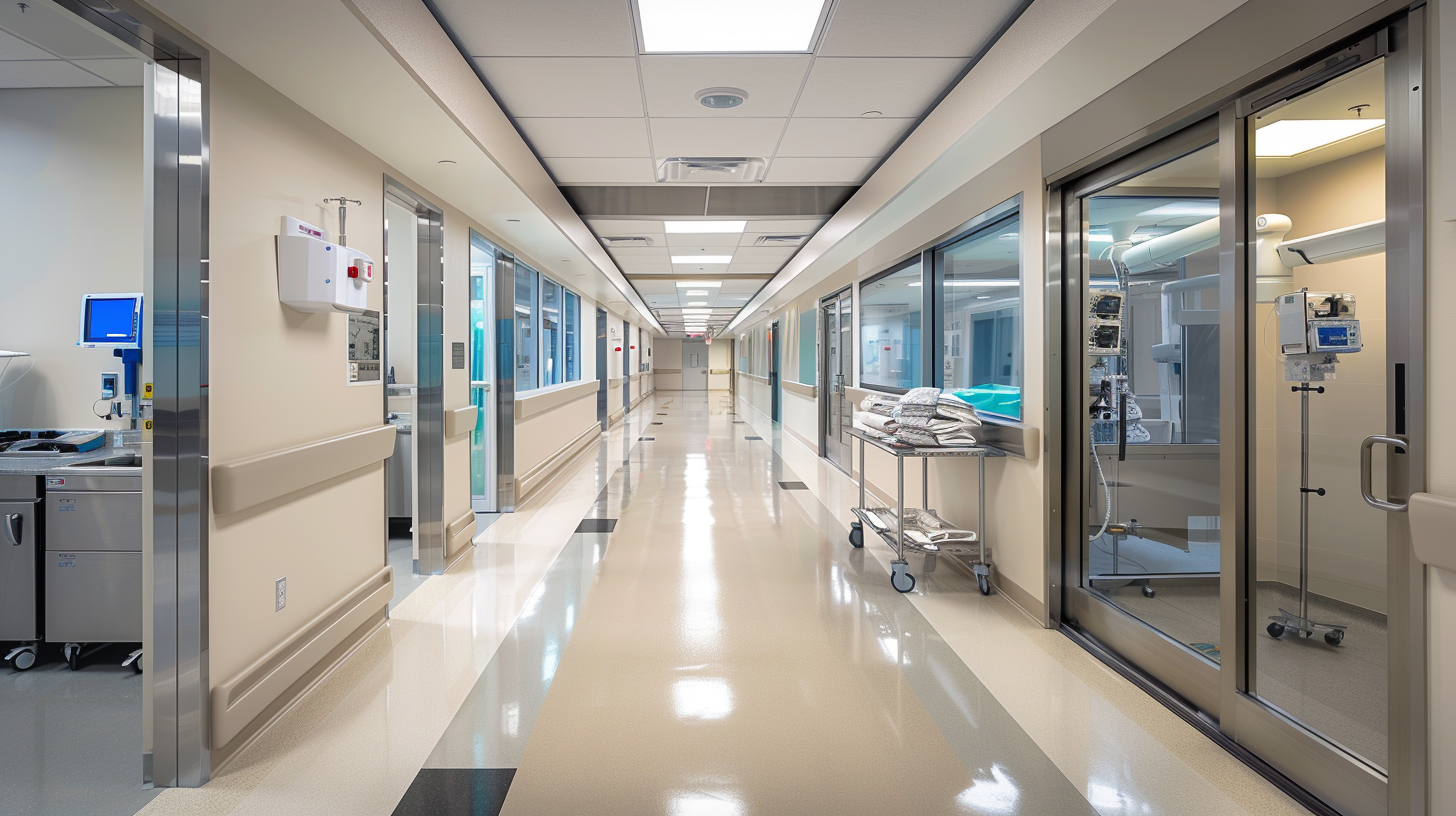
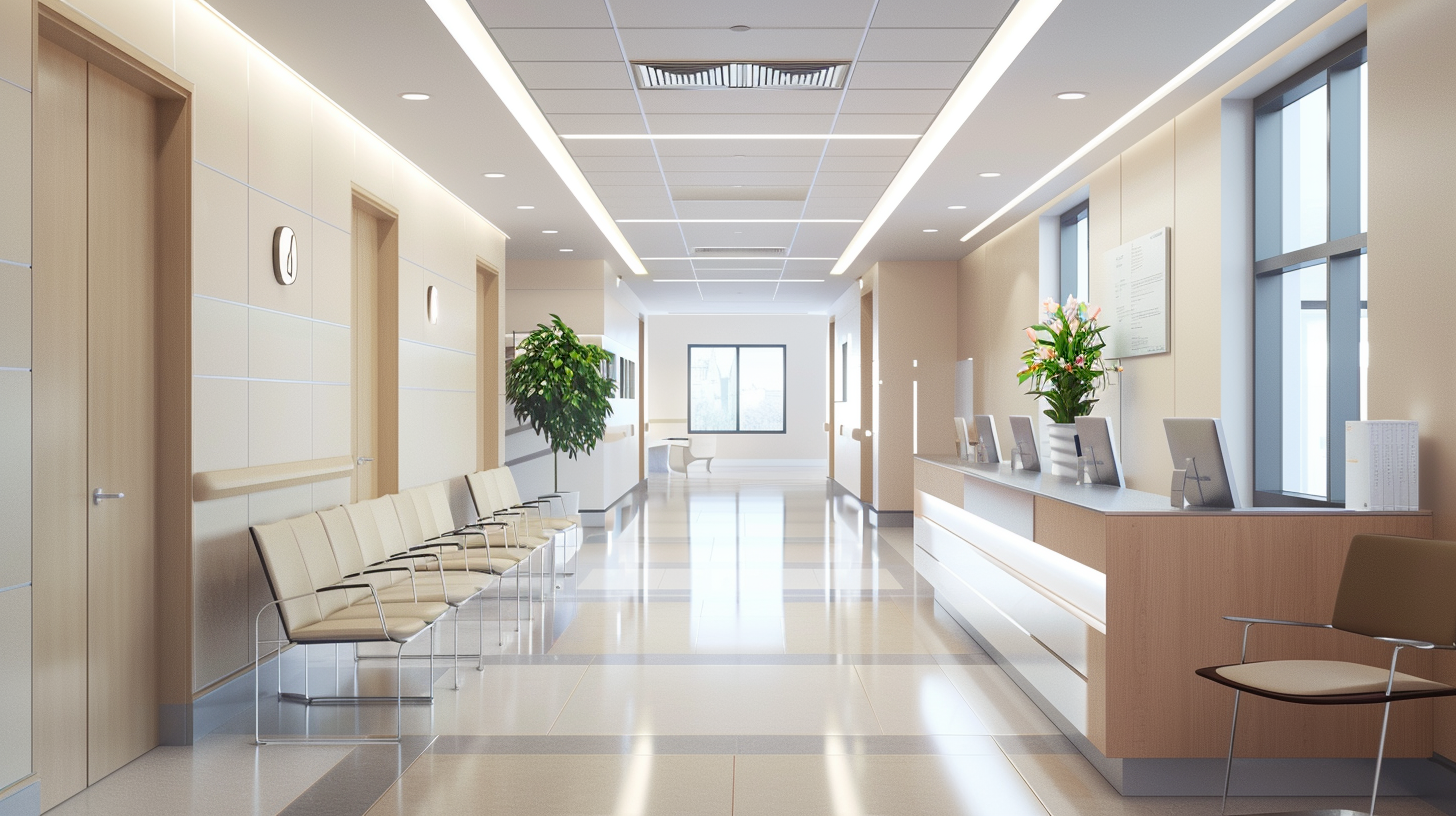
Infection control is no longer a specialized consideration in healthcare design—it’s a baseline expectation. Patients assume a level of cleanliness and safety that wasn’t always visible in the built environment, and regulatory oversight continues to reinforce that standard. At the same time, healthcare providers are under pressure to create environments that feel calm, accessible, and human.
Balancing those priorities is where projects become complex. Infection control introduces strict requirements around materials, layouts, and operations. Patient experience demands the opposite—spaces that feel open, comfortable, and non-institutional. The challenge is not choosing between the two. It’s designing environments where both can coexist without compromise.
Infection Control Starts With Layout, Not Materials
There is a tendency to focus on materials when discussing infection control—antimicrobial surfaces, seamless flooring, cleanable finishes. Those elements matter, but they don’t address the root issue.
Infection control starts with how people move through the space.
Cross-traffic between patients, staff, and materials is one of the most common sources of risk. When circulation paths overlap, or when clean and contaminated flows are not clearly separated, the environment becomes harder to manage regardless of how durable or cleanable the materials are.
We often see layouts where finishes meet every requirement, but circulation creates unnecessary exposure. Patients move through the same paths as waste removal. Staff travel between clean and soiled areas without clear separation. Those conditions are not solved with materials—they’re solved with planning.
Effective layouts reduce overlap, define zones, and make it easier for staff to maintain control without additional effort. When flow is clear, infection control becomes part of how the space operates, not something that has to be constantly enforced.
Material Selection Needs to Perform Under Pressure
Materials in healthcare environments are expected to do more than look clean—they need to withstand constant use, aggressive cleaning protocols, and long-term wear without degrading.
This is where many projects face trade-offs. Highly durable materials can feel cold or institutional. Softer, more residential finishes may support patient comfort but struggle to meet performance requirements.
The solution isn’t choosing one over the other. It’s understanding where each belongs.
High-contact and high-risk areas—corridors, exam rooms, treatment spaces—require materials that can handle frequent cleaning and disinfection without failure. In lower-risk areas, such as waiting rooms or administrative spaces, there is more flexibility to introduce warmth through texture, color, and finish.
Where projects tend to fall short is in overcorrecting. Either everything becomes overly clinical, or materials are selected without fully accounting for how they will perform over time. In both cases, the environment suffers—either in experience or durability.
Material selection should be driven by use, not preference.
Cleaning Protocols Should Be Designed Into the Space
Cleaning is often treated as an operational layer—something that happens after the space is built. In reality, the environment either supports those protocols or makes them more difficult.
Surfaces that are difficult to access, joints that collect debris, and layouts that require staff to work around obstacles all increase cleaning time and reduce effectiveness. Over time, that creates inconsistency.
We see this most clearly in tight spaces or poorly coordinated layouts. Equipment placed too close to walls, insufficient clearance around fixtures, or complex geometries that are difficult to maintain all introduce friction into daily cleaning routines.
Designing for cleaning means thinking about how surfaces will actually be maintained. Clear access, simplified detailing, and durable finishes all contribute to environments that can be consistently cleaned without excessive effort.
If cleaning protocols are not considered during design, they become harder to execute—and that’s where gaps begin to appear.
Airflow and Ventilation Are Part of the Experience
Ventilation systems are often discussed in technical terms—air changes, filtration levels, pressure relationships—but they also influence how a space feels.
Poorly designed systems can create drafts, noise, or temperature inconsistencies that affect comfort. Overly aggressive systems can make environments feel clinical or uncomfortable, even if they meet all technical requirements.
The goal is to integrate these systems in a way that supports both performance and experience. Air quality should be high, but it shouldn’t be noticeable in a way that disrupts the environment.
This requires coordination between engineering and design early in the process. When systems are treated as separate from the overall experience, they often work against it.
Patient Experience Is Shaped by What the Space Feels Like, Not Just How It Performs
Patients may not understand infection control protocols in technical terms, but they are highly aware of how a space feels. Cleanliness is perceived through light, materials, organization, and overall clarity of the environment.
Spaces that are well-lit, uncluttered, and visually calm tend to feel cleaner—even before any direct interaction with surfaces. Conversely, environments that feel crowded or disorganized can create doubt, regardless of how well they are maintained.
This is where design plays a critical role. Clear organization, thoughtful material transitions, and controlled visual environments reinforce a sense of safety without relying on overt clinical cues.
The goal is not to hide infection control—it’s to integrate it in a way that supports confidence rather than anxiety.
Balancing Risk and Experience Requires Early Coordination
Infection control and patient experience are often treated as competing priorities, but that tension usually comes from decisions being made in isolation.
When layout, materials, and systems are coordinated early, both goals can be addressed simultaneously. When they are not, teams are forced into trade-offs later in the process—often sacrificing one for the other.
We see this most often when infection control requirements are introduced after design has progressed. Adjustments become reactive, materials are swapped, layouts are modified, and the overall cohesion of the space begins to break down.
Early alignment between clinical teams, designers, and engineers ensures that infection control is embedded into the design from the beginning, rather than layered in later.
Designing for Performance and Perception
Healthcare environments are evaluated on both performance and perception. Infection control measures need to function at a high level, but they also need to support environments where patients feel comfortable and cared for.
Projects that succeed are the ones that treat these goals as interconnected. Layout supports safe flow. Materials perform under cleaning protocols while contributing to a calm environment. Systems are integrated in a way that enhances, rather than disrupts, the experience.
When these elements are aligned, infection control becomes part of the background—consistently supporting operations without defining the space.
That’s where the balance is achieved: not by minimizing risk or softening the environment, but by designing both to work together from the start.