Modern workplace design is often framed around collaboration. Open plans, shared spaces, and informal meeting areas are introduced to encourage interaction and strengthen culture. At the same time, employees continue to need focused, uninterrupted time to complete individual work.
This tension—between collaboration and concentration—is where many offices struggle. Environments designed entirely around openness tend to create distraction. Environments designed only for focus often feel isolated and underutilized.
The challenge is not choosing one over the other. It’s understanding how both behaviors actually occur throughout the day and designing spaces that support each without conflict.
Most Workplaces Overestimate Collaboration
Collaboration is often treated as the primary function of the office, particularly in post-hybrid environments. The assumption is that employees come in to interact, brainstorm, and work together.
While that’s true to a point, most collaboration is not happening in large conference rooms or formal meeting settings. It happens in short, informal interactions—quick conversations, small group discussions, or impromptu problem-solving.
Where offices fall short is in allocating too much space to formal collaboration and too little to the environments people actually use.
Large meeting rooms sit empty while smaller breakout areas remain occupied throughout the day. Open collaboration zones intended to feel energetic instead create constant background noise.
The issue isn’t collaboration itself. It’s misunderstanding how it functions operationally.
Focus Work Is More Fragile Than Most Teams Realize
Focused work requires conditions that are easy to disrupt and difficult to recover once interrupted. Noise, movement, visual distractions, and frequent interruptions all reduce concentration.
Open workplace layouts amplify these conditions.
We routinely see environments where employees compensate by using headphones, booking meeting rooms for individual work, or avoiding the office altogether when focus is required.
That’s usually a sign the workplace is out of balance.
Focus work doesn’t require silence, but it does require control. Employees need environments where interruptions can be managed and cognitive load reduced.
Without those spaces, productivity declines—even in highly collaborative cultures.
Acoustic Planning Is Often the Real Failure Point
Acoustics are one of the most underestimated drivers of workplace performance. Many offices look visually organized but perform poorly because sound is not controlled effectively.
This is where open layouts tend to break down. Conversations travel further than expected, overlapping activity creates constant ambient noise, and employees struggle to find spaces where they can concentrate.
Acoustic planning is not just about adding sound-absorbing materials. It’s about understanding how sound behaves across different zones and designing accordingly.
Quiet areas need separation from high-energy collaboration spaces. Meeting rooms require both speech privacy and sound containment. Transitional zones should help buffer noise rather than spread it.
When acoustics are addressed early, environments feel calmer and more controlled. When they’re not, the office becomes mentally exhausting to occupy.
Zoning Creates Behavioral Clarity
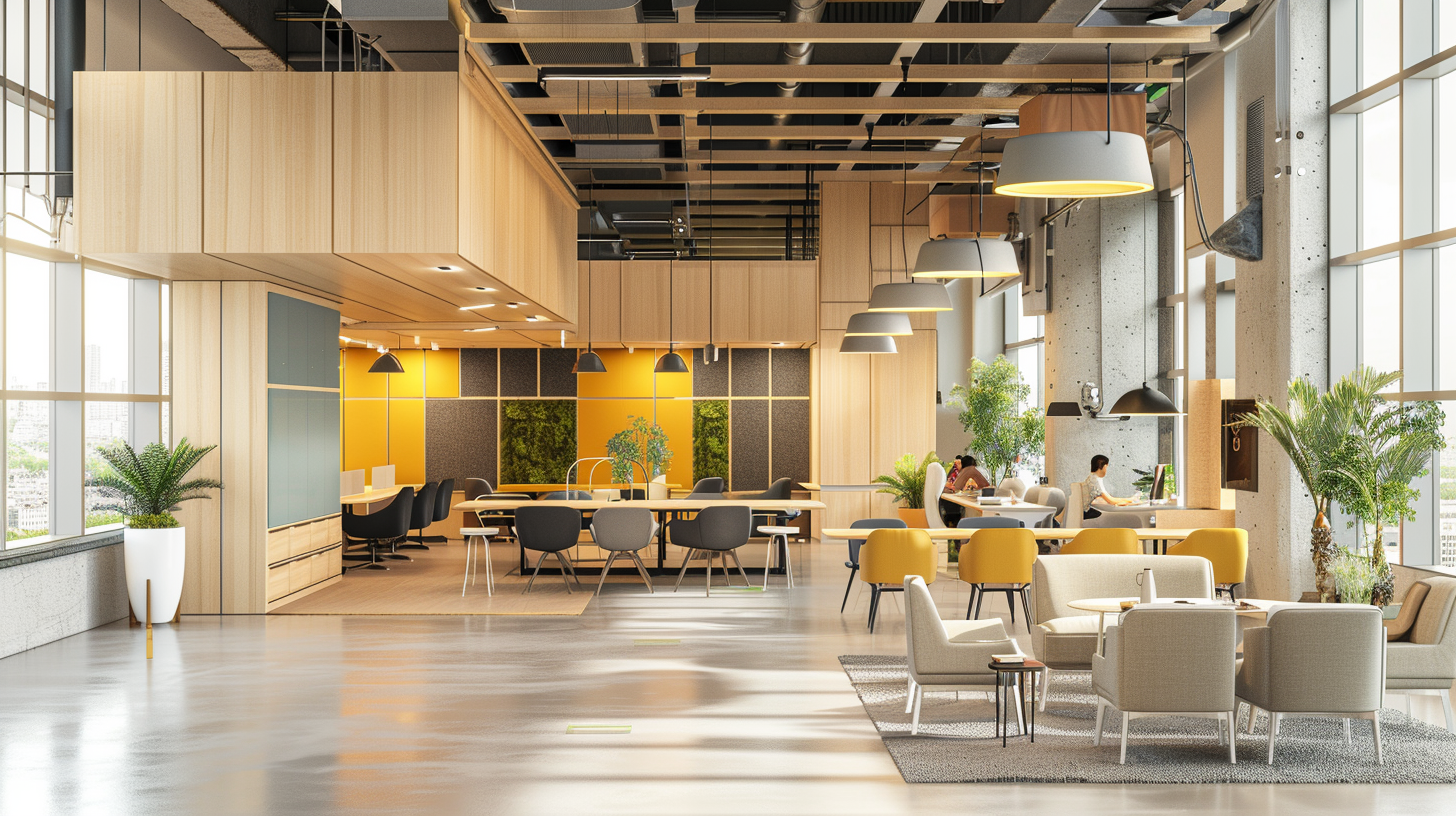
One of the most effective ways to balance focus and collaboration is through zoning. Spaces should communicate how they are intended to be used—not just through signage, but through layout, acoustics, and environmental cues.
Where offices struggle is in creating environments where every area feels interchangeable. Open seating, meeting areas, and social spaces blend together, making it difficult for employees to understand where focused work is actually supported.
Clear zoning reduces this ambiguity.
Collaborative areas should feel active and social. Focus zones should feel quieter and more controlled. Transitional spaces help manage the shift between the two.
When zoning is clear, employees naturally adjust their behavior to the environment around them.
Behavior Patterns Matter More Than Design Trends
Many workplace strategies are driven by trends—open offices, hoteling, agile workspaces, collaboration hubs. The problem is that trends don’t always reflect how people within a specific organization actually work.
This is where projects become disconnected from reality. Spaces are designed around industry narratives instead of observed behavior patterns.
Some teams collaborate constantly. Others spend most of their day in focused individual work. Some departments rely on scheduled meetings, while others operate through informal interaction.
Without understanding these patterns, workplace design becomes generic.
The most effective offices are not the ones following the latest workplace trend. They are the ones aligned with how their users actually operate.
Flexibility Needs Structure
Flexibility is now a standard goal in workplace design. Spaces are expected to support multiple work modes and changing attendance patterns.
Where flexibility fails is when it removes structure entirely.
Environments that try to support every type of work everywhere often end up supporting none of them particularly well. Noise spreads, focus becomes difficult, and employees struggle to find the right environment for the task at hand.
Effective flexibility still requires definition. Different spaces should support different behaviors clearly and intentionally.
Choice works best when users understand what each space is designed to support.
The Balance Is Operational, Not Aesthetic
The relationship between focus and collaboration is often treated as a design style question—open versus enclosed, modern versus traditional. In reality, it’s an operational issue.
The question is not what the office looks like. It’s whether the environment supports how work actually happens throughout the day.
That requires balancing energy and concentration, visibility and privacy, interaction and control.
Offices that get this right tend to feel intuitive. Employees move naturally between different modes of work without friction.
Offices that don’t usually force people to adapt around the environment instead of being supported by it.
Designing Around Real Work Patterns
The future workplace is not entirely collaborative or entirely focused. It is a mix of both, constantly shifting throughout the day.
Designing for that reality requires more than adding meeting rooms or quiet booths. It requires understanding how people behave, where friction occurs, and what conditions different types of work actually require.
When offices are designed around real work patterns, both collaboration and focus improve.
When they’re designed around assumptions, one usually comes at the expense of the other.