By: Commercial Design Strategist | Corporate & Office
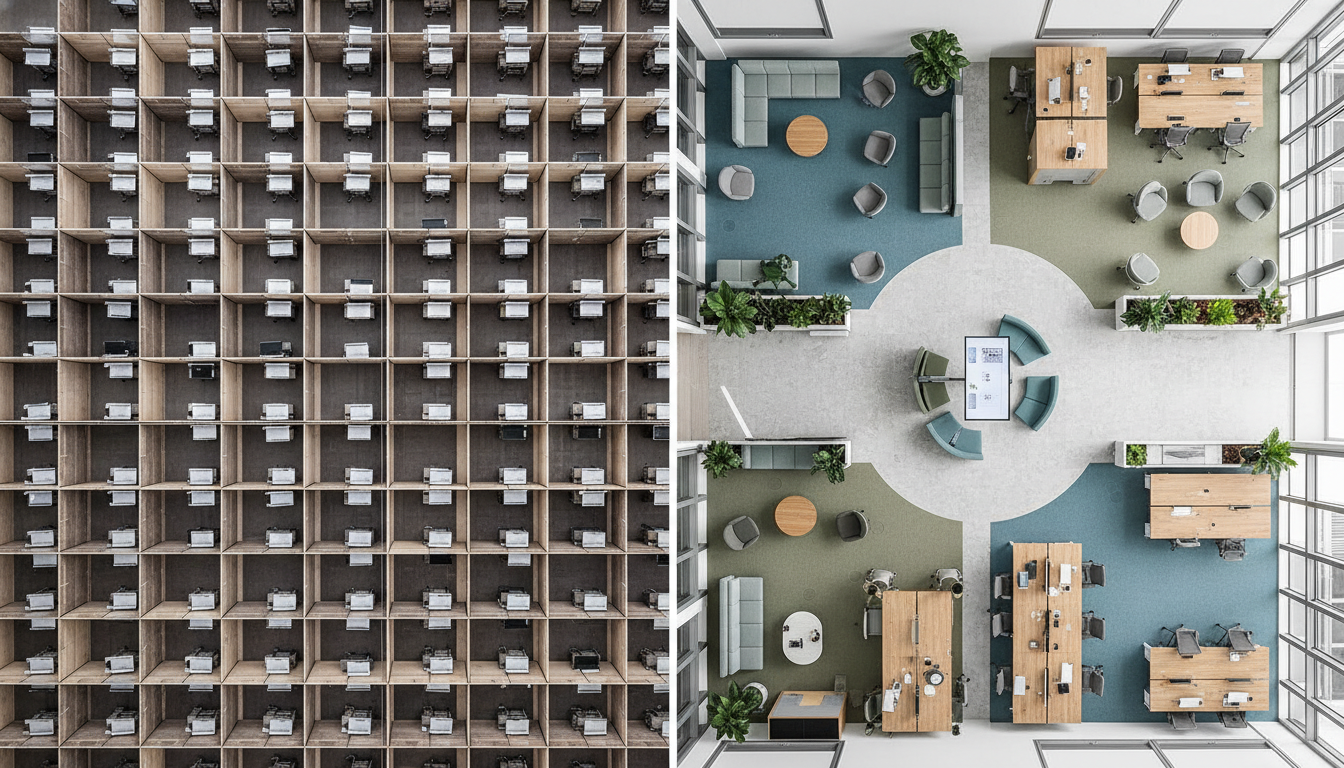
For decades, the Manhattan skyline was defined by the rhythmic glow of fluorescent lights across endless rows of cubicles. The office was a factory for information—a place where presence was synonymous with productivity. However, the post-pandemic era has catalyzed a fundamental shift in the corporate landscape of the NYC/Tri-State area. For the C-Suite executive, the challenge is no longer about maximizing the number of bodies per square foot, but about optimizing the “Return on Environment.”
The traditional office is dead. In its place, the “Hybrid Work Hub” has emerged. This new model recognizes that focus work—the deep, solitary analysis that once occupied 70% of our desks—is now largely performed in home offices in Westchester, Fairfield, or the outer boroughs. The physical office in Midtown or the Financial District has been recast as a destination for high-impact collaboration, cultural reinforcement, and mentorship. Navigating this transition requires more than just removing a few desks; it requires a complete reimagining of hybrid office layout ideas to align with a flexible, technology-dependent workforce.
The New Purpose of the Office
To optimize a modern office footprint, executives must first ask: Why are we here? In the hybrid model, the office serves three primary functions: collaboration, socialization, and brand immersion. Research indicates that companies optimizing for hybrid work often reduce real estate costs by 20% while simultaneously increasing employee satisfaction. This is achieved by pivoting away from the “assigned seat” philosophy.
In the pre-pandemic world, the office was a warehouse for people. In the post-pandemic world, it is a laboratory for ideas. When employees commute into the city, they are looking for the “social capital” that Zoom cannot provide. They are looking for the “water cooler” moments that drive innovation and the face-to-face mentorship that accelerates career growth for junior associates. Consequently, the spatial allocation of the office must shift. We are seeing a move from a 70/30 split (desks vs. meeting space) to a 40/60 split, where the majority of the floor plate is dedicated to communal activities.
Key Takeaways for the Strategic Executive:
- Technology Integration: Prioritize seamless connectivity for hybrid meetings where “proximity bias” is mitigated.
- Footprint Reduction: Transition to desk sharing to reduce fixed real estate overhead.
- Acoustic Excellence: Invest in high-end soundproofing to manage the noise of constant video conferencing.
| Zone | Pre-Pandemic Allocation | Hybrid Model Allocation |
|---|---|---|
| Private Desks | 60% | 30% (Hoteling) |
| Meeting Rooms | 20% | 40% (Varied sizes) |
| Social/Lounge | 10% | 20% |
| Specialized/Utility | 10% | 10% |
From Rows to Neighborhoods
The most significant change in hybrid office layout ideas is the move toward “Neighborhoods.” Instead of a sea of identical workstations, the office is divided into zones tailored to specific activities. A “Quiet Neighborhood” might feature library-style seating and soundproof pods for deep work, while a “Collaboration Neighborhood” features mobile whiteboards, modular furniture, and high-tech huddle spaces.
Central to this concept is the implementation of “Hoteling” or “Hot-desking.” For the NYC executive managing high-cost Class A real estate, assigned seating is a liability. By utilizing reservation systems, firms can accommodate a headcount that is 1.5x to 2x the number of physical desks available. This doesn’t just save money; it creates a dynamic environment where departments intermingle, breaking down the silos that often plague large organizations.
When considering a corporate office in Queens, NY or other regional hubs, the neighborhood approach allows for a “hub-and-spoke” model. The Manhattan headquarters acts as the cultural flagship, while regional offices provide high-quality “touchdown” points for employees who wish to avoid the full commute but still require a professional environment.
Technology Integration
A hybrid office is only as effective as the technology that powers it. The greatest friction point in the modern workday is the “tech-fail”—the five minutes wasted at the start of every meeting trying to connect a laptop to a screen or adjusting a camera. For the Tri-State executive, investing in “Zero-Friction” technology is a non-negotiable.
This includes Internet of Things (IoT) sensors that track occupancy in real-time, allowing facilities managers to adjust HVAC and lighting based on actual usage. It also involves integrated booking software that syncs with Outlook or Google Workspace, enabling an employee to book a desk, a parking spot, and a lunch locker before they even leave their home in New Jersey. The goal is to make the transition from the home office to the corporate office as seamless as possible.
Designing for Video Equity
In a hybrid world, “Video Equity” is a matter of workplace fairness. This concept ensures that remote participants have the same presence and influence in a meeting as those physically in the room. Traditional long, rectangular conference tables are being replaced by “V-shaped” or “D-shaped” tables, where everyone faces the camera. This prevents the “bowling alley” effect, where remote workers feel like they are looking down a long tunnel at their colleagues.
Furthermore, the rise of the “Zoom Room” is a response to the need for acoustic privacy. With 80% of meetings now including at least one remote participant, the open-office plan has become a cacophony of video calls. Specialized, one-person acoustic pods and small-format “huddle rooms” (designed for 2-3 people) are essential. These spaces must be equipped with high-quality studio lighting and directional microphones to ensure that the executive presence is maintained, whether the participant is in the room or on a screen.
The Importance of Acoustic Privacy
Acoustics are often an afterthought in office design, yet they are the primary driver of employee dissatisfaction in open-plan layouts. In a hybrid office, the “soundscape” must be managed through a combination of sound masking technology, acoustic baffles, and strategic zoning. By placing “loud” social hubs far from “quiet” focus zones, you protect the cognitive load of your workforce.
Social Hubs and Culture
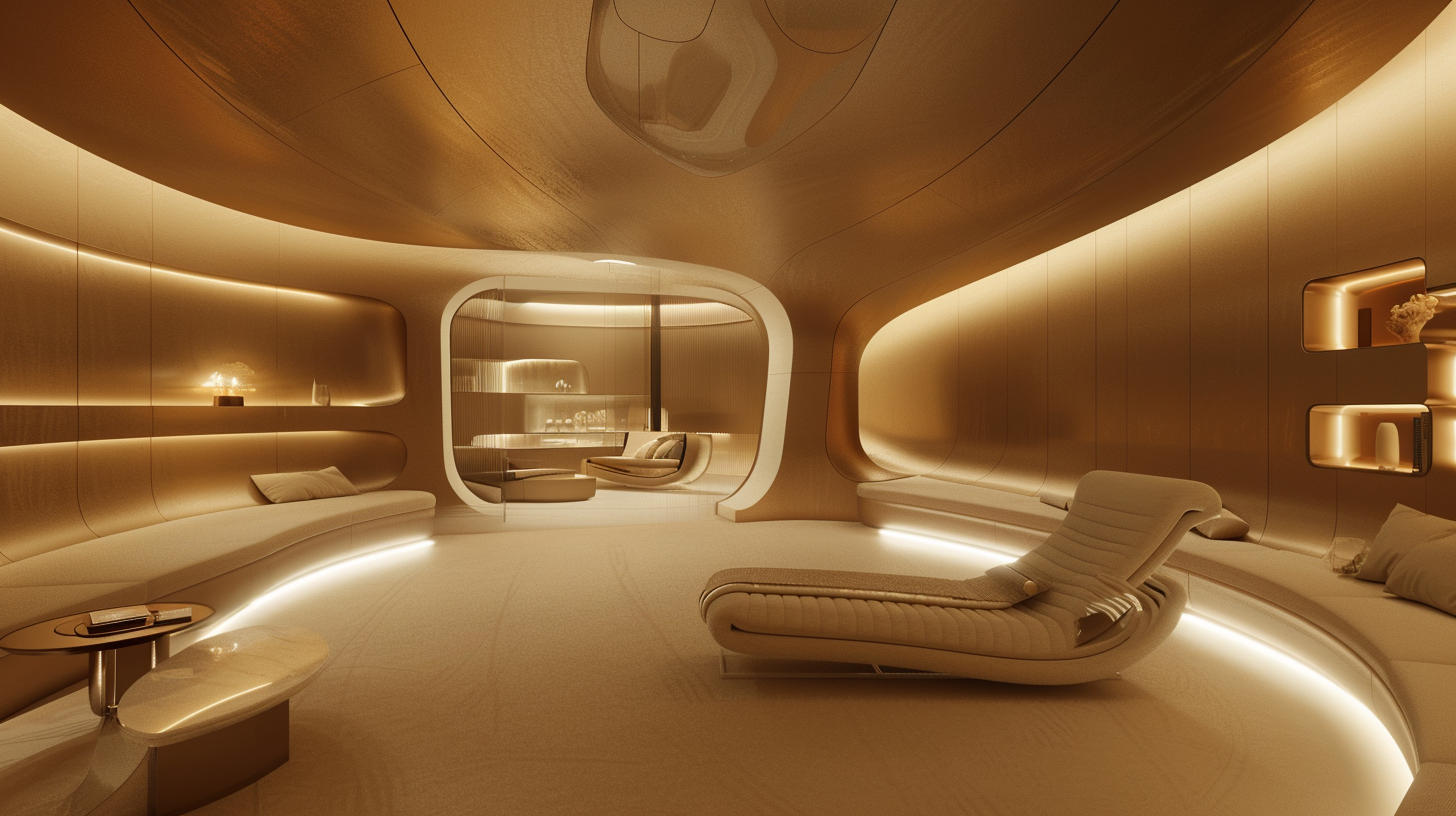
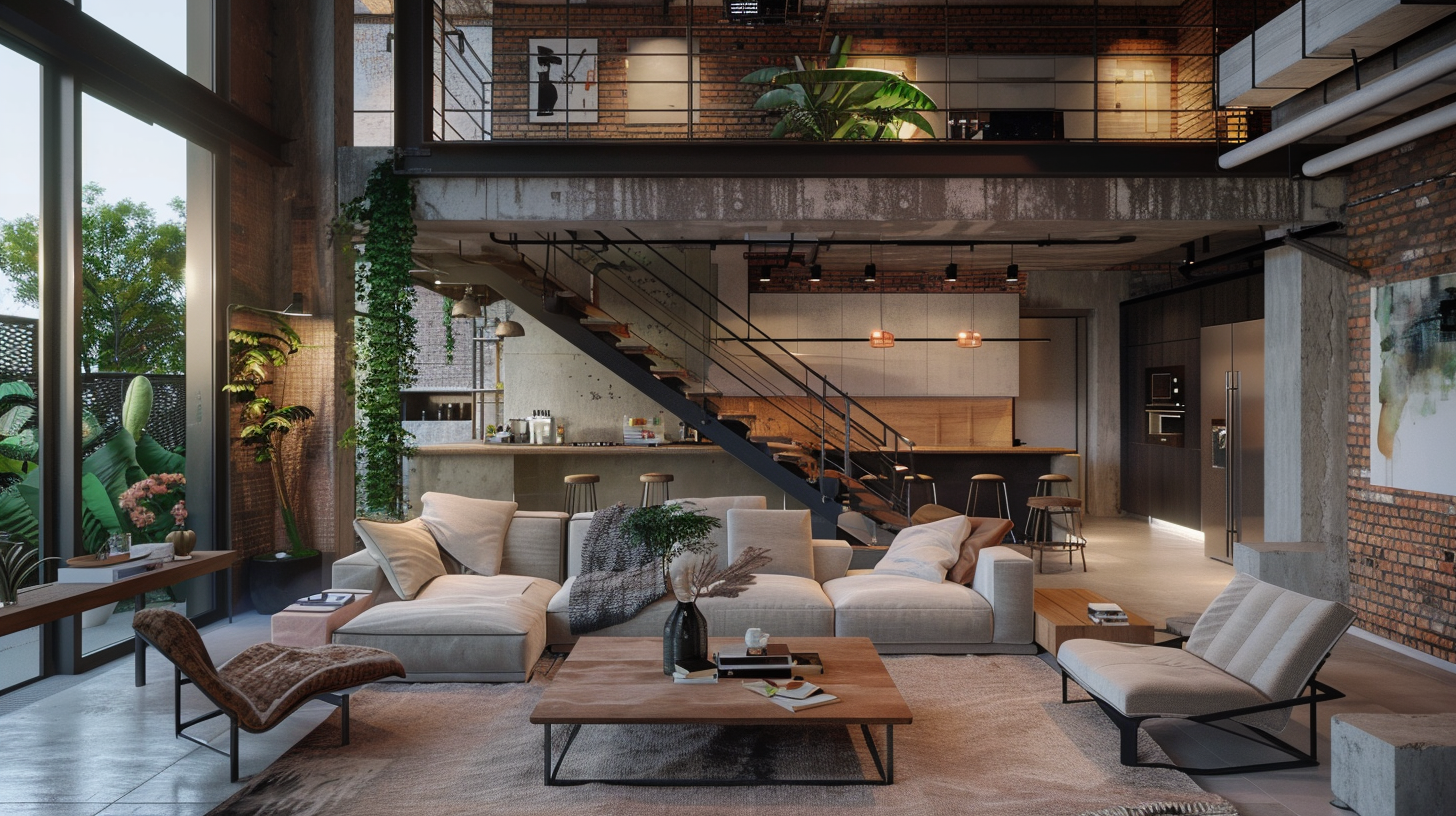
If the office is no longer where we have to be, it must be where we want to be. This is where “Resimercial” design—a blend of residential and commercial aesthetics—comes into play. We are seeing NYC firms invest heavily in lounge-style breakout areas that resemble high-end hotel lobbies rather than sterile breakrooms.
These social hubs are the heartbeat of the hybrid work hub. They are designed to foster the “accidental collisions” that lead to new business strategies. Features like premium coffee bars, communal “town hall” stairs, and outdoor terraces are no longer luxuries; they are strategic tools for talent retention. In the competitive NYC talent market, the quality of the physical workplace is a tangible expression of the brand’s values and its commitment to employee well-being.
By prioritizing these communal spaces, executives can drive “office magnetism.” Instead of mandating attendance, firms are creating environments that naturally draw people back to the city. When an employee feels that the office offers better tools, better coffee, and better social interaction than their home office, the “return to office” becomes a choice rather than a chore.
Conclusion: Optimizing for the Future
The post-pandemic office is a lean, agile, and highly specialized tool. By shifting the focus from individual desks to collaborative neighborhoods, integrating seamless technology, and prioritizing video equity, NYC and Tri-State firms can significantly reduce their real estate overhead while boosting innovation. The key is to view the office footprint not as a fixed cost, but as a flexible asset that can be optimized to meet the evolving needs of a hybrid workforce.
Frequently Asked Questions
Q: What is hoteling in an office?
A: Hoteling is a reservation-based system where employees book a specific desk or workspace for the day via an app or software, rather than having a permanently assigned seat. This allows for greater flexibility and more efficient use of square footage.
Q: How does a hybrid office layout save money?
A: By moving to a desk-sharing model, companies can often reduce their total square footage by 20-30%, leading to significant savings on rent, utilities, and maintenance in high-cost markets like New York City.
Q: What are the best hybrid office layout ideas for small teams?
A: Small teams should focus on “multi-purpose” zones. For example, a breakroom that can double as a presentation space, or workstations that are on wheels to allow for quick reconfiguration based on the project at hand.
Optimize Your Footprint
Is your NYC office space working as hard as you are? Our team of commercial design strategists specializes in optimizing real estate for the modern hybrid era. From Queens to Manhattan, we help C-Suite executives transform their workplace into a high-performance collaboration hub.
DIG specializes in transforming NYC and Tri-State commercial offices for the hybrid era. See our full approach on the Commercial Office Interior Design NYC page, or explore our workplace design services to optimize your office footprint for today’s workforce.