Healthcare facility interior design is one of the most complex and critical disciplines in the world of commercial interiors. It transcends mere aesthetics, playing a vital role in patient outcomes, staff efficiency, and the overall healing process. A well-designed healthcare environment can reduce patient anxiety, minimize the spread of infection, improve staff morale, and even decrease the need for pain medication. It is a field where design is not just about creating a beautiful space, but about fostering health, safety, and well-being for every person who walks through the doors.
From a bustling urban hospital to a quiet suburban clinic, thoughtful healthcare facility design is the backbone of patient-centered care. This guide will delve into the key considerations and specific area requirements that define excellence in modern healthcare interiors.
The Critical Role of Design in Healthcare
The design of a healthcare facility directly impacts its core mission. Evidence-based design (EBD) is a field of study that uses credible research to inform design decisions, linking the physical environment to patient and staff outcomes. The research is clear: the environment of care matters.
- For Patients: A calming, intuitive, and safe environment can lower stress, promote faster recovery, and improve the overall patient experience.
- For Staff: An efficient, ergonomic, and supportive workspace reduces physical and mental fatigue, minimizes errors, and enhances job satisfaction and retention.
- For Families: Comfortable and welcoming spaces for visitors can reduce their anxiety and allow them to better support their loved ones.
Key Design Considerations for Healthcare Facilities
Designing for healthcare requires a unique blend of empathy, technical knowledge, and creativity. The following considerations are paramount in any project.
1. Durability and Maintenance
Healthcare facilities experience immense wear and tear and are subject to rigorous cleaning protocols.
- Material Selection: Surfaces—including flooring, walls, and furniture—must be non-porous, seamless, and able to withstand harsh chemical cleaners and disinfectants without degrading. Materials like solid surfaces, luxury vinyl tile (LVT), and specially treated textiles are common.
- Longevity: Finishes and furniture must be incredibly durable to handle high traffic, medical equipment, and constant use, ensuring a long life cycle and a good return on investment.
2. Hygiene and Infection Control
Preventing healthcare-associated infections (HAIs) is a top priority.
- Cleanability: Every surface must be easily and effectively cleanable. This means minimizing seams, cracks, and crevices where pathogens can hide.
- Antimicrobial Properties: While not a substitute for cleaning, selecting materials with inherent antimicrobial properties can provide an additional layer of protection.
- Layout for Separation: Design should support protocols for separating clean and soiled materials and provide adequate space for handwashing stations.
3. Accessibility and ADA Compliance
Healthcare spaces must be fully accessible to people of all ages and abilities.
- ADA and Beyond: While ADA (Americans with Disabilities Act) compliance is the legal minimum, excellent design goes further, incorporating principles of universal design to create spaces that are comfortable and usable for everyone, including patients with mobility aids, vision or hearing impairments, and temporary injuries.
- Clear Wayfinding: Intuitive navigation is crucial in often large and complex facilities. This is achieved through logical layouts, clear signage, color-coding, and landmark features to help patients and visitors find their way with minimal stress.
4. Creating a Calming, Non-Institutional Atmosphere
Moving away from the sterile, cold clinical environments of the past is a key trend in modern healthcare design.
- Biophilic Design: Incorporating natural light, views of nature, plants, and natural materials like wood and stone has been proven to reduce stress and improve patient outcomes.
- Soothing Color Palettes: Using colors found in nature, such as blues, greens, and earthy tones, can create a serene and healing atmosphere.
- Residential Feel: Using comfortable, home-like furniture, soft lighting, and artwork can help to humanize the space and make it feel less intimidating.
Designing for Specific Areas
Different areas within a healthcare facility have unique functional and emotional needs.
Waiting Rooms
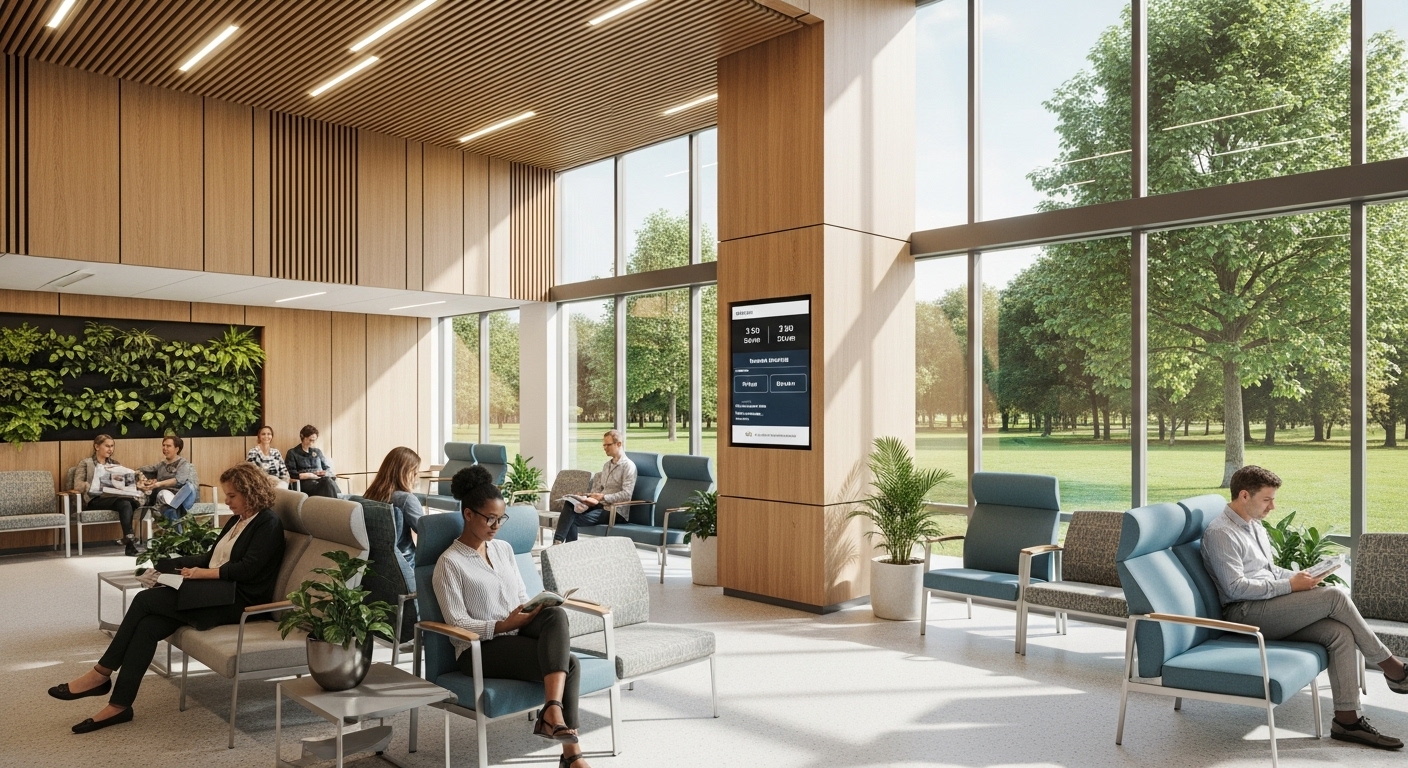
As the first point of contact, the waiting room sets the tone. The goal is to reduce anxiety. This involves providing a variety of seating options to accommodate families and individuals, offering positive distractions like art or nature views, and ensuring a degree of privacy.
Examination Rooms
These rooms must balance clinical functionality with patient comfort. Design should optimize the layout for efficient use by clinicians, provide ample space for family members, and use calming colors and materials. Allowing the patient to have some control over their environment, such as lighting, can also help reduce feelings of helplessness.
Staff Stations
Often the chaotic hub of a unit, nurse and staff stations must be designed for maximum efficiency and collaboration while also mitigating noise and protecting staff from burnout. This includes ergonomic workstations, good lighting, clear sightlines to patient areas, and dedicated break areas for respite.
DIG’s Expertise in Healthcare Design
At DIG Interior Design, we understand the profound responsibility that comes with designing healthcare spaces. Our approach is rooted in evidence-based principles and a deep commitment to creating environments that heal. We have a proven track record of developing facilities that are safe, efficient, and profoundly human-centered. Our experience with diverse projects, such as the specialized ABA Clinic in Charlotte and the community-focused Bronx Wellness Center, demonstrates our ability to tailor design solutions to the unique needs of each patient population and clinical specialty. We believe that thoughtful design is a form of care. You can learn more about our firm’s dedication to impactful design and explore our full range of services.
Key Standards & Organizations in Healthcare Facility Design
Healthcare interior design in the United States is governed by several authoritative bodies whose standards must be integrated from the earliest programming phase:
- FGI (Facility Guidelines Institute) — publishes the Guidelines for Design and Construction of Health Care Facilities, the primary reference standard adopted by most U.S. states for hospital and outpatient facility design.
- The Joint Commission (TJC) — accredits hospitals and requires Environment of Care (EC) compliance, directly influencing spatial design, acoustic standards, and safety protocols.
- CMS (Centers for Medicare & Medicaid Services) — Conditions of Participation require physical plant compliance for Medicare/Medicaid-certified facilities.
- ADA (Americans with Disabilities Act) — mandates accessible routes, clearances, reach ranges, and signage standards throughout all healthcare spaces.
- NFPA 101 (Life Safety Code) — governs fire protection, egress, and occupancy requirements for healthcare occupancies.
- CEFPI / Learning Environments Network (LeNS) — referenced for educational healthcare spaces including medical schools and simulation labs.
- Center for Health Design — the leading research organization publishing evidence-based design guidelines for healthcare environments; administers the EDAC certification.
DIG Interior Design applies all applicable standards as a baseline — compliance is the floor, not the ceiling.
The clinical research supporting healthcare design as a patient outcome driver is substantial. The Center for Health Design’s Pebble Project has documented measurable improvements in patient safety and satisfaction across hundreds of participating healthcare facilities. A landmark study published in Health Environments Research & Design Journal found that single-patient rooms reduced hospital-acquired infection rates by up to 45% compared to multi-bed wards. WHO guidelines on noise in hospitals set maximum nighttime ambient noise at 30 dB(A) — a standard most existing facilities fail to meet without deliberate acoustic design intervention.
Frequently Asked Questions: Healthcare Facility Interior Design
What makes healthcare interior design different from commercial design?
Healthcare interior design must satisfy regulatory requirements (FGI Guidelines, NFPA 101, ADA), infection prevention standards, and patient safety protocols that don’t apply to standard commercial spaces. Every material selection, layout decision, and lighting choice must be validated against clinical evidence and code compliance — not just aesthetics or budget.
How does interior design affect patient outcomes?
Research consistently shows that well-designed healthcare environments reduce patient anxiety, lower the need for pain medication, shorten recovery times, and decrease hospital-acquired infection rates. Elements like natural light, acoustic control, wayfinding clarity, and single-patient rooms all have measurable clinical impacts documented in peer-reviewed studies.
What are the most important design considerations for a medical waiting room?
The top priorities for a medical waiting room are: acoustic privacy to protect HIPAA-sensitive conversations, seating that accommodates mobility aids, natural light or biophilic elements to reduce anxiety, clearly visible wayfinding signage, and antimicrobial surface materials. Zones for children and adults should be separated when patient mix allows.
What materials are required in healthcare interior design?
Healthcare environments require materials that are non-porous, antimicrobial, and compatible with hospital-grade disinfectants. Common specifications include luxury vinyl tile (LVT) or polished concrete flooring, seamless wall coverings or antimicrobial paint, solid-surface countertops, and stainless steel or powder-coated metal fixtures. All materials should meet ASTM and GREENGUARD standards.
How long does a healthcare facility interior design project take?
A typical healthcare interior design project — from programming through construction administration — takes 12 to 36 months depending on scope. A single-specialty outpatient clinic might complete in 12–18 months; a multi-floor hospital renovation can take 3+ years. Early engagement of an experienced healthcare design team significantly reduces schedule risk and change orders.
Do healthcare interior designers handle code compliance?
Yes. Qualified healthcare interior designers coordinate compliance with FGI Guidelines for Design and Construction, ADA Standards for Accessible Design, local building codes, CMS Conditions of Participation, and Joint Commission Environment of Care standards. At DIG, our team manages code compliance throughout design and coordinates with licensed engineers during permitting and construction administration.
What is evidence-based design in healthcare?
Evidence-based design (EBD) in healthcare uses peer-reviewed clinical research to inform design decisions. Rather than choosing finishes based on aesthetics alone, EBD practitioners select layouts, materials, and lighting based on documented impacts on patient safety, staff performance, and clinical outcomes. It is the gold standard for modern healthcare facility design.
How much does healthcare facility interior design cost?
Healthcare interior design fees typically range from 8% to 15% of total construction cost, depending on project complexity, regulatory requirements, and the scope of FF&E procurement services included. For a 10,000 sq ft outpatient clinic, expect design fees of $150,000–$400,000. Integrated design-build firms like DIG can reduce overall project cost by eliminating coordination gaps between design and implementation.
For a partner who understands the intricate balance of clinical excellence and compassionate design, look no further. Contact DIG Interior Design to discuss your next healthcare facility project and position your organization as a leader in patient-centered care.