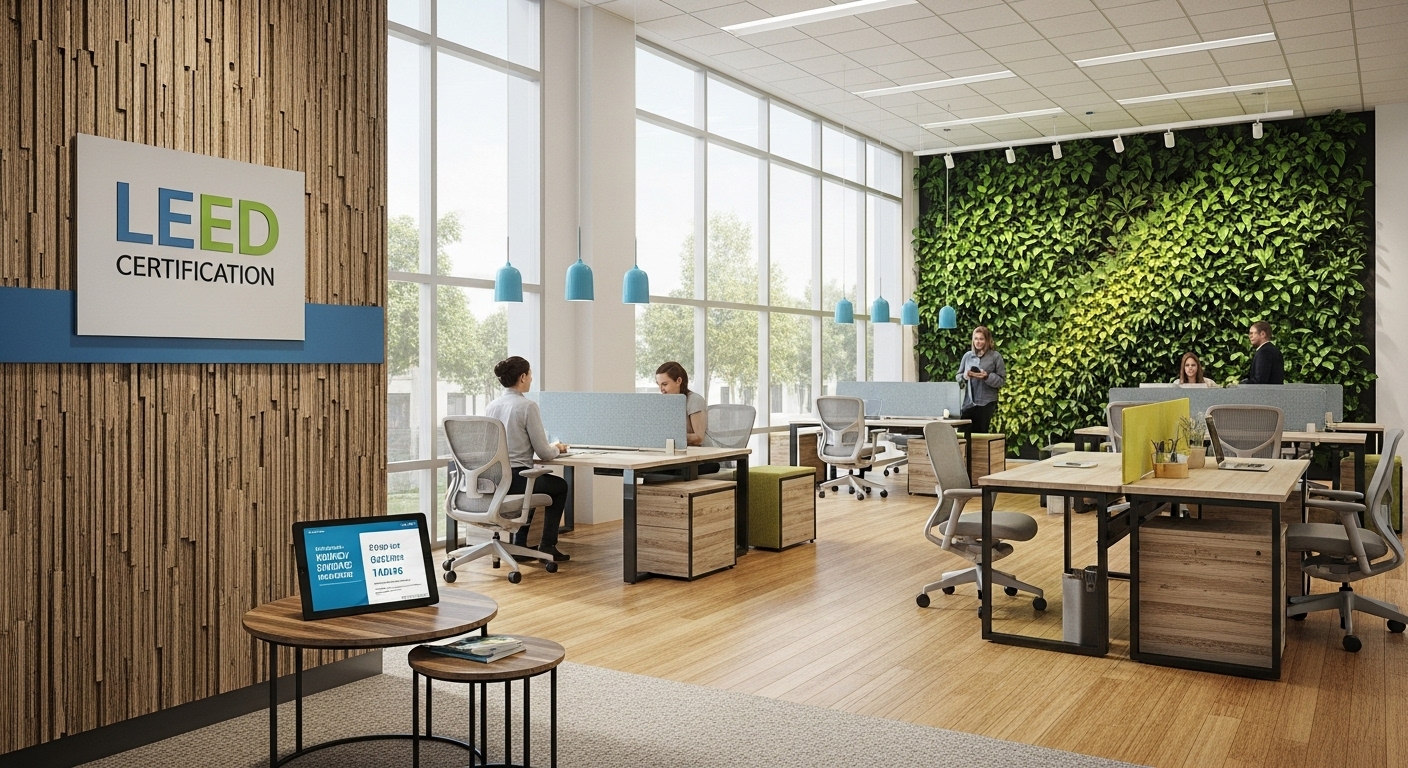
In the world of sustainable design, LEED is the gold standard. For businesses looking to make a credible and verifiable commitment to environmental responsibility, achieving LEED interior design certification is the most recognized way to demonstrate leadership. Developed by the U.S. Green Building Council (USGBC), LEED (Leadership in Energy and Environmental Design) is a globally recognized symbol of sustainability achievement and a comprehensive framework for creating healthy, highly efficient, and cost-saving green buildings.
While the prospect of certification can seem daunting, it is a worthwhile endeavor that provides a clear roadmap for sustainable practices. This guide will demystify the LEED certification process for commercial interiors, explaining its benefits and outlining the key areas where design choices can earn points toward achieving this prestigious credential.
What is LEED and Why Pursue It?
LEED is the world’s most widely used green building rating system. It provides a third-party verification that a building or space was designed and built using strategies aimed at improving performance across all the metrics that matter most: energy savings, water efficiency, CO2 emissions reduction, improved indoor environmental quality, and stewardship of resources.
The specific rating system for commercial interiors is called LEED ID+C (Interior Design and Construction). This system is tailored to tenants or owners who do not occupy the entire building but want to certify their specific interior space.
The Benefits of LEED Certification
Pursuing LEED certification is a strategic business decision that offers tangible returns beyond just the environmental goodwill.
- Credibility and Recognition: LEED is a powerful and respected brand. Certification is a clear, third-party validated statement of your company’s commitment to sustainability, enhancing your corporate image and brand reputation.
- Potential Tax Incentives and Rebates: Many municipalities and states, including New York, offer financial incentives such as tax credits, grants, or expedited permitting for LEED-certified projects.
- Market Differentiation: In a competitive market, a LEED-certified space can be a key differentiator, helping to attract and retain top talent and appeal to environmentally conscious clients and customers.
- Lower Operating Costs: LEED-certified spaces are designed to be more energy- and water-efficient, which translates directly into lower monthly utility bills and a stronger bottom line.
- Improved Employee Wellness: The LEED framework places a strong emphasis on indoor environmental quality, including air quality, lighting, and acoustics, leading to a healthier, more comfortable, and more productive workforce.
Demystifying the LEED Credit Categories
LEED certification is based on a point system. Projects earn points by adhering to various prerequisites and credits across several key categories. The total number of points earned determines the level of certification achieved: Certified, Silver, Gold, or Platinum.
Here’s how design choices impact the main credit categories for Interior Design and Construction (ID+C):
Location and Transportation (LT)
This category encourages locating tenant spaces in dense, well-connected areas that reduce reliance on private automobiles. While you may not control the building’s location, you can earn points by selecting a site with access to public transportation, providing bicycle storage and shower facilities for commuters, and choosing a location that reduces the need for new parking infrastructure.
Water Efficiency (WE)
This category focuses on reducing water consumption. Design choices here include installing low-flow toilets, urinals, and faucets that have the EPA WaterSense label, and selecting water-efficient appliances like dishwashers and ice makers.
Energy and Atmosphere (EA)
This is a heavily weighted category focused on reducing energy consumption. Key design strategies include optimizing the energy performance of the lighting systems, specifying Energy Star-rated equipment and appliances, and installing submeters to track and manage energy usage.
Materials and Resources (MR)
This category encourages the use of sustainable materials and the reduction of waste. Points are earned by:
- Diverting construction and demolition waste from landfills.
- Using materials with recycled content, those sourced regionally, and those with transparent disclosures about their life-cycle impacts (Environmental Product Declarations) and material ingredients (Health Product Declarations).
- Specifying wood that is FSC-certified.
- Designing a dedicated space for the collection and storage of recyclables for building occupants.
Indoor Environmental Quality (EQ)
This critical category focuses on the health and well-being of the occupants. Design decisions that earn points include:
- Specifying low-emitting (low-VOC) materials for paints, flooring, adhesives, and furniture.
- Implementing a green cleaning policy.
- Maximizing daylight and providing occupants with quality views of the outdoors.
- Giving individuals control over lighting and thermal comfort.
- Designing for good acoustic performance to reduce distractions.
Navigating these categories requires expertise and meticulous documentation. At DIG Interior Design, we have the knowledge to guide clients through this complex process. Our deep understanding of sustainable design principles, as outlined in our Sustainable Interior Design – Eco-Friendly Commercial Spaces in NYC guide, forms the foundation of our LEED consulting services.
Ready to elevate your project and make a bold statement about your commitment to sustainability? Contact DIG Interior Design today. We can offer expert guidance through the complexities of achieving LEED certification for your commercial interior.