
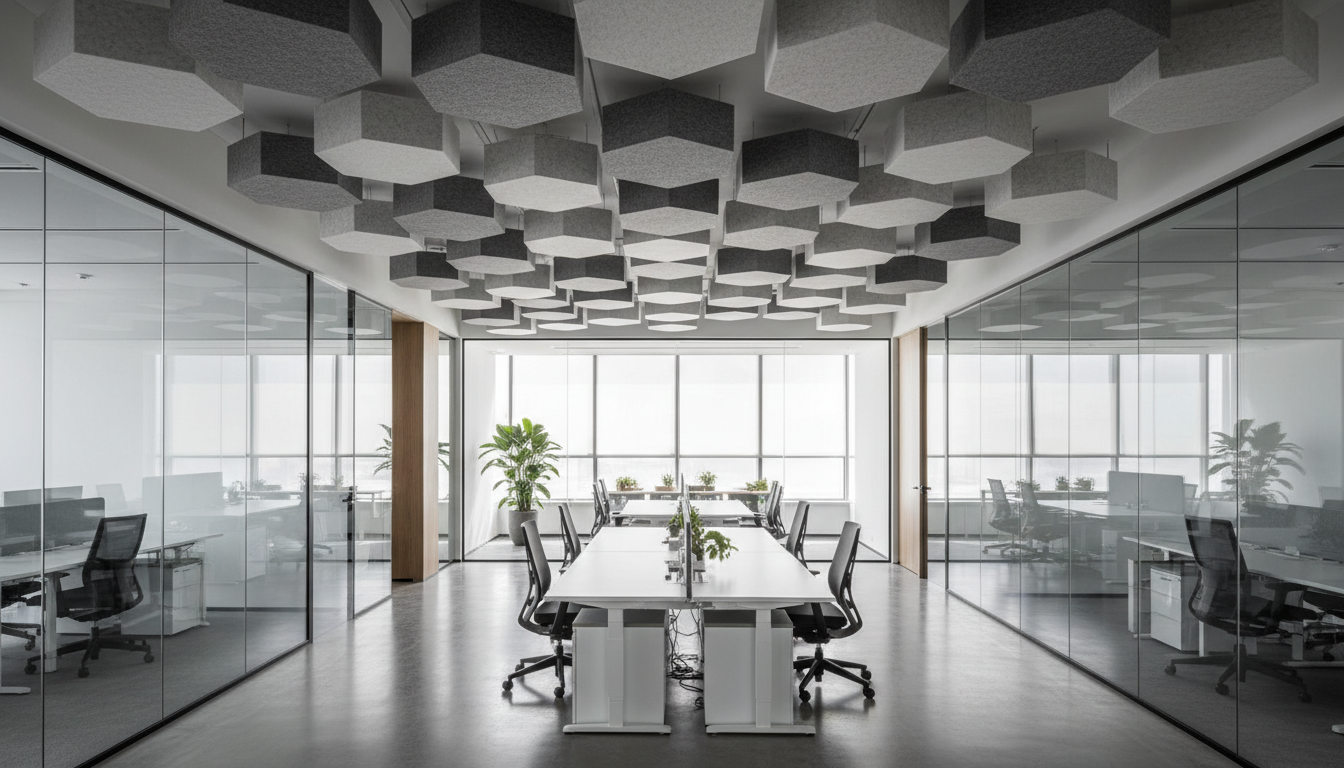
Noise is consistently the top complaint from employees in open plan offices. Specifically, the intelligibility of nearby conversations. The human brain is hardwired to attend to speech, which means a nearby conversation is physiologically difficult to ignore even at moderate sound levels. Acoustic design for open plan offices addresses this at multiple levels.
Why standard acoustic treatment is not enough
Acoustic ceiling tile reduces reverberation — the persistence of sound after the source stops. Reverberation is one component of acoustic comfort, but it is not the primary driver of speech intelligibility problems in open plan spaces. The primary driver is direct sound path: conversations that travel directly from speaker to listener without enough absorption or distance. Reducing reverberation without addressing direct sound paths produces a quieter but still distracting environment.
Space planning as an acoustic tool
The most effective first-order acoustic intervention is spatial. Workstations positioned further from high-activity zones — collaboration areas, circulation paths, coffee stations — experience fewer speech intelligibility problems. Space planning decisions made before construction are cheaper and more effective than acoustic remediation added afterward.
Sound masking and enclosed focus spaces
Sound masking introduces a broadband background sound tuned to the frequency spectrum of human speech, making conversations less intelligible to people who are not part of them. Properly tuned systems reduce speech intelligibility meaningfully across an open plan. Equally important: enclosed focus spaces — phone booths and small conference rooms — give employees an alternative for concentrated work and private calls. People tolerate open plan noise better when they have a visible escape valve.
DIG Interior Design Solutions designs acoustically-considered workplaces in New York and New Jersey. Contact us to discuss acoustic design for your project.