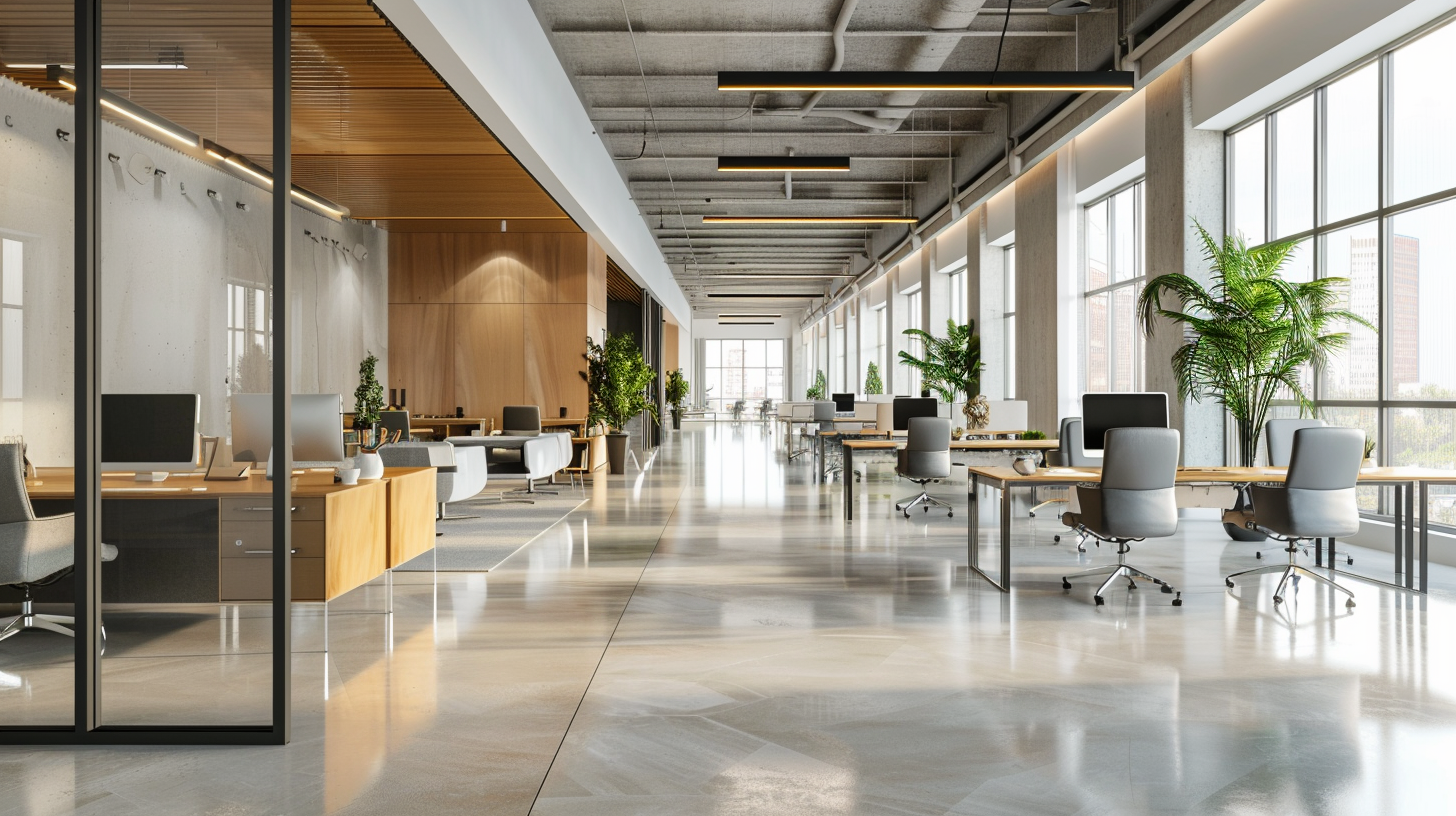
Workplace layouts are often evaluated based on appearance, density, or immediate space efficiency. What’s less visible is the long-term operational impact those decisions have once the office is occupied.
Poor layouts rarely fail dramatically. More often, they create a steady level of friction that compounds over time—slower workflows, increased interruptions, employee frustration, and underutilized space.
These issues are easy to normalize because they develop gradually. But operationally, they carry real cost.
The difference between an efficient office and an inefficient one is rarely aesthetic. It’s how effectively the environment supports the way people actually work.
Inefficiency Compounds Quietly
Most layout issues do not appear significant in isolation.
A support space located slightly too far from work areas. Circulation paths that force unnecessary movement. Teams positioned in ways that interrupt concentration or slow communication.
Individually, these decisions seem manageable.
Over time, they compound.
Employees spend more time navigating the environment, adjusting around interruptions, or compensating for layouts that don’t align with workflow. The result is operational drag that affects productivity day after day.
This is where many organizations underestimate the true impact of layout planning. Small inefficiencies repeated consistently become large operational costs.
Workflows Break Down Before Layouts Do
Most offices remain technically functional even when layouts are poorly planned. The problem is that workflows begin to deteriorate long before the space itself appears inadequate.
We frequently see environments where:
– Teams that collaborate constantly are physically separated
– Focus-heavy roles are placed in high-traffic zones
– Shared resources create bottlenecks throughout the day
The office still operates, but with constant friction built into daily activity.
This is where performance starts to decline. Not because employees are incapable of adapting—but because the environment continuously works against efficient behavior.
Employee Churn Is Influenced by the Environment
Workplace design is rarely the sole reason employees leave an organization, but it does influence how people experience their workday.
Environments that feel chaotic, distracting, or exhausting contribute to dissatisfaction over time. Poor acoustics, lack of privacy, overcrowding, and inadequate support spaces all affect how sustainable the workplace feels.
This becomes especially important in competitive labor markets where employees have more flexibility in where and how they work.
Organizations often focus on amenities to improve retention while overlooking the more foundational issue: whether the workplace itself creates unnecessary stress.
Layout decisions shape that experience more directly than most teams realize.
Open Offices Often Shift Costs Instead of Removing Them
Open workplace strategies are frequently introduced to improve collaboration and maximize space efficiency. In some cases, they achieve both.
In many others, they simply shift operational costs elsewhere.
Noise increases. Interruptions become more frequent. Employees search for alternative spaces to focus or take calls. Meeting rooms become occupied by individual work instead of collaboration.
The office may use space more efficiently on paper, while operating less efficiently in practice.
The issue is not openness itself—it’s imbalance. Open environments without acoustic planning, zoning, or focus spaces force employees to create their own workarounds.
That workaround behavior is often a signal the layout is underperforming.
Operational Drag Is Difficult to Measure—but Easy to Feel
One of the challenges with workplace inefficiency is that it rarely appears as a single measurable problem.
Instead, it shows up as accumulated friction:
– Slower decision-making
– Reduced concentration
– Increased movement
– Constant low-level interruption
– Underutilized spaces
Because these issues are distributed across the workday, organizations often normalize them rather than identifying them as design problems.
Employees feel the impact long before leadership measures it.
Space Utilization Often Reflects Layout Problems
Underutilized spaces are not always a sign of excess square footage. Frequently, they indicate that certain environments are not supporting behavior effectively.
We often see:
– Large conference rooms that remain empty
– Amenity spaces with low occupancy
– Open seating areas employees actively avoid
At the same time, smaller informal spaces become oversubscribed because they align more closely with actual work patterns.
Utilization patterns reveal where layouts support behavior—and where they don’t.
Good Layouts Reduce Cognitive Load
Effective workplace design reduces the amount of energy employees spend navigating the environment itself.
Clear circulation, intuitive zoning, balanced acoustics, and accessible support spaces allow people to focus on work rather than managing around friction.
This is where strong layouts create operational value. They make everyday tasks easier without requiring conscious effort from users.
Well-designed offices feel intuitive because the environment supports expected behavior naturally.
The Cost Is Long-Term, Not Immediate
Poor layout decisions rarely create immediate failure. Offices continue operating, employees adapt, and workflows adjust.
The cost appears over time:
– Productivity loss
– Reduced focus
– Employee frustration
– Space inefficiency
– Increased churn
Because these effects accumulate gradually, they are often underestimated during planning.
But operationally, they shape how effectively the workplace performs year after year.
Designing Around How Work Actually Happens
The most effective workplace layouts are not the ones that follow trends most closely. They are the ones aligned with real operational behavior.
That means understanding:
– How teams collaborate
– Where focus work occurs
– What creates interruption
– How employees move throughout the office
When layouts reflect these realities, inefficiency decreases and performance improves naturally.
When they don’t, the organization absorbs the cost continuously—often without realizing how much of it comes from the environment itself.