Higher education environments are undergoing a significant shift. Traditional classroom models built around fixed schedules, fixed seating, and single-purpose spaces are increasingly misaligned with how students learn today.
Hybrid learning, interdisciplinary collaboration, evolving technology, and changing student expectations are reshaping the role of campus facilities.
As a result, colleges and universities are moving away from highly specialized environments and toward spaces that can support multiple activities throughout the day.
The challenge is not simply creating flexible rooms. It is designing environments that remain functional, intuitive, and operationally effective while accommodating a wider range of uses.
The Classroom Is No Longer the Center of Learning
For decades, classroom design focused primarily on instruction. Students gathered in a dedicated room, attended lectures, and moved on to the next scheduled space.
That model still exists, but learning increasingly happens outside traditional classroom boundaries.
Students collaborate in common areas, participate in hybrid instruction, work in project teams, and access digital resources from virtually anywhere on campus.
This shift changes how educational spaces need to perform.
The goal is no longer just supporting instruction. It is supporting a broader ecosystem of learning experiences.
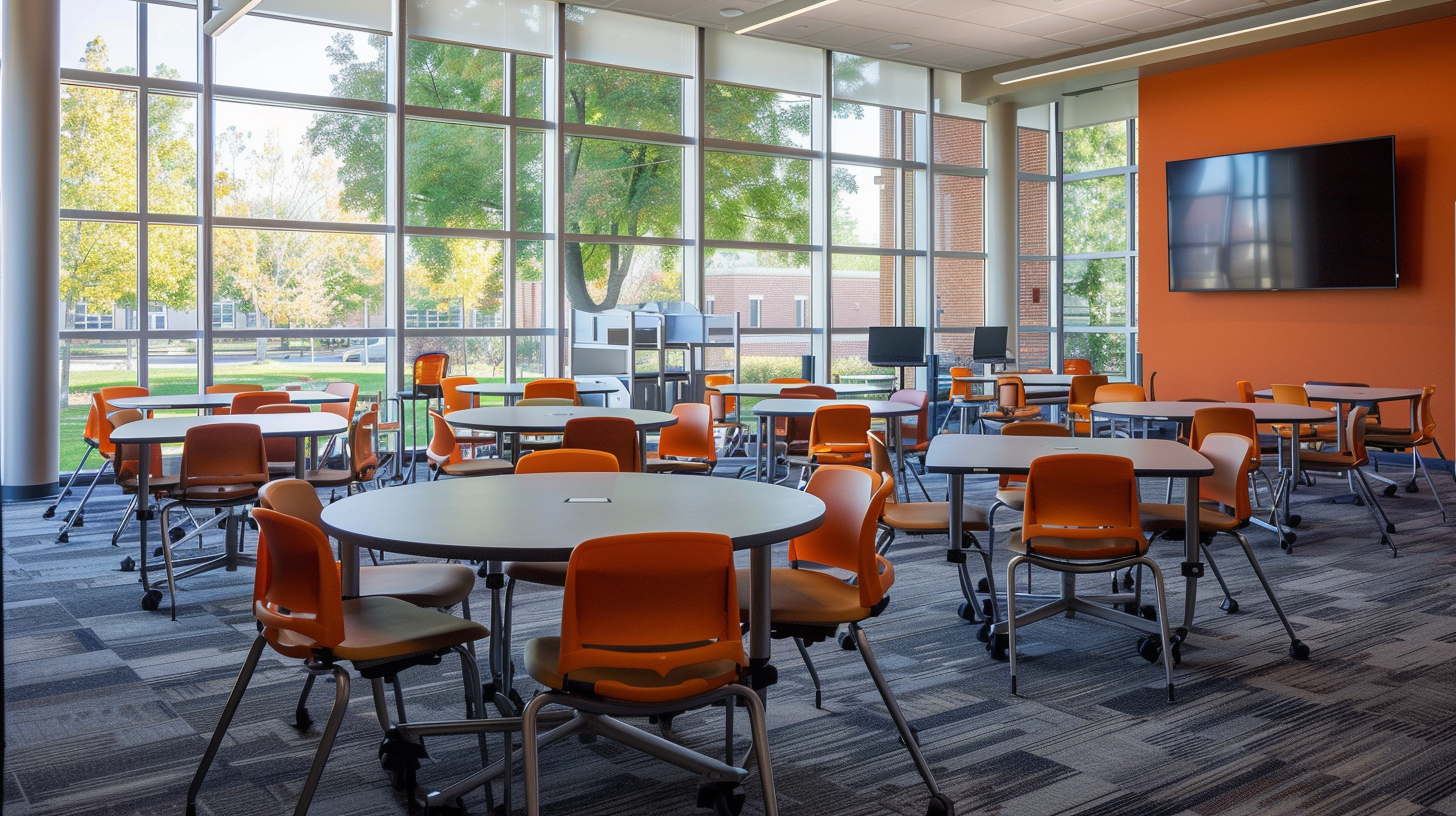
Flexibility Requires More Than Movable Furniture
When institutions discuss flexibility, the conversation often begins with furniture.
While mobile tables and chairs certainly help, flexibility is fundamentally a planning strategy—not a furniture strategy.
Effective flexible environments require:
– Adaptable room configurations
– Accessible technology infrastructure
– Multiple teaching modes
– Clear circulation patterns
– Appropriate acoustic performance
Without these supporting elements, movable furniture simply creates a different layout—not a truly flexible environment.
The strongest educational spaces are designed to accommodate change without sacrificing usability.
Collaboration Has Become a Core Space Requirement
Employers increasingly emphasize collaboration, communication, and team-based problem solving. Higher education facilities are responding by creating environments that support these behaviors before students enter the workforce.
This shift is visible across campus.
Informal collaboration zones, project rooms, study lounges, and interdisciplinary workspaces now play a larger role in the student experience.
However, collaboration is often misunderstood.
Successful collaborative environments are not simply large open spaces. They require a balance between interaction, comfort, visibility, and acoustic control.
Without that balance, spaces become noisy, distracting, and underutilized.
Hybrid Learning Has Changed Infrastructure Needs
Technology now plays a central role in nearly every educational environment.
Hybrid learning models require spaces capable of supporting both in-person and remote participation simultaneously.
This affects:
– Audio systems
– Video integration
– Power access
– Connectivity
– Display technology
Where institutions often struggle is treating technology as a separate layer rather than integrating it into the design process.
When technology is planned early, it supports the environment seamlessly. When added later, it frequently creates limitations and operational challenges.
Multi-Use Spaces Improve Long-Term Value
Higher education institutions face constant pressure to maximize the value of campus real estate.
Single-purpose spaces often sit vacant for large portions of the day, creating inefficiencies in utilization.
This is why many institutions are prioritizing multi-use environments that can support different functions throughout the week.
A room used for instruction in the morning may host collaboration sessions in the afternoon and campus events in the evening.
The ability to support multiple activities increases utilization while improving long-term flexibility.
The challenge is ensuring these environments perform well across all intended uses rather than becoming compromises for each.
Student Expectations Continue to Evolve
Today’s students often evaluate campus environments differently than previous generations.
They expect access to:
– Technology
– Comfortable study environments
– Informal gathering spaces
– Flexible work settings
– Diverse learning environments
These expectations influence how facilities are perceived and used.
Spaces that feel outdated or overly rigid often struggle to support modern learning behaviors, regardless of the quality of instruction occurring within them.
Design increasingly plays a role in student engagement and overall campus experience.
Acoustics Are Critical in Flexible Environments
One of the most overlooked challenges in collaborative educational environments is acoustic performance.
As spaces become more flexible and open, controlling noise becomes increasingly important.
Students need environments that support both interaction and concentration.
Without proper acoustic planning, collaborative spaces can negatively impact nearby study areas and learning environments.
The most successful campuses create a variety of acoustic conditions that support different learning styles and activities.
The Most Valuable Spaces Support Multiple Learning Modes
Educational environments no longer serve a single purpose.
Students move continuously between:
– Individual study
– Small-group collaboration
– Formal instruction
– Informal interaction
– Hybrid participation
The strongest facilities support these transitions naturally.
Rather than forcing students to adapt to the environment, the environment adapts to the way students learn.
Designing for the Future of Learning
Higher education continues to evolve, and campus environments need to evolve alongside it.
The institutions best positioned for the future are creating spaces that can accommodate changing technologies, shifting learning models, and new student expectations without requiring constant renovation.
Flexibility and collaboration are no longer optional design considerations.
They are fundamental requirements for modern educational environments.
And the campuses that recognize this today will be better prepared for how students learn tomorrow.