Higher education campuses have traditionally been designed around institutional needs. Classrooms were organized around instruction, buildings were planned around departments, and common spaces were often treated as secondary to academic functions.
Today, that approach is changing.
Colleges and universities increasingly recognize that the student experience extends far beyond the classroom. Recruitment, retention, engagement, and overall student success are influenced by how campus environments support daily life, social interaction, academic work, and wellbeing.
This shift has given rise to a more student-centered approach to design—one that prioritizes how facilities are experienced and used rather than simply how they are organized.
Students Evaluate Campuses Differently Than They Once Did
Prospective students increasingly compare campus environments in the same way consumers evaluate hospitality, retail, and workplace experiences.
Academic quality remains critical, but the physical environment plays a larger role in decision-making than many institutions realize.
Students are paying attention to:
– Study environments
– Student commons
– Dining spaces
– Wellness amenities
– Technology integration
– Informal gathering areas
These spaces contribute to first impressions and influence how connected students feel to the campus community.
As competition for enrollment continues, campus experience becomes an increasingly important differentiator.
Retention Is Influenced by Environment
Student retention is often discussed through the lens of academics, financial aid, and support services.
The physical environment also plays a meaningful role.
Students who feel connected to their campus are more likely to remain engaged and persist through challenges. Campus facilities help shape that connection.
Spaces that encourage interaction, provide comfortable study environments, and support a variety of learning styles contribute to a stronger sense of belonging.
While design alone cannot solve retention challenges, it can either support or undermine broader institutional goals.
Common Areas Have Become Strategic Assets
Historically, many campus common areas served primarily as circulation space—places students moved through on their way to somewhere else.
Today, these environments are increasingly designed as destinations.
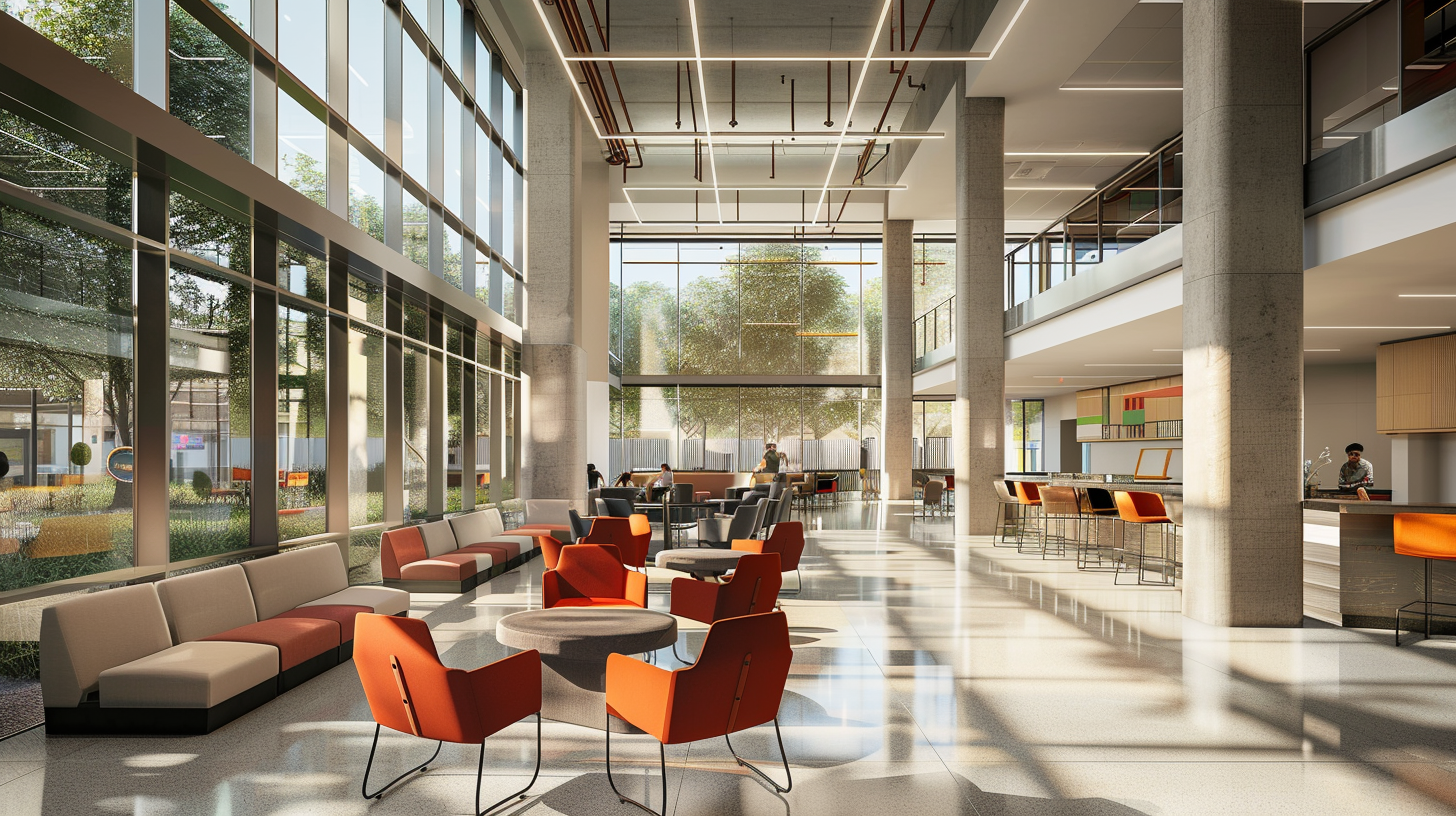
Student lounges, collaborative study areas, flexible gathering spaces, and informal work zones are playing a larger role in campus life.
These environments support spontaneous interaction, peer learning, and community building.
We often see the highest-utilized campus spaces are not necessarily classrooms or lecture halls—they are the areas where students choose to spend time between scheduled activities.
That voluntary use is an important measure of success.
Usage Patterns Matter More Than Space Counts
One of the biggest shifts in higher education planning is moving away from measuring success solely by square footage or seat counts.
Institutions are paying closer attention to utilization.
A large space that remains mostly empty contributes less value than a smaller environment that supports consistent student engagement.
This has led many campuses to rethink how facilities are evaluated.
Instead of asking how much space exists, the question becomes:
How well is the space actually being used?
Design strategies increasingly focus on supporting behavior rather than maximizing capacity.
Flexibility Supports Student Choice
Students do not learn, study, or socialize in identical ways.
Some prefer quiet individual environments. Others thrive in collaborative settings. Many move between different modes throughout the day.
Student-centered design recognizes this variability.
Rather than prescribing a single way to use a space, campuses are creating environments that support multiple options.
This includes:
– Flexible furniture
– Adaptable layouts
– Individual focus areas
– Group collaboration spaces
– Hybrid learning environments
The goal is to give students greater control over how they engage with the campus environment.
Technology Is Now Part of the Environment
Technology is no longer a separate layer added to campus facilities. It is part of the environment itself.
Students expect reliable connectivity, accessible power, integrated displays, and seamless access to digital resources.
Where facilities often struggle is treating technology as an afterthought.
When integrated early, technology supports flexibility and enhances usability. When added later, it can create operational and spatial limitations.
Student-centered environments recognize that physical and digital experiences are increasingly interconnected.
Wellbeing Has Become a Design Priority
Student wellbeing is receiving more attention than ever before, and campus facilities are playing a growing role in supporting it.
Natural light, comfortable seating, access to outdoor space, acoustic comfort, and opportunities for social connection all influence how students experience their environment.
These elements may seem secondary to academics, but they contribute significantly to how students feel on campus day to day.
The most successful facilities support both learning and wellbeing simultaneously.
The Future of Campus Design Is Experience-Driven
Higher education facilities are no longer evaluated solely by what they contain.
They are increasingly evaluated by how they perform for students.
The shift toward student-centered design reflects a broader understanding that campus environments influence engagement, retention, and overall experience.
Institutions that embrace this approach are creating facilities that support not just instruction, but the full student journey.
Because ultimately, students do not experience campus through organizational charts or building programs.
They experience it one space at a time.