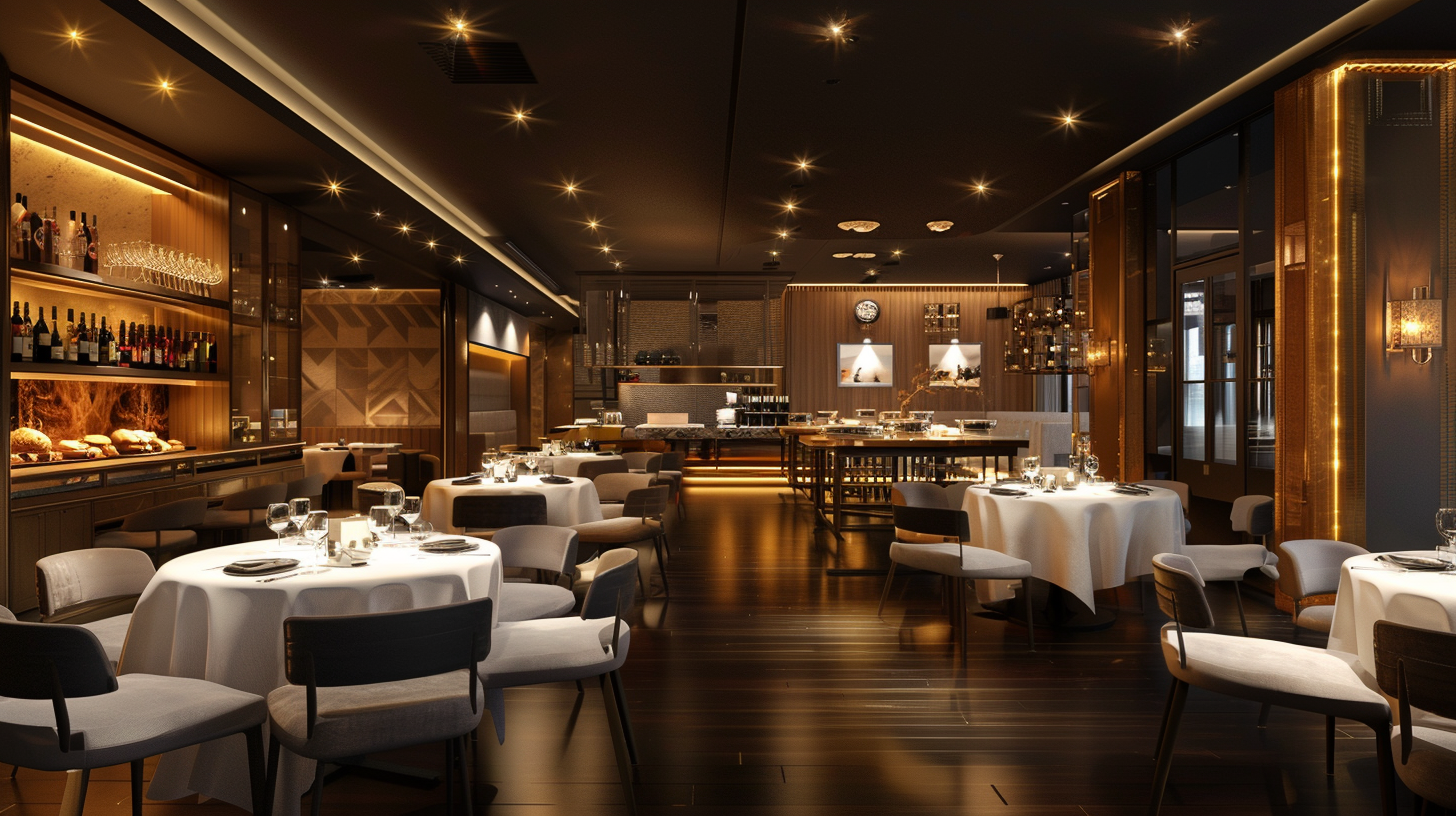
Restaurant design is often judged by what customers see: finishes, lighting, furniture, branding, and overall ambiance. While atmosphere plays an important role in the guest experience, it is only part of what determines whether a restaurant succeeds operationally.
Behind every successful dining experience is a system of workflows, staffing patterns, circulation routes, and operational decisions that either support efficiency or create friction.
The restaurants that perform best are rarely the ones with the most elaborate interiors. They are the ones where front-of-house and back-of-house operations are designed to work together seamlessly.
Great atmosphere may attract customers once. Efficient operations help keep them coming back.
The Guest Experience Starts Behind the Kitchen Doors
Most restaurant operators focus heavily on customer-facing spaces during planning. Dining rooms, bars, patios, and waiting areas naturally receive significant attention.
What often gets overlooked is that guest experience is directly influenced by what happens behind the scenes.
Slow ticket times, inconsistent service, crowded circulation paths, and staffing inefficiencies eventually become visible to customers.
The dining room may look exceptional, but operational friction almost always finds its way into the guest experience.
Restaurant design succeeds when operational performance and atmosphere are developed together rather than independently.
Back-of-House Flow Determines Efficiency
One of the most important aspects of restaurant planning is understanding how staff move throughout the facility during peak operations.
Kitchen workflows, food preparation sequences, storage access, dishwashing operations, and service circulation all influence efficiency.
Where restaurants often struggle is in creating unnecessary movement.
Staff repeatedly crossing paths, traveling long distances for supplies, or navigating around bottlenecks adds time and labor to every service period.
Individually, these delays may seem insignificant.
Across hundreds of transactions per day, they become operationally expensive.
Labor Efficiency Is a Design Issue
Staffing challenges continue to impact restaurants across the industry. As labor costs increase, efficiency becomes even more important.
Many operators view staffing strictly as a management issue. In reality, design plays a significant role in determining how effectively staff can perform their work.
Layout decisions influence:
– Travel distances
– Visibility between stations
– Communication efficiency
– Service speed
– Operational flexibility
A well-designed restaurant allows staff to accomplish more with less effort.
Poor layouts create labor inefficiencies that no amount of management can fully overcome.
The Dining Room Still Needs to Function Operationally
Guest-facing spaces are often designed primarily around atmosphere and seating capacity.
While both are important, operational performance should remain part of the conversation.
Table spacing, server access, aisle widths, host stand positioning, and service station locations all influence how efficiently the dining room operates.
Overcrowding may increase seat count on paper while reducing service quality in practice.
Similarly, poorly positioned service stations can create congestion that affects both guests and staff.
The strongest dining environments balance capacity with functionality.
Visibility Improves Coordination
Restaurants are highly dynamic environments where communication happens continuously.
Visibility between key operational areas often determines how effectively teams can coordinate during busy periods.
When managers, servers, hosts, and kitchen staff can easily understand what’s happening throughout the restaurant, decision-making becomes faster and more efficient.
Where visibility is restricted, teams rely more heavily on reactive communication and workarounds.
This increases stress while reducing operational responsiveness.
Storage Is Usually Undersized
Storage is one of the most overlooked aspects of restaurant design.
During planning, square footage is often allocated toward revenue-generating spaces while storage is minimized.
Over time, this creates operational strain.
Staff spend additional time retrieving inventory, supplies overflow into working areas, and back-of-house organization becomes increasingly difficult.
The result is inefficiency that affects daily operations long after construction is complete.
Well-planned storage rarely receives attention from guests—but operators feel its impact every day.
Technology Doesn’t Fix Operational Layout Problems
Many restaurants continue investing in digital ordering systems, kitchen display systems, and operational software.
These tools can improve performance, but they cannot compensate for a fundamentally inefficient layout.
If workflows are poorly organized, technology often accelerates existing problems rather than solving them.
The most successful operators view technology as an enhancement to good design—not a replacement for it.
The Cost of Operational Friction Adds Up Quickly
Restaurant inefficiencies rarely appear as one large problem.
Instead, they emerge through dozens of small operational obstacles:
– Longer ticket times
– Excess staff movement
– Communication delays
– Service bottlenecks
– Reduced table turns
Each issue may seem minor independently.
Together, they affect profitability, guest satisfaction, and staff retention.
This is why operational planning has such a significant impact on long-term performance.
Designing for the Business, Not Just the Brand
Strong restaurant design creates memorable experiences.
Exceptional restaurant design also supports the business itself.
The most successful environments understand that atmosphere and operations are not competing priorities. They are interconnected.
Guests notice the ambiance immediately.
They notice operational efficiency through shorter waits, better service, and smoother experiences.
And over time, those operational advantages become one of the most important drivers of long-term success.