Lighting is one of the most influential elements in retail design, yet it is often discussed primarily in terms of appearance. While lighting certainly contributes to the visual identity of a store, its impact extends far beyond aesthetics.
Lighting influences how customers perceive products, how they move through a space, how long they stay, and ultimately how likely they are to make a purchase.
In many retail environments, layout receives most of the strategic attention while lighting is treated as a finishing layer. The most successful retailers take the opposite approach. They understand that lighting is not simply decoration—it is a tool for shaping behavior.
Customers Notice Lighting Before They Realize It
Most shoppers cannot articulate why one retail environment feels inviting while another feels uncomfortable.
Lighting is often a major part of that reaction.
Brightness, contrast, color temperature, and visual hierarchy all influence emotional perception almost immediately. Customers begin forming impressions of the environment before they have meaningfully engaged with a single product.
This makes lighting one of the earliest touchpoints in the customer experience.
When done well, it feels invisible. When done poorly, customers may not identify the cause, but they often respond behaviorally.
Lighting Creates Visual Hierarchy
Retail environments compete constantly for attention. Products, signage, displays, and circulation paths all vie for visual focus.
Without hierarchy, customers become overwhelmed.
This is where lighting becomes a strategic design tool.
By selectively emphasizing certain areas, retailers can guide attention naturally toward:
– Featured products
– Promotional displays
– New merchandise
– Key circulation routes
The goal is not to illuminate everything equally.
In fact, uniform lighting often creates visual flatness that makes products harder to distinguish and environments less engaging.
Strategic contrast creates interest and directs customer attention more effectively.
Perceived Product Value Is Influenced by Lighting
Lighting affects how products are viewed, interpreted, and valued.
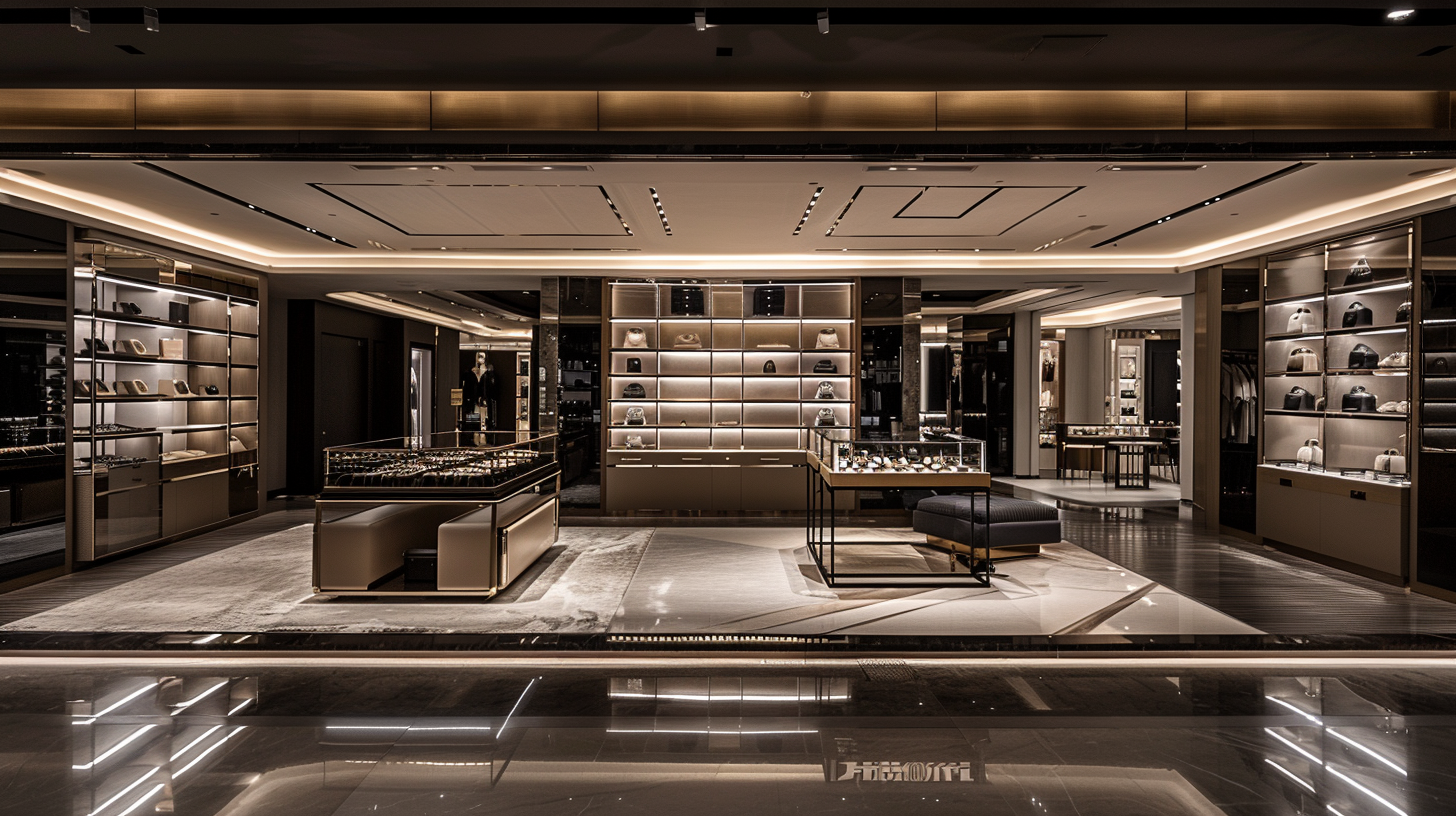
Luxury retailers have understood this for years. Premium products are rarely displayed under harsh, uniform illumination.
Instead, lighting is used to create focus, depth, and perceived importance.
The same product can appear dramatically different depending on how it is lit.
Color accuracy, texture visibility, material richness, and visual depth are all influenced by lighting conditions.
This directly affects customer perception and purchasing confidence.
Dwell Time Is Shaped by Comfort
One of the most important retail metrics is dwell time—the amount of time customers spend within the environment.
Longer dwell times do not guarantee purchases, but they generally increase opportunities for engagement and conversion.
Lighting plays a significant role in determining whether customers feel comfortable remaining in a space.
Overly bright environments can feel clinical and exhausting. Poorly lit environments can feel uninviting or difficult to navigate.
The strongest retail environments create visual comfort through balance.
Customers remain engaged longer when lighting feels intentional and easy on the eyes.
Different Zones Require Different Lighting Strategies
One of the most common mistakes in retail design is applying a single lighting strategy across the entire store.
Retail environments support multiple activities:
– Browsing
– Product evaluation
– Consultation
– Checkout
– Brand experience
Each activity benefits from different lighting conditions.
Entry zones may require higher visibility and stronger visual impact. Product displays may benefit from focused accent lighting. Consultation areas often perform better with softer, more comfortable illumination.
When lighting strategies respond to behavioral needs, the environment feels more intuitive and easier to navigate.
Lighting Supports Flow and Movement
Customers do not move through stores randomly.
Movement is influenced by layout, merchandising, sightlines, and lighting.
Changes in brightness, focal points, and illuminated pathways all encourage movement toward specific areas.
This is particularly important in larger retail environments where customers can easily miss product categories or underutilized sections.
Lighting can help draw customers deeper into the store without relying heavily on signage or promotional messaging.
The strongest environments guide movement subtly rather than forcing it.
Technology Has Expanded Lighting’s Role
Advances in LED technology and lighting controls have significantly expanded what retailers can achieve.
Lighting can now adapt to:
– Time of day
– Seasonal merchandising
– Promotional campaigns
– Brand events
This flexibility allows environments to remain dynamic without requiring major physical changes.
However, technology alone is not the solution.
The strategy behind the lighting remains far more important than the fixtures themselves.
Lighting Is a Business Decision
Retail lighting is often viewed as a design consideration.
Operationally, it is a business decision.
Lighting influences:
– Customer perception
– Product visibility
– Dwell time
– Store navigation
– Conversion opportunities
These outcomes directly affect revenue performance.
When lighting is treated strategically, it becomes one of the most effective tools available for shaping customer behavior and supporting sales objectives.
Designing Beyond Aesthetics
The best retail environments understand that lighting does far more than make a space look attractive.
It influences how customers experience the environment, interact with products, and move toward purchasing decisions.
When integrated thoughtfully, lighting supports both brand experience and business performance.
Because in retail, customers don’t just buy what they see.
They buy what the environment helps them notice.