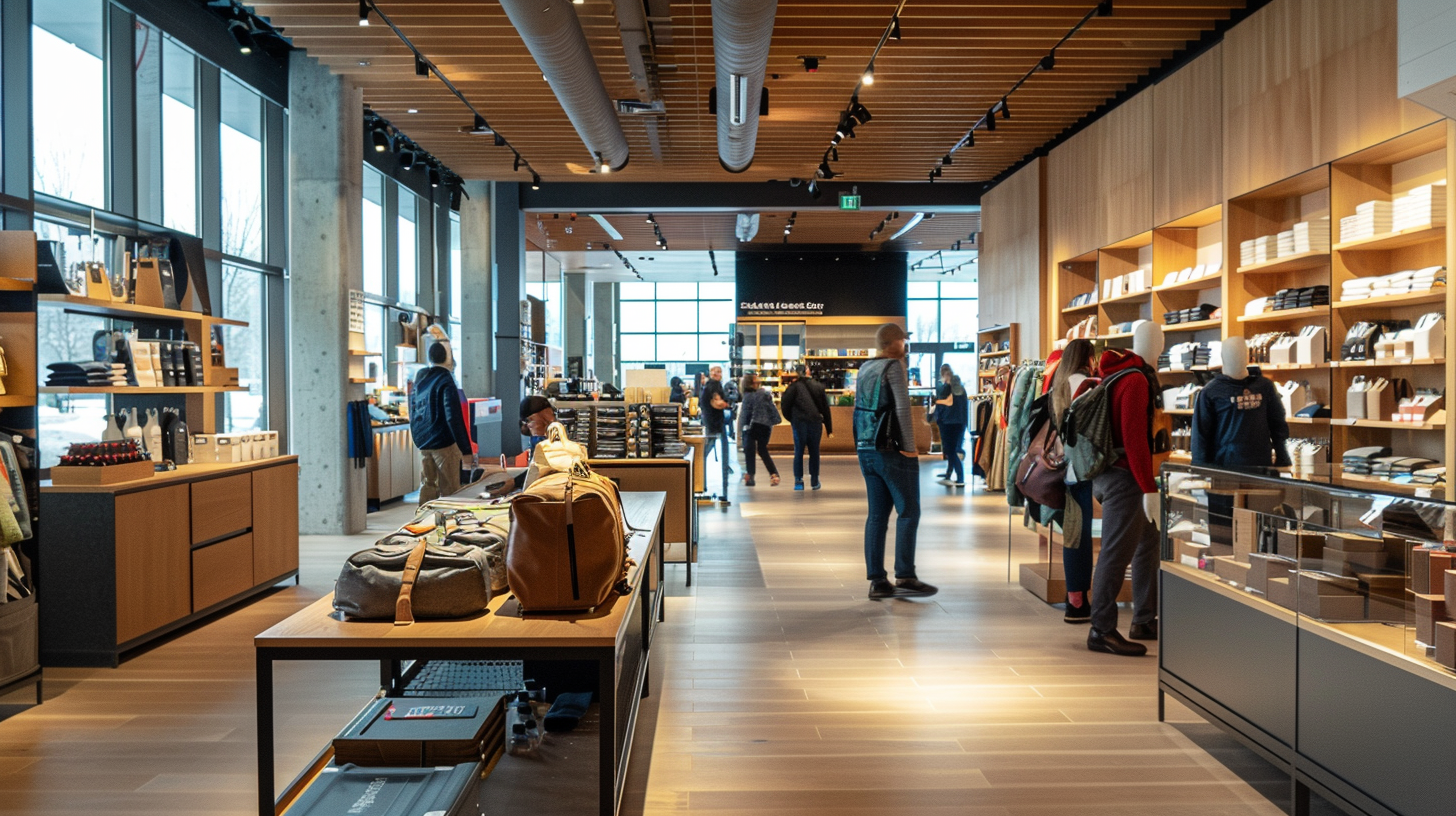
Foot traffic is often treated as the primary indicator of retail success. If customers are entering the store, spending time inside, and engaging with displays, the assumption is that sales will follow.
In reality, many retail environments experience strong traffic but weak conversion.
The issue is rarely product alone. More often, it is a disconnect between customer behavior and the physical environment. Customers are willing to enter the space, but something within the experience prevents them from moving confidently toward a purchase.
This is where retail design becomes less about aesthetics and more about understanding the customer journey.
Traffic and Conversion Are Different Metrics
A busy store can create the impression that everything is working. High occupancy, visible activity, and strong dwell times all feel positive.
However, traffic measures interest. Conversion measures action.
The gap between those two metrics is where many retailers struggle.
We often see environments that attract customers successfully but create friction later in the experience. Shoppers browse, explore, and interact with products—but leave without purchasing.
When this happens consistently, the issue is often not marketing. It is the journey customers experience once they arrive.
Customers Need Direction Without Feeling Directed
One of the most common causes of poor conversion is a lack of spatial clarity.
Customers enter the environment but quickly become uncertain about where to go next. Key product categories are difficult to locate. Circulation paths feel fragmented. The hierarchy of the space becomes unclear.
Retailers often respond by adding more signage.
In many cases, the problem is not information—it is layout.
Strong retail environments guide movement naturally through sightlines, product placement, lighting, and circulation planning. Customers should intuitively understand how to navigate the space without needing constant instruction.
When movement feels effortless, decision-making becomes easier.
Product Density Can Reduce Purchasing Confidence
Retailers frequently assume that displaying more products creates more sales opportunities.
There is a point where the opposite becomes true.
When product density becomes excessive, customers experience decision fatigue. Too many choices compete for attention simultaneously, making it harder to evaluate options confidently.
This often results in longer browsing and lower conversion.
Customers may spend time in the environment but leave without making a decision.
The strongest retail environments create balance. Products feel discoverable without feeling overwhelming.
High-Traffic Zones Don’t Always Drive Revenue
Not every busy area of a store contributes equally to sales.
Some locations naturally attract movement because they sit along primary circulation paths. Customers pass through them frequently, but movement alone does not guarantee engagement.
We often see retailers mistake traffic for opportunity.
Products placed in high-traffic areas may receive visibility but not consideration. Customers are focused on navigation rather than evaluation.
Effective merchandising aligns product placement with behavioral intent, positioning key items where customers are most receptive rather than simply where they are most visible.
The Environment Can Create Subtle Friction
Many conversion challenges come from small moments of friction that are difficult to identify individually.
Examples include:
– Congested circulation paths
– Awkward display layouts
– Poor sightlines
– Confusing category organization
– Difficult checkout experiences
None of these issues may appear significant on their own.
Together, they influence how comfortable customers feel moving through the environment and making decisions.
Retail spaces that convert well often feel remarkably simple. That simplicity is usually the result of careful planning rather than luck.
Customers Buy When They Feel Comfortable
Purchasing behavior is influenced by more than product quality and pricing.
Customers need to feel confident, oriented, and comfortable within the environment itself.
When layouts feel chaotic, crowded, or confusing, confidence decreases. Shoppers spend more energy navigating the space and less energy evaluating products.
This is particularly important in premium retail environments where purchasing decisions tend to be more deliberate.
The environment should support decision-making rather than compete with it.
Checkout Is Part of the Design Strategy
Retail teams often focus heavily on the shopping experience while underestimating the importance of the final transaction.
Checkout remains one of the most influential points in the customer journey.
Poor visibility, long queues, confusing processes, or awkward transitions can undermine an otherwise successful experience.
Customers who are ready to purchase should encounter as little friction as possible.
The best retail environments treat checkout as part of the overall flow—not as a separate operational function.
Retail Performance Is About Alignment
Stores that convert effectively are rarely the ones with the most displays, the most signage, or the highest traffic.
They are the ones where layout, merchandising, circulation, and customer expectations align.
Customers move naturally through the environment. Products appear at the right moments. Decisions feel easier.
The space quietly supports the purchase journey rather than interrupting it.
Understanding the Gap Between Busy and Successful
Retail spaces can feel energetic, active, and well-attended while still underperforming commercially.
The difference often comes down to conversion.
When customer behavior and design strategy are aligned, traffic turns into sales. When they are not, the store may appear successful while leaving significant revenue unrealized.
Because in retail, being busy and being effective are not always the same thing.