A well-designed private dining room is one of the highest-return investments a NYC restaurant can make. In a city where corporate entertainment budgets, milestone celebrations, and exclusive events drive significant revenue, the private dining room is not a nice-to-have — it is a dedicated profit center. Private dining room design in NYC requires a different approach than the main dining floor: it must be simultaneously intimate enough for a birthday dinner for ten and functional enough for a corporate board event for thirty, with the acoustics, technology, and service infrastructure to perform at the highest level for both.
At DIG Interior Design Solutions, we design private dining spaces that increase restaurant event revenue by creating rooms that guests want to book — and book again. Our approach combines elegant aesthetics with operational intelligence, ensuring that every design decision serves both the guest experience and the business model.
The Revenue Case for Private Dining Room Design
Private dining rooms generate revenue in ways that the main dining floor cannot. They command a room minimum that guarantees revenue regardless of menu spend. They attract corporate clients who return regularly for team dinners, client entertainment, and board meetings. They host milestone events — anniversaries, birthdays, proposals — that drive premium beverage sales. And they fill weeknight inventory that might otherwise remain empty on a Tuesday or Wednesday when walk-in traffic is light.
The design of the space directly affects its bookability. A private dining room that feels generic — a rectangle with a long table and no distinct character — competes on price alone. A private dining room that feels designed, special, and exclusive commands premium pricing and generates word-of-mouth referrals. Every design decision, from the chandelier to the wall treatment to the custom table detail, contributes to the perceived value that justifies the room minimum and brings guests back.
Flexible Layouts: Designing for Multiple Revenue Scenarios
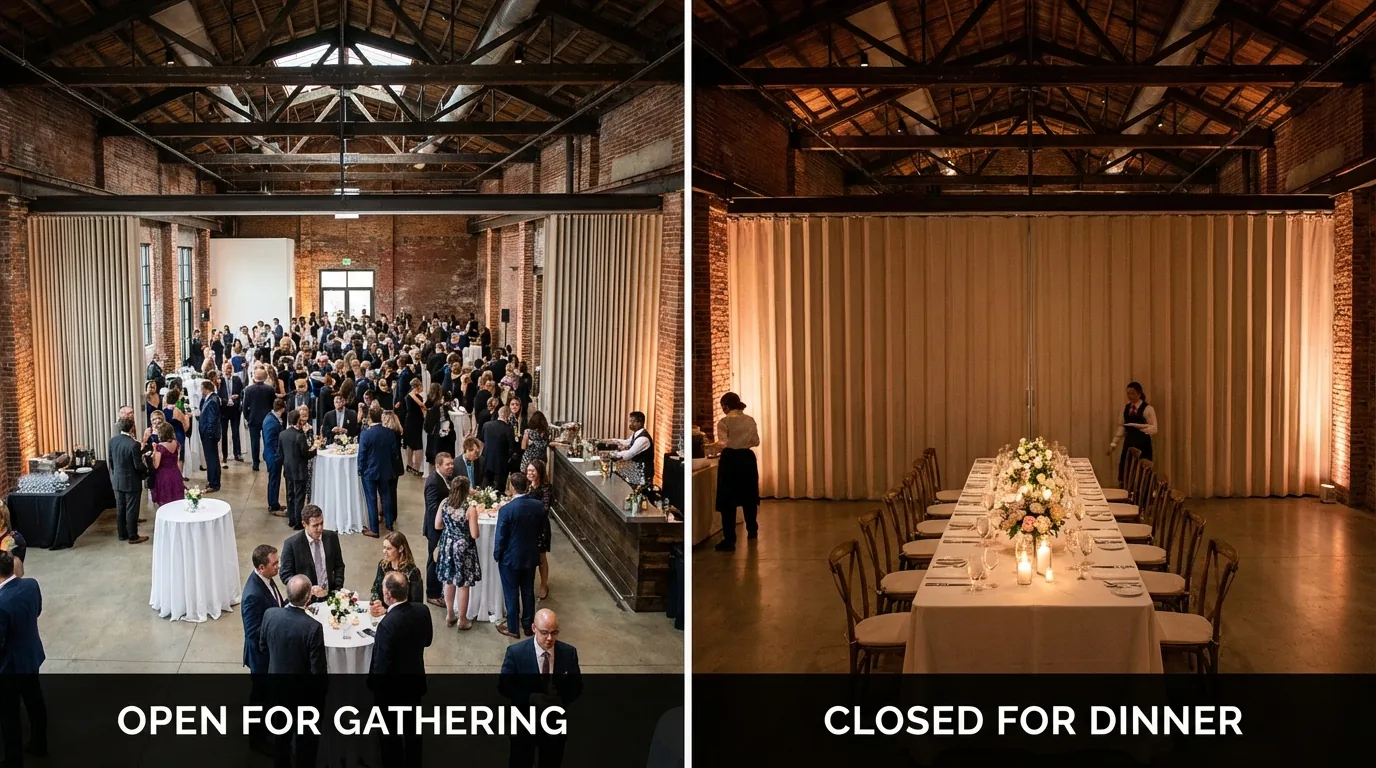
The most commercially effective private dining rooms are flexible. A fixed configuration that only works for a dinner party of twelve leaves revenue on the table every time an operator needs to accommodate a cocktail reception for forty or a seated lunch for six. Designing for flexibility from the outset — with moveable room dividers, stackable furniture, and modular seating configurations — allows one space to serve the full spectrum of event types without compromising the experience at any configuration.
Acoustic room dividers deserve particular attention in NYC private dining design. A well-specified operable wall system can transform a single 800-square-foot room into two fully private 400-square-foot spaces, each capable of hosting independent events simultaneously. The divider must provide genuine acoustic separation — not just visual — so that a corporate meeting in one half does not bleed into a birthday dinner in the other. DIG specifies acoustic room dividers with STC ratings appropriate for the ambient noise level of each venue.
Technology Integration for Corporate Events
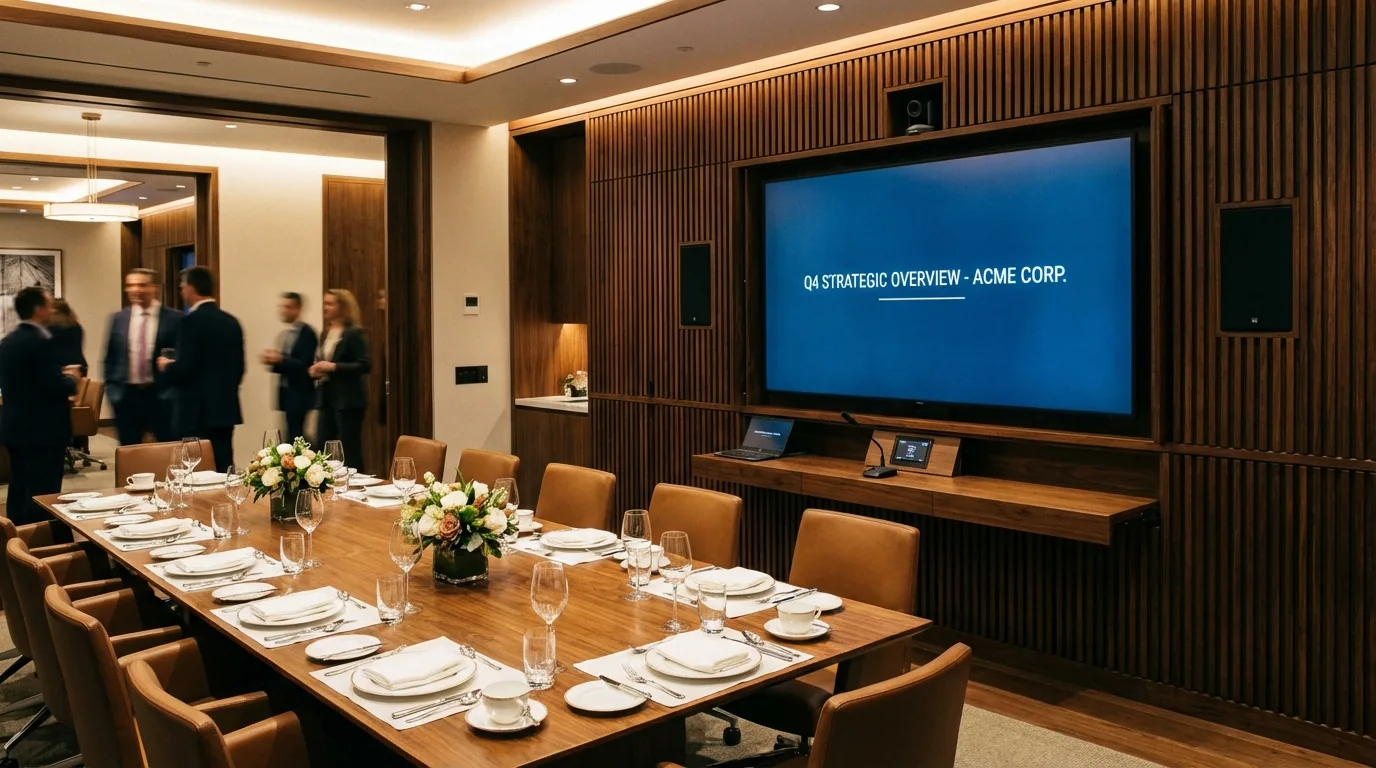
Corporate clients are the most reliable source of private dining revenue, and they have specific technology requirements that must be met if a restaurant wants to compete for their business. A private dining room without presentation capability — a screen, a projector, or a display — is immediately eliminated from consideration for any event that involves a presentation, a product launch, or a keynote. These are high-value bookings that go to better-equipped competitors.
The challenge in private dining room technology design is integrating AV capability without disrupting the elegance of the space. A flat-screen television mounted on a wall bracket looks out of place in a room designed for luxury dining. DIG integrates presentation screens into custom millwork — concealed behind cabinet panels that reveal the display only when in use, or framed within architectural elements that make the technology feel intentional rather than retrofitted. HDMI and wireless presentation connectivity, built-in speakers with independent volume control, and appropriate ambient lighting that adjusts for screen visibility are all components of a complete corporate-ready private dining design.
Acoustic Privacy: The Non-Negotiable Requirement
Private dining means private. Guests booking a private dining room have a reasonable expectation that their conversations — whether personal or business — cannot be heard in the main dining room or adjacent spaces. This acoustic privacy is not just a comfort issue; for corporate clients discussing sensitive business matters, it is a requirement. A private dining room that leaks sound is a private dining room that stops getting booked for the events that matter most.
NYC restaurant buildings present specific acoustic challenges. Older Manhattan buildings with masonry construction transmit sound differently than newer curtain-wall buildings. The HVAC systems that serve the main dining floor often run through the private dining space, creating a noise transmission pathway that requires careful design attention. DIG addresses private dining acoustics through a combination of wall construction specifications, door and frame selection, ceiling treatment, and soft furnishing placement to achieve genuine acoustic separation from the main restaurant environment.
Lighting Design for Private Dining Rooms
Private dining room lighting must serve multiple states: the intimate warmth of a romantic dinner, the brighter functionality of a working lunch, and the presentation-compatible levels needed for corporate events. A single fixed lighting scheme will fail at least one of these scenarios. DIG designs private dining lighting on independently dimmable circuits — chandelier, wall sconces, accent lighting, and task lighting all on separate controls — with programmable scene presets that allow staff to transition between configurations with a single button press.
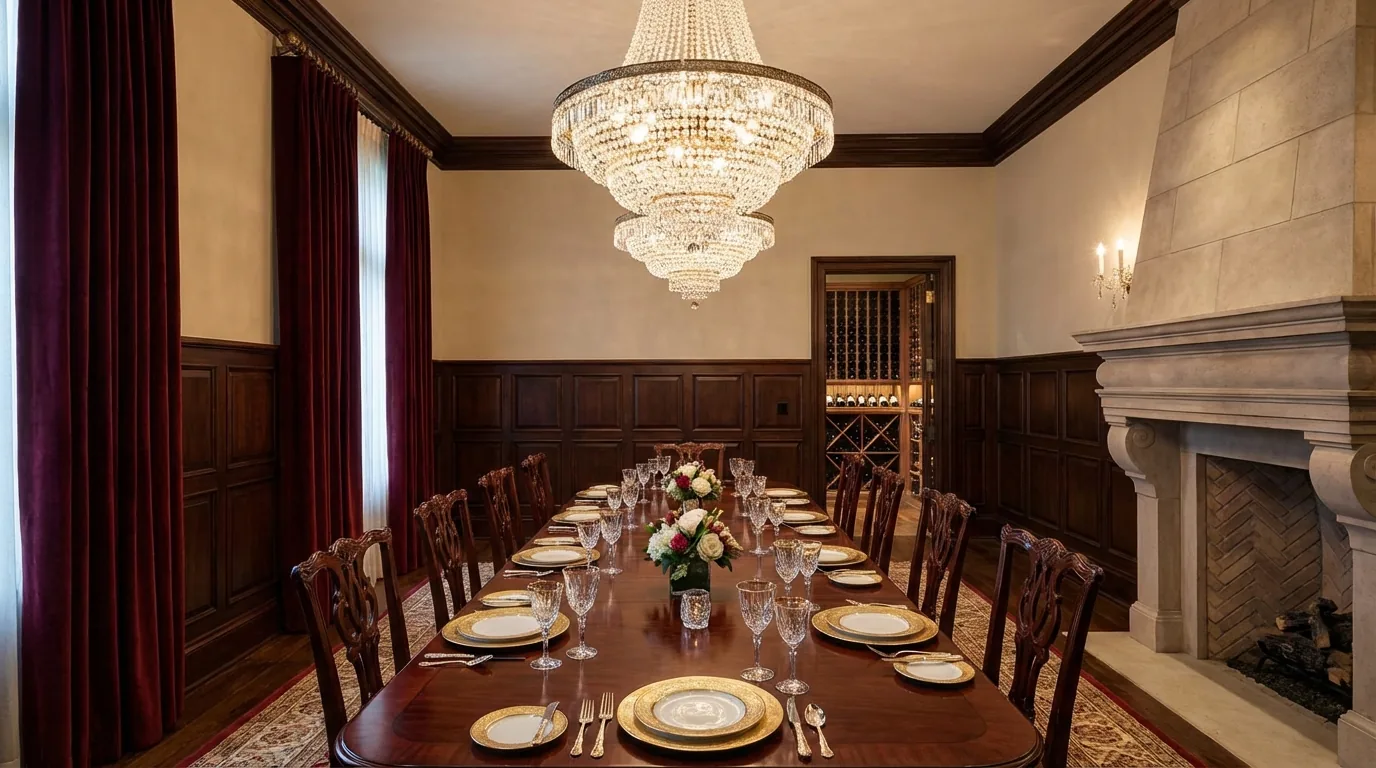
The chandelier is the signature design element of most private dining rooms. It sets the tone for the space before the table is set, before the menu is read. A dramatic chandelier in a well-proportioned room communicates luxury and occasion in a way that no other single design element can. DIG selects and sources chandeliers that are proportioned correctly for the room dimensions, appropriate in style for the restaurant’s overall design language, and specified for the dimming system in use.
Custom Millwork and Premium Finishes
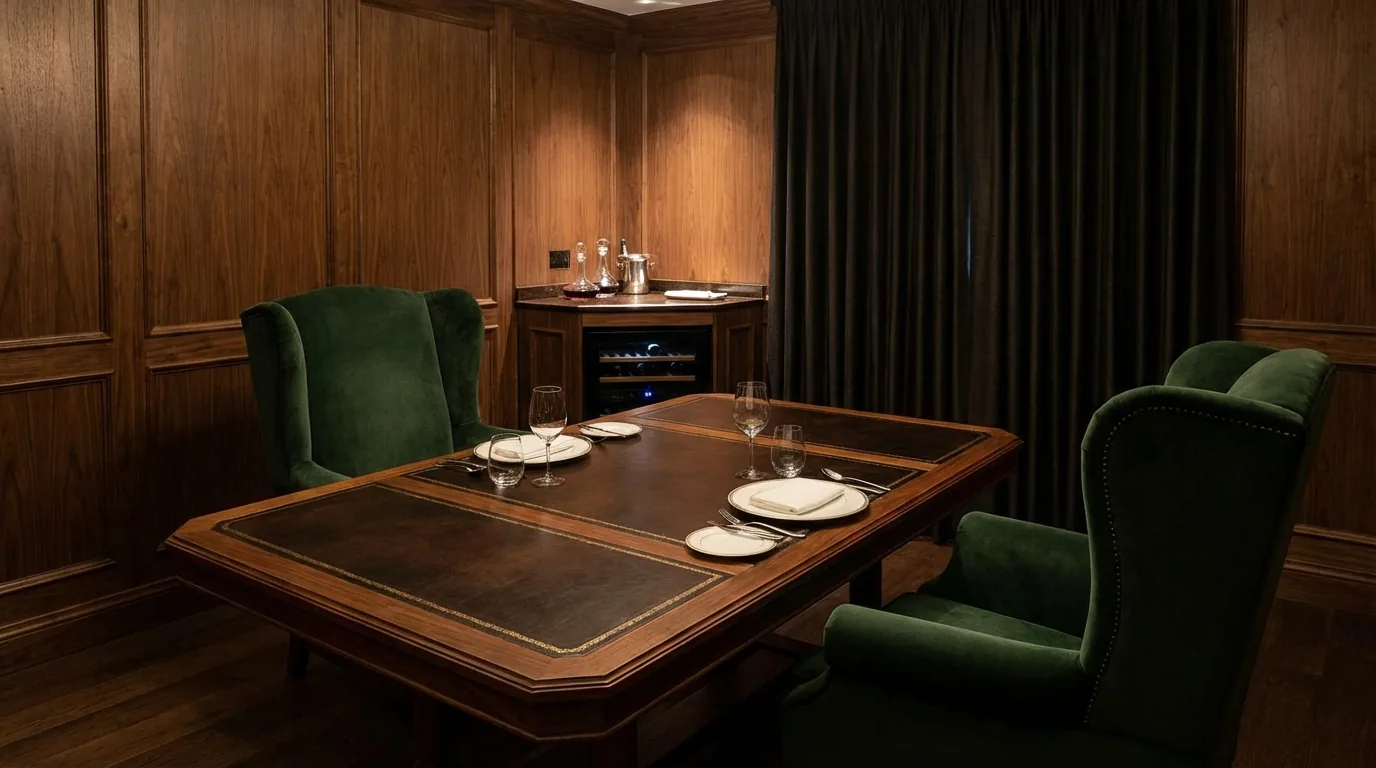
The difference between a private dining room that feels special and one that feels generic often comes down to the quality and intentionality of the finishes. Custom millwork — built-in wine storage, upholstered wall panels, integrated credenzas for service staging — signals that the room was designed, not assembled. The dining table itself is the centerpiece: a custom table with inlaid leather, a live-edge slab, or a marquetry pattern communicates premium quality before a single plate is set. Captain’s chairs with genuine upholstery, a dedicated sommelier station integrated into the room design, and hardware finishes that coordinate across all touchpoints complete the picture.
NYC fire code compliance applies to all finish selections in private dining rooms. DIG specifies materials with appropriate flame spread ratings and coordinates with the Department of Buildings to ensure that all custom elements meet code requirements. Premium design and code compliance are not in conflict — they require experienced specification from the outset.
The DIG Approach to Private Dining Design
DIG Interior Design Solutions designs private dining rooms that perform as revenue assets. Our process begins with a revenue model analysis — understanding the event types the operator wants to attract, the room minimum targets, and the competitive landscape for private dining in that neighborhood. From that foundation, we develop a design that serves all target use cases while creating a space distinctive enough to command premium pricing.
Our experience with NYC hospitality projects, including the Tabernacle Steakhouse, has given us deep expertise in the specific demands of New York restaurant design — the codes, the vendors, the timeline realities, and the client expectations that define this market. We deliver private dining rooms that restaurants book immediately and guests return to repeatedly.
Frequently Asked Questions: Private Dining Room Design NYC
What size should a private dining room be in a NYC restaurant?
Private dining room size in NYC restaurants depends on the target event types and capacity. A room designed for intimate dinners of eight to twelve typically requires 200 to 300 square feet. A room intended to flex between intimate dinners and larger corporate events may need 600 to 1,000 square feet with operable walls. DIG conducts a revenue model analysis before finalizing size recommendations to ensure the room serves the operator’s specific business goals.
How do you soundproof a private dining room in a NYC restaurant?
Soundproofing a private dining room in NYC requires attention to wall construction, door and frame specification, ceiling treatment, and HVAC penetrations. Solid-core doors with proper acoustic seals, walls with decoupled stud construction and appropriate insulation, and acoustic ceiling treatment that addresses both impact and airborne sound transmission are the primary tools. DIG specifies acoustic assemblies appropriate for the ambient noise level of each specific venue and building type.
What technology should a NYC private dining room have?
A competitive NYC private dining room should include a concealed presentation display or projector screen, wired and wireless connectivity for presentations, built-in speakers with independent volume control, and a programmable lighting control system with scene presets. DIG integrates all technology into custom millwork so it is available when needed and invisible when not in use, preserving the elegance of the space.
How much does private dining room design cost in NYC?
Private dining room design costs in NYC vary based on the size of the space, the level of custom millwork, technology integration requirements, and finish specifications. DIG offers free initial consultations to assess scope and provide project-specific estimates. Given that a well-designed private dining room can generate significant incremental revenue, the design investment typically returns quickly through event bookings.
Can a private dining room double as a flexible event space?
Yes, and designing for flexibility is often the highest-return approach. With operable acoustic walls, modular furniture, and adaptable lighting and technology systems, a single private dining room can serve intimate dinners, corporate lunches, cocktail receptions, and larger seated events. DIG designs flexible configurations from the outset rather than retrofitting flexibility into a fixed design.
Ready to turn your private dining space into a dedicated revenue center? Contact DIG Interior Design Solutions for a free consultation on private dining room design in NYC.