In New York City’s competitive nightlife landscape, a bar or lounge lives and dies by its design. The space itself is the product — before the first drink is poured, before a DJ plays a single note, your guests have already formed an impression based on what they see, feel, and experience the moment they walk through the door. Expert bar and lounge design in NYC is the difference between a venue that generates lines around the block and one that struggles to fill seats on a Friday night.
At DIG Interior Design Solutions, we design NYC bars and lounges that balance sophisticated aesthetics with operational efficiency and regulatory compliance. From intimate cocktail bars in the West Village to high-volume nightlife venues in Hell’s Kitchen, our approach addresses every dimension of what makes a nightlife space profitable and memorable.
What Makes NYC Bar Design Unique
Designing a bar or lounge in New York City is not the same as designing one anywhere else. The city’s density, the sophistication of its clientele, the strict requirements of the New York State Liquor Authority (NYSLA), and the premium cost of every square foot create a design environment with almost no margin for error. Every decision — from bar counter depth to sightline management to emergency egress — must serve both the guest experience and operational reality simultaneously.
NYC’s nightlife guests are among the most discerning in the world. They have options. They notice when a space feels generic or poorly conceived, and they notice when it feels intentional and alive. The design communicates the venue’s identity before the music starts, before the menu is read, and before the first interaction with staff. That first impression is the brand.
Bar Layout: The Foundation of Efficiency and Atmosphere
A great bar layout solves two problems at once: it makes bartenders fast and it makes guests feel welcome. These goals can conflict, and resolving that tension is where design expertise matters most.
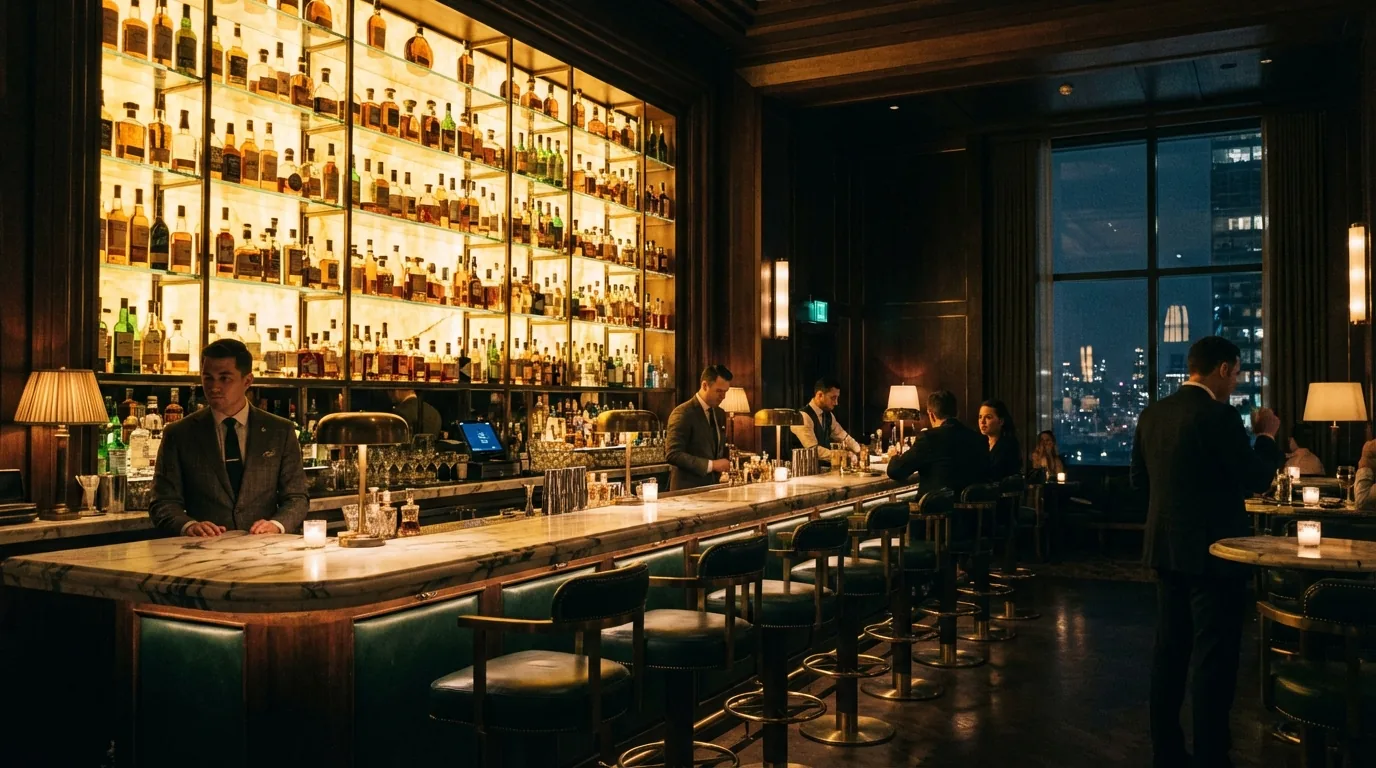
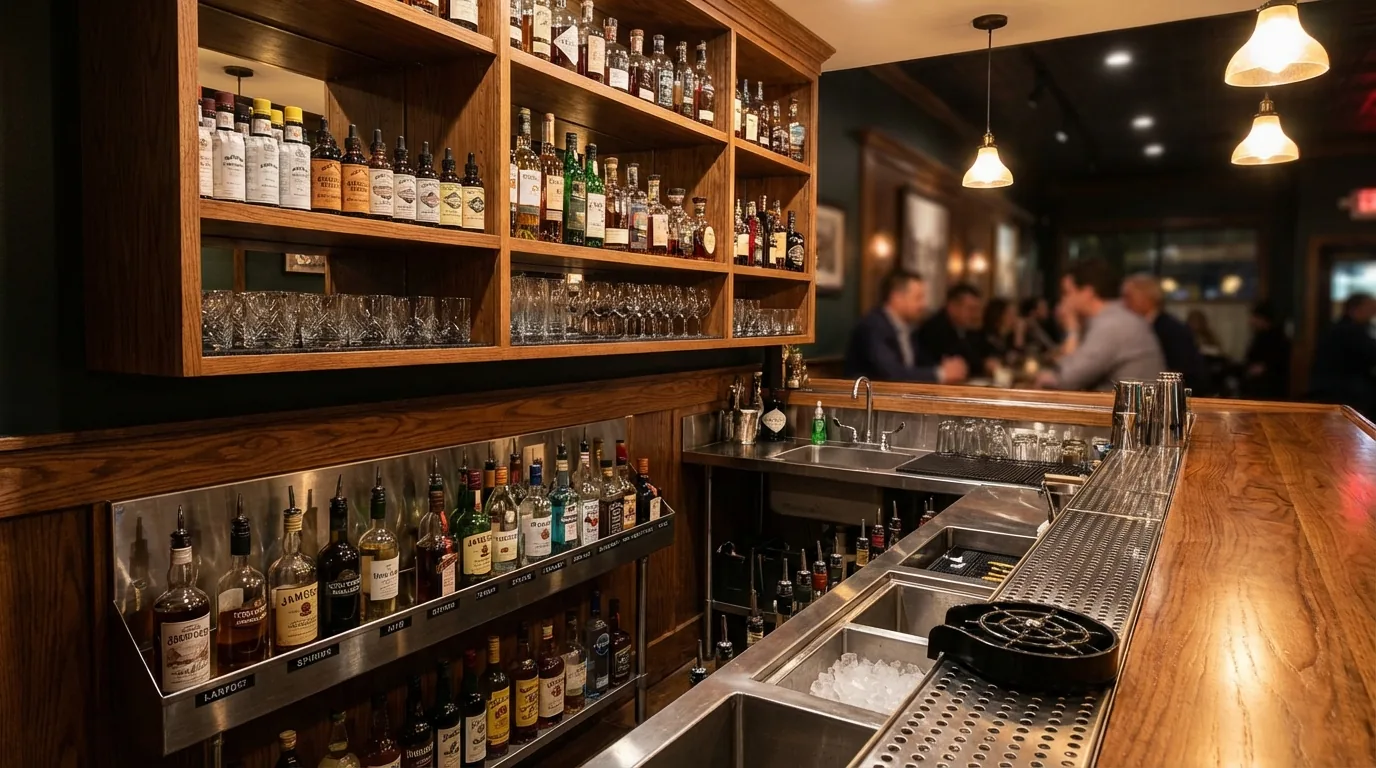
The back bar display is the focal point of the entire room. When designed well — with tiered shelving, strategic backlighting, and a thoughtful arrangement of bottles — it functions as a piece of art that also communicates the bar’s identity and price point. A dramatic backlit spirits wall signals sophistication and premium positioning before a single price is seen. The bar counter itself should be between 42 and 48 inches high for standing service, with a 16 to 20 inch overhang for seating. Marble, zinc, concrete, and hardwood each convey a different character — the material choice is a brand statement.
Behind the bar, the work triangle — the relationship between the ice well, the speed rail, and the glass storage — determines how many drinks a bartender can produce per hour. A poorly planned work triangle creates bottlenecks during peak service. An optimized one allows a skilled bartender to service 20 or more guests simultaneously without stress. DIG designs back bar layouts with operational efficiency as a primary metric, not an afterthought.
Seating Strategy for NYC Bars and Lounges
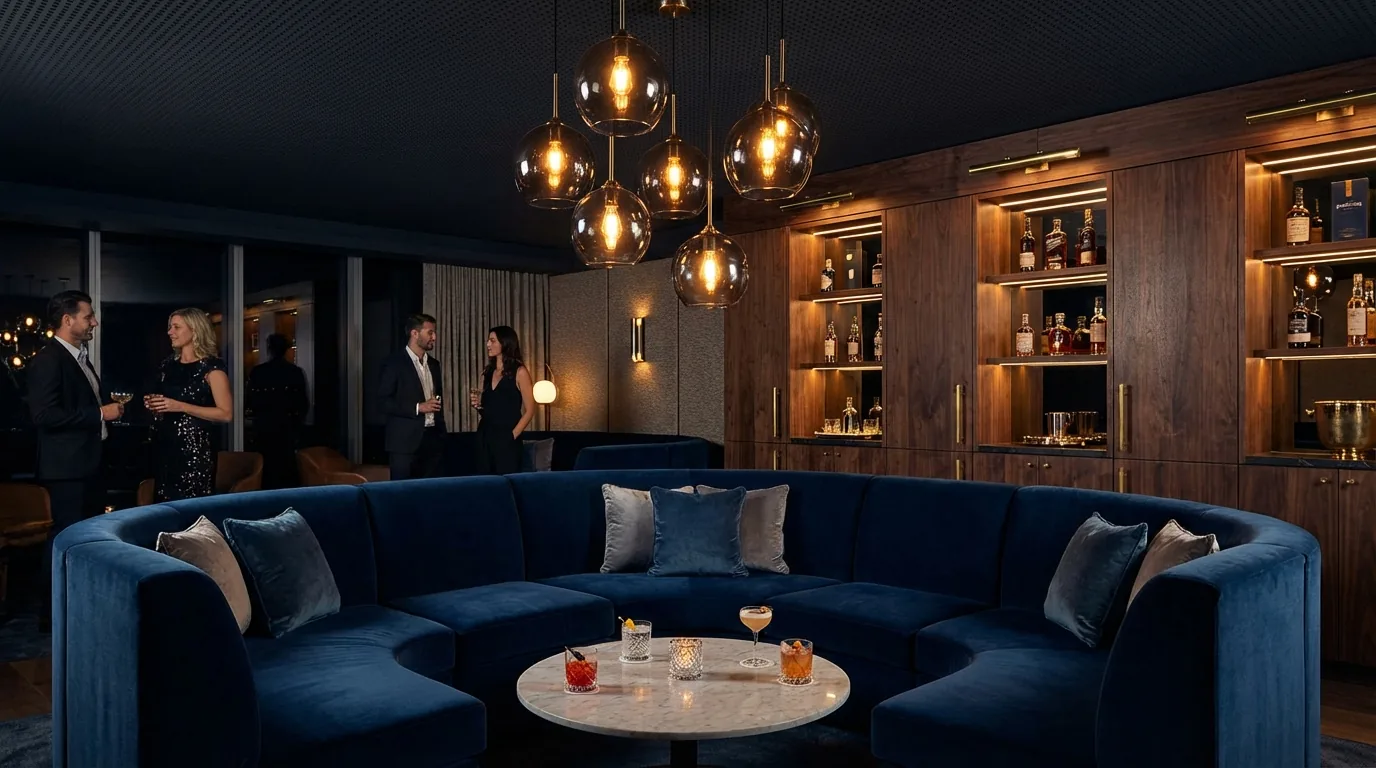
Seating strategy in a NYC bar or lounge is revenue strategy. The mix of bar stools, lounge seating, booth banquettes, and standing areas directly determines average check size, table turn rate, and overall capacity. A thoughtful seating plan balances intimacy — which drives dwell time and higher spend — with the ability to accommodate volume during peak hours.
Lounge seating anchors the room’s atmosphere. Curved velvet sectionals, low-profile club chairs, and custom upholstered banquettes signal that guests are meant to settle in and spend. The furniture selection communicates the venue’s positioning as clearly as the menu pricing does. For cocktail bars targeting a sophisticated clientele, the seating should invite conversation and linger — not rush. For high-volume venues, modular seating configurations that can be rearranged for events give operators flexibility across different programming needs.
VIP Sections: Designing for Premium Revenue
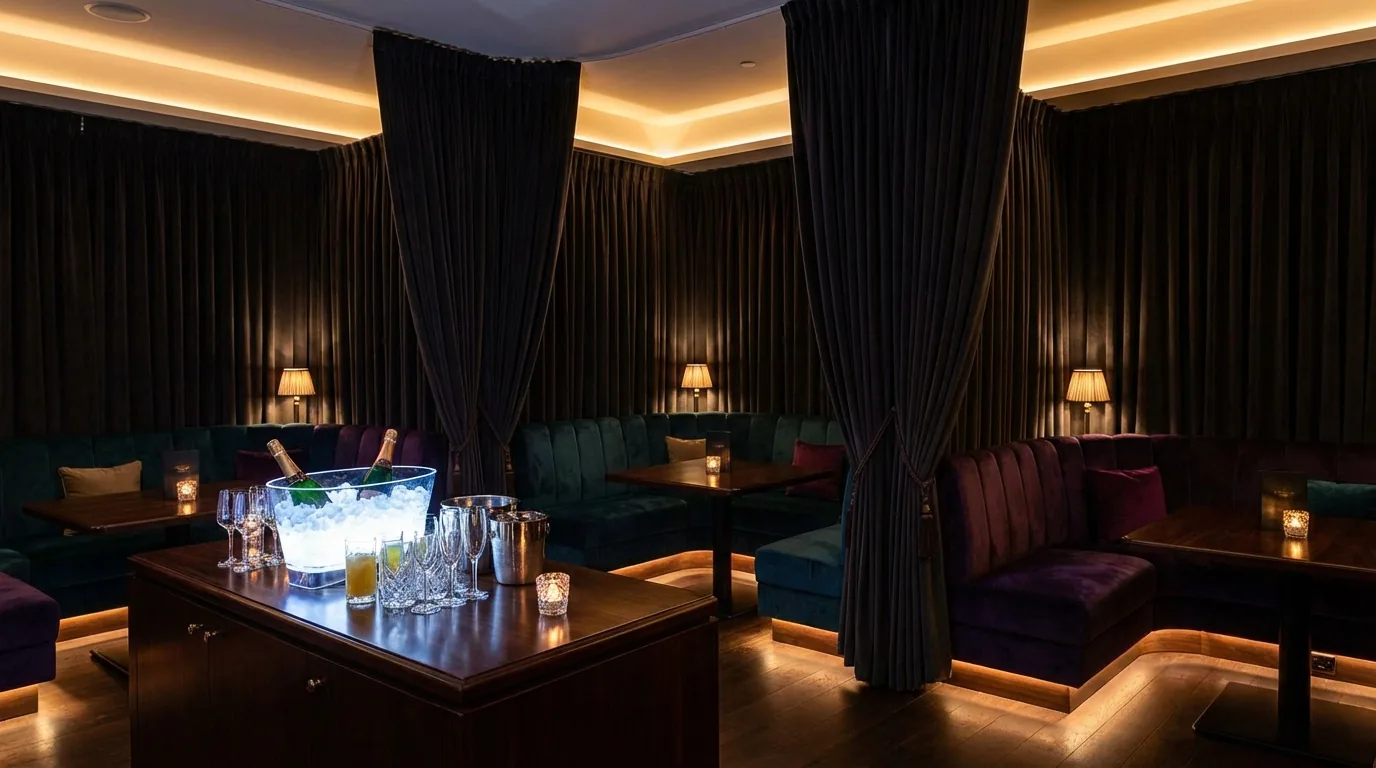
VIP sections are among the highest-return design decisions in nightlife venues. A well-designed VIP area — with plush seating, privacy curtains or partitions, dedicated bottle service infrastructure, and intimate lighting — commands significant premiums over standard seating. The design of the VIP section must balance exclusivity (which is what guests are paying for) with the ability for operations staff to service the space efficiently.
Privacy is the premium product in VIP design. Semi-enclosed booths with velvet curtains, frosted glass partitions, or elevated platforms that separate the section from the main floor all signal exclusivity while maintaining the energy connection to the room. Bottle service infrastructure — ice wells, glassware storage, dedicated server stations — must be integrated into the design so service flows without interrupting the guest experience. DIG designs VIP sections with a revenue lens, optimizing booth depth, sightlines, and service access to maximize the premium per square foot.
Lighting Design for Nightlife Venues
Lighting is the most powerful atmospheric tool in a bar or lounge designer’s kit. NYC nightlife venues require a layered lighting approach that serves multiple states: pre-opening setup, early evening arrivals, peak-hour energy, and late-night intimacy. A static lighting scheme that looks great at one point of the evening will fail at others.
The back bar backlighting anchors the room’s visual identity. LED strip lighting under the bar counter adds depth and defines the footprint. Pendant lights over seating areas create pools of intimate warmth. Accent lighting on artwork, architectural features, or textural wall treatments adds dimension. All of these layers should be on independently dimmable circuits, controlled by a programmable system that allows the operator to shift the entire atmosphere with a single scene preset. This operational flexibility is a design decision that pays dividends every night of operation.
Acoustic Design in NYC Bars and Lounges
Acoustic management is frequently underestimated in nightlife design. NYC bars built in former industrial or commercial spaces — which describes a significant portion of the city’s nightlife venues — often have hard concrete ceilings, brick walls, and stone or hardwood floors that create intense sound reflection. Without acoustic treatment, the result is a space that becomes physically uncomfortable at volume, shortening guest dwell time and limiting the operator’s ability to program music effectively.
Acoustic solutions in nightlife venues must be invisible or aesthetic — unlike office acoustic panels, they cannot look utilitarian. DIG uses upholstered booth backs, fabric-wrapped wall panels framed as art, acoustic ceiling baffles that read as design features, and strategic soft furnishing placement to absorb and diffuse sound. The goal is a space where guests can hear each other in conversation while still feeling the energy of the music — what designers call the “buzz without clamor” threshold.
NYSLA Compliance and NYC Building Codes
Every bar and lounge design in New York City must navigate the requirements of the New York State Liquor Authority. The NYSLA has specific regulations governing the physical configuration of licensed premises — including sightline requirements that allow staff to observe the entire licensed area, layout requirements that prevent the creation of hidden or obscured spaces, and occupancy calculations that affect capacity. Failure to design for NYSLA compliance from the outset can result in license delays, required modifications, or denial.
NYC building codes add additional requirements around egress widths, fire suppression, accessible restroom compliance, and occupancy load calculations. DIG works with NYC-experienced expeditors and coordinates with the Department of Buildings during the design phase to ensure that every bar and lounge project we deliver meets all applicable codes at certificate of occupancy. Designing for compliance from the first sketch eliminates costly mid-construction changes.
The DIG Approach to Bar and Lounge Design
DIG Interior Design Solutions brings end-to-end hospitality design expertise to every NYC bar and lounge project. Our process begins with a deep understanding of the operator’s concept, target clientele, and revenue model — because great nightlife design is always in service of a business strategy. We develop concept boards, space plans, material palettes, lighting schemes, and custom millwork drawings that bring the vision to life while hitting the operational targets that make a venue successful.
Our experience with projects like Tabernacle Steakhouse in NYC has given us a fluency in the specific demands of New York hospitality — the codes, the vendors, the timelines, and the client expectations that define this market. We understand that a nightlife venue’s design must work not just on opening night but on the two hundredth night, when the novelty has worn off and the space itself must carry the experience.
Frequently Asked Questions: Bar and Lounge Design NYC
How much does bar and lounge design cost in NYC?
Bar and lounge design costs in NYC vary significantly based on the size of the space, the level of custom work, and the complexity of the build-out. Smaller cocktail bars under 2,000 square feet typically range from design fees plus contractor costs, while larger full-service nightlife venues require more extensive investment. DIG offers free initial consultations to assess scope and provide a project-specific estimate.
What are NYSLA layout requirements for NYC bars?
The New York State Liquor Authority requires that licensed premises be configured so that staff can maintain sightlines across the entire licensed area. This means avoiding enclosed rooms, hidden alcoves, or partitioned spaces that are not visible to staff. VIP sections must be designed to allow staff oversight while maintaining a sense of privacy for guests. DIG coordinates all bar layouts with NYSLA compliance as a design parameter from the first draft.
How long does a bar design and build-out take in NYC?
A typical NYC bar design and build-out timeline runs from initial concept through certificate of occupancy. The design phase generally takes six to ten weeks for a mid-size venue. Permitting through the NYC Department of Buildings adds time depending on scope and whether the project requires full plan approval. Construction timelines vary by complexity. DIG works proactively with expeditors and contractors to keep projects on schedule.
What makes a profitable bar layout?
A profitable bar layout optimizes the relationship between bar capacity, seating mix, and service flow. The bar itself should be sized and positioned to handle peak-hour volume without creating guest bottlenecks. The seating mix should include a range of options — bar seats for solo and duo guests, lounge seating for groups, and VIP configurations for premium spend occasions. Sightlines from the bar to all seating areas allow staff to service the room efficiently. DIG uses revenue-per-square-foot analysis to inform every layout decision.
Can DIG Interior Design help with a bar concept in Brooklyn or Queens?
Yes. DIG Interior Design serves all five NYC boroughs including Manhattan, Brooklyn, Queens, the Bronx, and Staten Island. We have experience with the specific neighborhood character and building typologies across the city, from Williamsburg warehouse conversions to Lower East Side tenement retrofits to Hell’s Kitchen new construction. Our NYC-wide expertise ensures the design feels right for the neighborhood as well as the concept.
Ready to design a NYC bar or lounge that drives real revenue? Contact DIG Interior Design Solutions for a free consultation. We bring NYC hospitality expertise, NYSLA compliance knowledge, and proven nightlife design to every project.