The executive office has traditionally been one of the most defined spaces in the workplace. Larger footprint, perimeter location, controlled access—it was a clear signal of hierarchy and authority.
That model is changing.
As workplace dynamics shift toward hybrid work, flatter organizational structures, and increased emphasis on transparency, the role of the executive office is being redefined. The question is no longer just where leadership sits, but how leadership is represented through space.
Hierarchy Is Less Visible—but Still Present
There is a perception that modern workplaces are moving away from hierarchy altogether. In reality, hierarchy still exists—it’s just expressed differently.
Where traditional offices used size and location to signal status, newer environments rely more on access, flexibility, and functionality. Executives may occupy smaller or more integrated spaces, but they still require environments that support decision-making, privacy, and focus.
The shift is not about eliminating hierarchy. It’s about recalibrating how it’s communicated.
Privacy Remains Critical
Despite the move toward openness, the need for privacy at the leadership level has not changed. Executive roles require space for confidential conversations, focused work, and strategic decision-making.
Where designs often fall short is in overcorrecting toward transparency. Fully open environments or highly exposed offices can limit the ability to operate effectively.
Privacy is not just about enclosure—it’s about control. The ability to manage visibility, acoustics, and access is what defines a functional executive space.
Effective designs balance openness with the ability to close off when needed.
Transparency Is Driving Spatial Changes
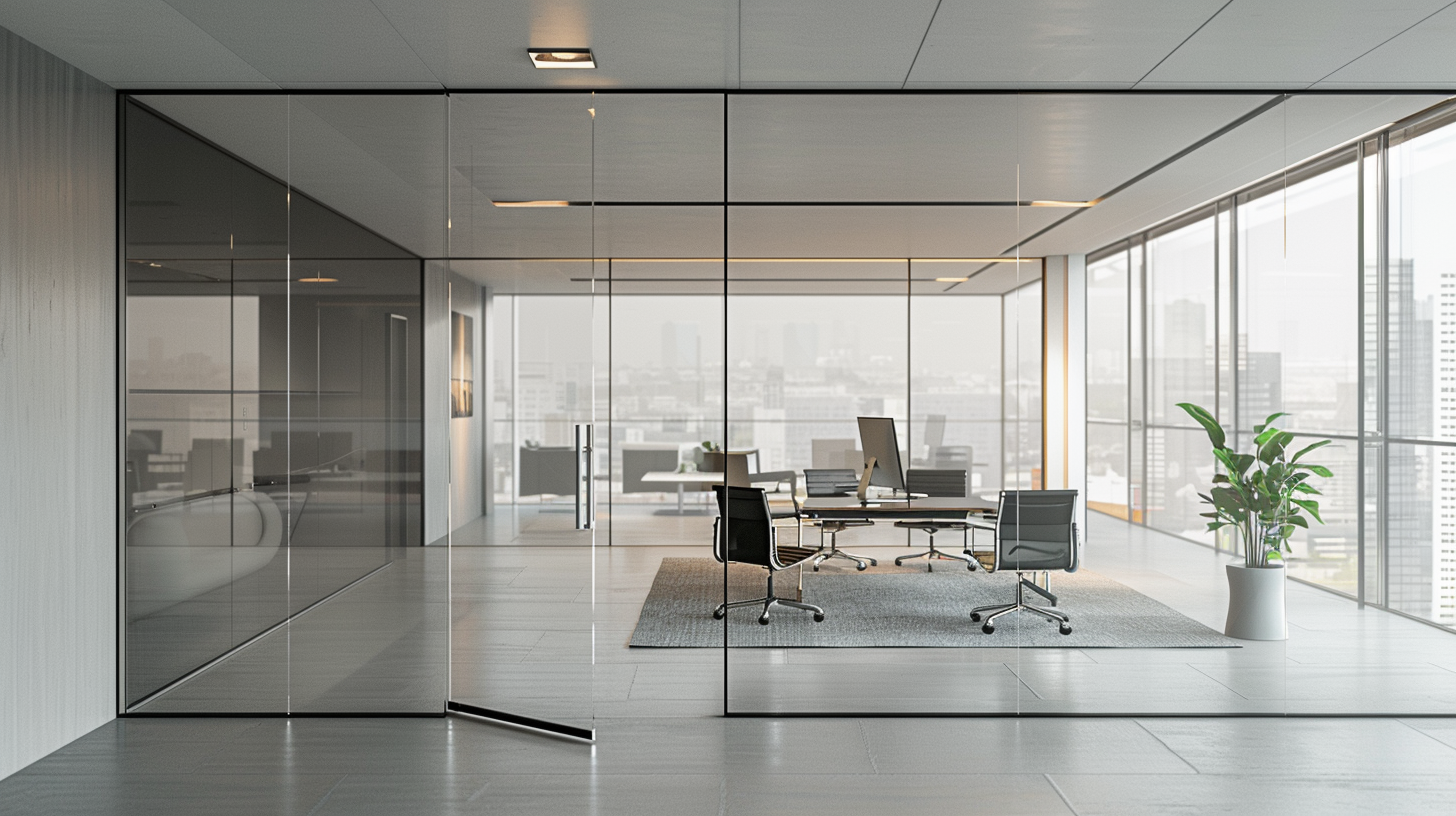
At the same time, there is increasing pressure for leadership to be visible and accessible. Glass walls, reduced footprints, and more integrated layouts are all responses to this shift.
These changes are intended to support transparency—but they also introduce new challenges.
Visual openness can conflict with acoustic privacy. Reduced separation can blur boundaries between focused work and collaboration. Without careful planning, transparency becomes performative rather than functional.
The goal is not to eliminate separation, but to make it more intentional.
Location Within the Office Is Changing
Traditionally, executive offices occupied perimeter locations, maximizing access to light and views. In many newer layouts, those positions are being redistributed.
We’re seeing executive spaces move closer to the interior, or become part of shared zones, with perimeter areas opened up for broader use.
This shift reflects a change in priorities—moving from individual allocation to shared benefit. However, it also requires careful consideration of how executive functions are supported without those traditional advantages.
Access to light, acoustic separation, and proximity to key functions still need to be addressed, regardless of location.
Flexibility Is Becoming a Requirement
Executive work is no longer confined to a single space. Meetings, collaboration, and remote work all influence how leadership uses the office.
This is driving a need for flexibility. Spaces need to support a range of activities—from private work to team discussions to hybrid meetings.
Static, single-use offices are becoming less effective. Environments that can adapt to different needs throughout the day provide more value.
This doesn’t eliminate the need for a dedicated space—but it changes how that space is used.
Technology Integration Is Central
Executive spaces are often where critical meetings take place, including those involving remote participants. Technology needs to support seamless communication across formats.
Where offices fall short is in treating technology as an add-on. Poorly integrated systems create friction and reduce effectiveness.
Audio, video, and connectivity need to be embedded into the design. When they are not, the space may look appropriate but fail to function during key moments.
Design Signals Culture
The executive office is more than a functional space—it is a signal of organizational culture.
Large, enclosed offices communicate one set of values. Open, integrated environments communicate another. Neither is inherently right or wrong, but both send a message.
Where organizations struggle is in misalignment. Spaces that signal openness while maintaining rigid access, or spaces that appear collaborative but limit interaction, create confusion.
Design needs to reflect how leadership actually operates—not just how it wants to be perceived.
Balancing Presence and Function
The evolution of the executive office is not about choosing between privacy and transparency. It’s about balancing both in a way that supports leadership effectiveness.
Executives need spaces that allow for focus, confidentiality, and decision-making, while also supporting visibility and connection with teams.
The most effective environments are those that provide control—over visibility, access, and use—rather than forcing a single mode of operation.
This balance is what defines the next generation of executive space.
Redefining the Role of the Office
As workplace dynamics continue to evolve, the executive office will continue to change with them.
What remains constant is the need for spaces that support how leadership actually works. Size, location, and visibility will continue to shift, but functionality and alignment will remain the drivers of performance.
The executive office is no longer just a symbol of position. It is a tool—and its effectiveness depends on how well it reflects the realities of modern work.