For decades, the design of medical centers was guided by sterility and function, often resulting in spaces that felt cold, impersonal, and stressful. Today, a design revolution is underway, driven by a simple but powerful idea: connecting humans with nature to promote healing. This is the core principle of biophilic design, and it is fundamentally transforming healthcare environments from places of anxiety into spaces of wellness and recovery.
Biophilic design is more than just adding a few potted plants. It is a holistic approach that incorporates natural light, materials, patterns, and sensory experiences into the built environment. In a healthcare setting, the results are profound, leading to measurable improvements in patient outcomes, reduced stress for staff, and a stronger sense of community.
This guide explores how biophilic design principles are revolutionizing modern medical centers and creating true environments for healing.
Core Principle #1: Direct Connection with Nature
The most straightforward application of biophilic design is the direct integration of real, living nature into a space.
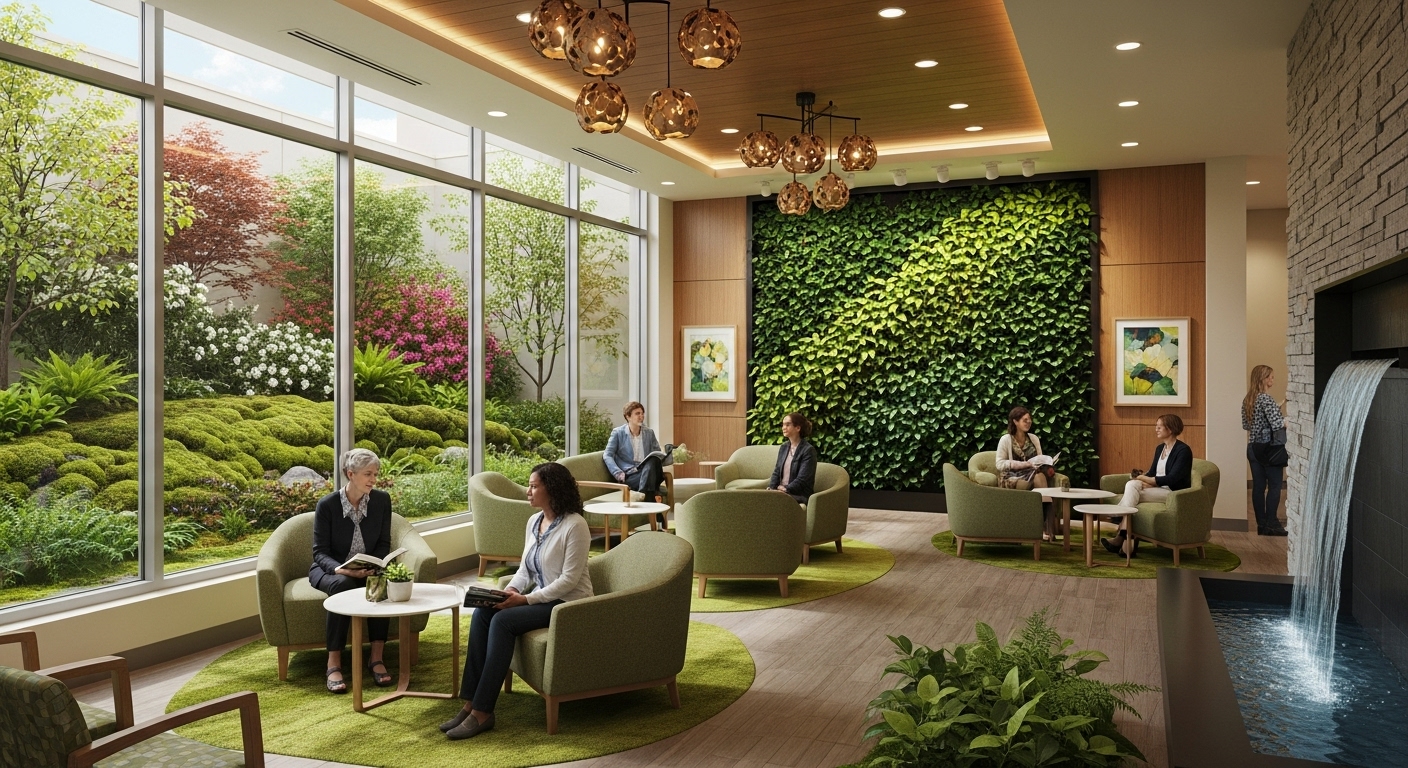
- Living Walls and Interior Gardens: A vertical garden or a small interior courtyard can become the literal and figurative heart of a facility. These features are proven to purify the air, reduce stress, and provide a positive, life-affirming focal point for patients and visitors.
- Maximizing Natural Light: Large windows, skylights, and thoughtful floor plans that allow sunlight to penetrate deep into the building are crucial. Natural light helps regulate our circadian rhythms, improves mood, and reduces the need for harsh artificial lighting.
- Views of Nature: Studies have shown that patients with a view of natural landscapes from their window recover faster and require less pain medication than those looking at a brick wall. Every room, from patient suites to staff break rooms, should prioritize a view of the outdoors.
Core Principle #2: Natural Analogues and Materials
When direct connections aren’t possible, we can evoke nature through materials, patterns, and colors that mimic the natural world.
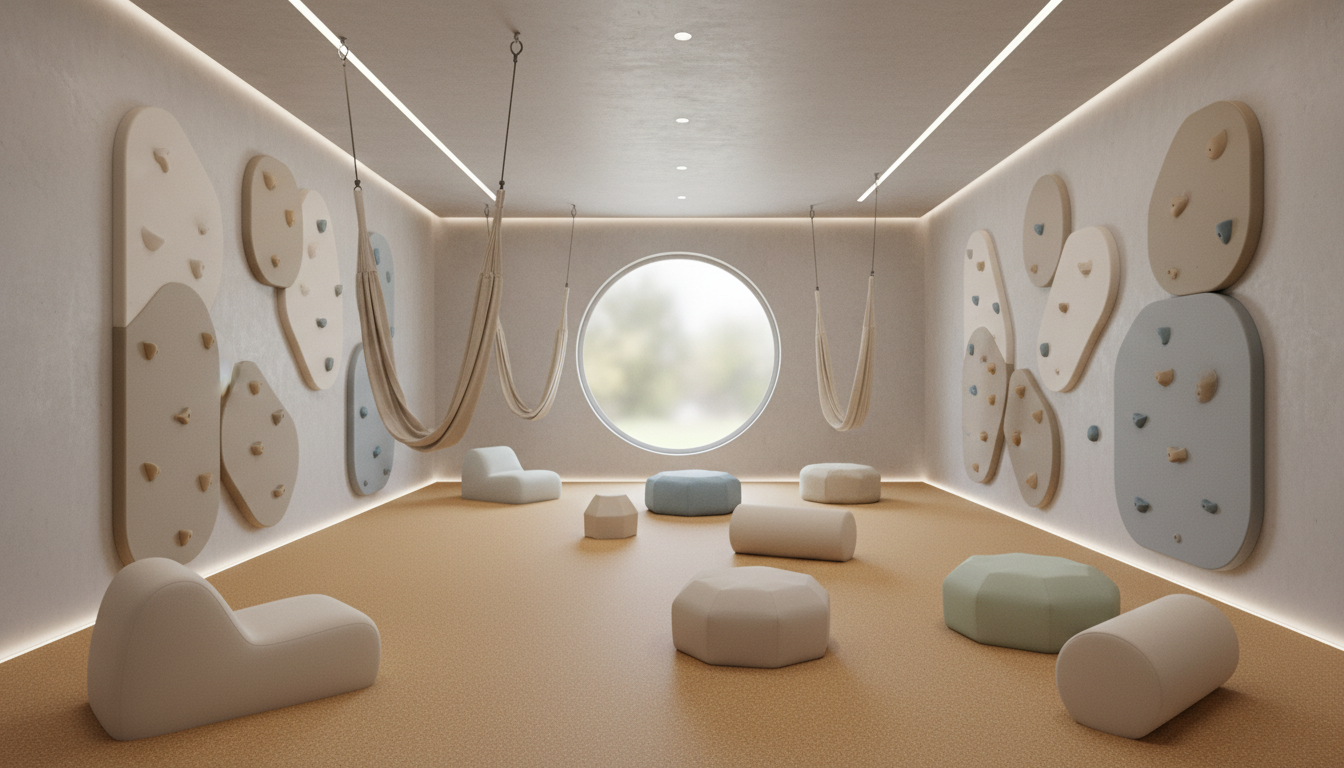
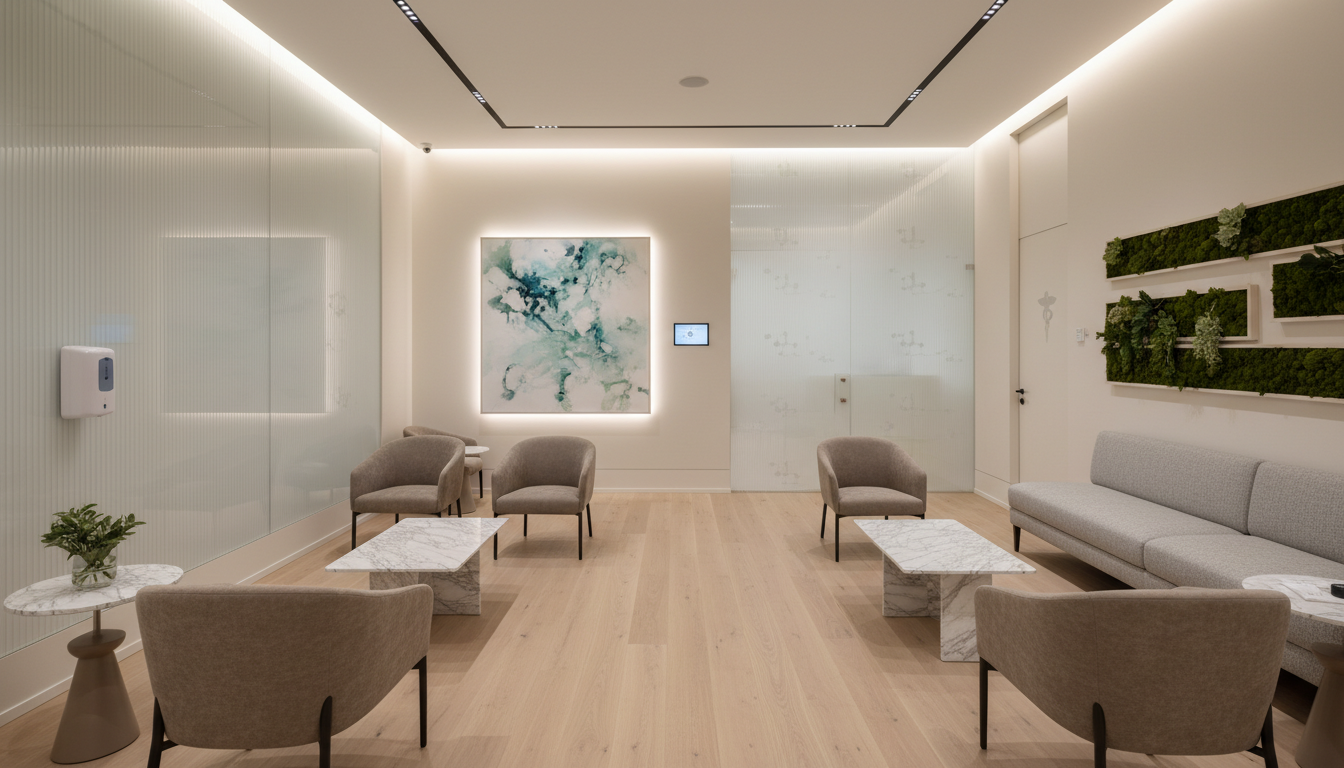
- Natural Materials: Using materials like wood for flooring and wall paneling, stone for reception desks, and natural fibers like wool and cotton in upholstery brings a tactile warmth and authenticity to a space. These materials are a welcome contrast to the cold, synthetic surfaces traditionally used in healthcare.
- Biomorphic Patterns: Nature rarely moves in straight lines. Incorporating patterns that mimic natural forms—like honeycombs, waves, or leaf veins—in flooring, textiles, or decorative screens creates a sense of organic order and visual interest.
- A Nature-Inspired Palette: Color choices should draw from the natural world. Earthy tones, soft greens, and calming blues can reduce blood pressure and create a serene atmosphere, moving far away from the sterile “hospital white” of the past.
The Proven Benefits in Healthcare
The shift toward biophilic design in medical centers is not just an aesthetic trend; it’s an evidence-based practice. Research has consistently shown that these environments lead to:
- For Patients: Faster recovery times, reduced stress and anxiety, and a lower perception of pain.
- For Staff: Increased job satisfaction, reduced burnout, and improved focus.
- For Families & Visitors: A more welcoming and less stressful experience, which is crucial for supporting loved ones.
Final Thoughts: Designing for Humanity
A medical center’s primary function is to heal. Biophilic design recognizes that healing is a holistic process that involves the mind and spirit as much as the body. By intentionally designing spaces that connect us to our innate affinity for nature, we can create medical centers that are not just technologically advanced, but also deeply human.
Is your medical facility ready to embrace a design philosophy that puts wellness first? Contact DIG Interior Design to explore the healing potential of biophilic design.