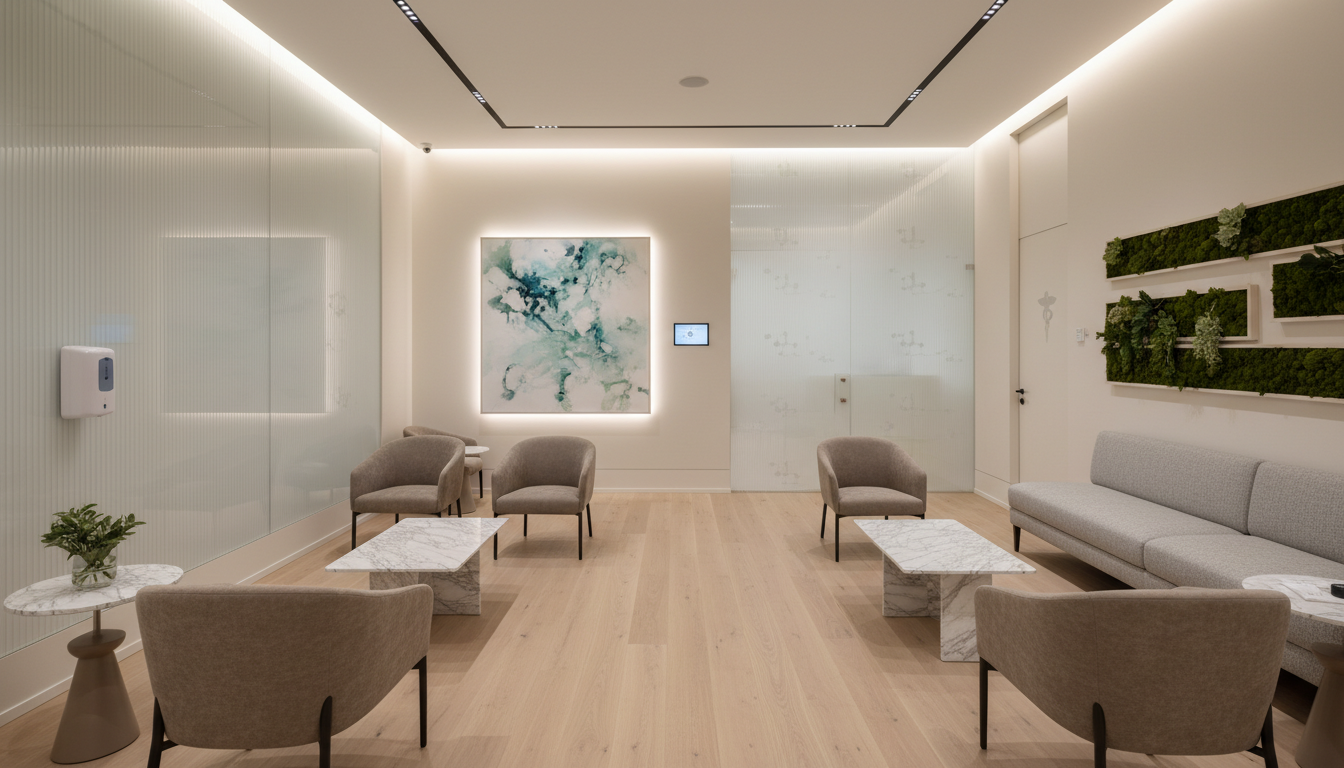
In the competitive landscapes of New York and New Jersey, the medical spa (MedSpa) industry has evolved beyond simple aesthetic enhancements. Today, these facilities represent a sophisticated convergence of high-level clinical medicine and luxury hospitality. For healthcare administrators and facility managers, the challenge lies in a delicate balancing act: adhering to stringent state health department regulations while maintaining an environment that justifies premium pricing and fosters patient loyalty.
Designing a MedSpa is not merely an exercise in interior decoration; it is an exercise in technical compliance. Whether navigating the complexities of New York’s Article 28 standards or the New Jersey Board of Medical Examiners’ requirements, every design choice—from the porosity of a countertop to the decibel rating of a partition wall—has clinical and operational implications. This article examines the critical intersection of medical spa interior design requirements and high-end aesthetic execution.
The MedSpa Hybrid Model: Clinical Precision Meets Hospitality
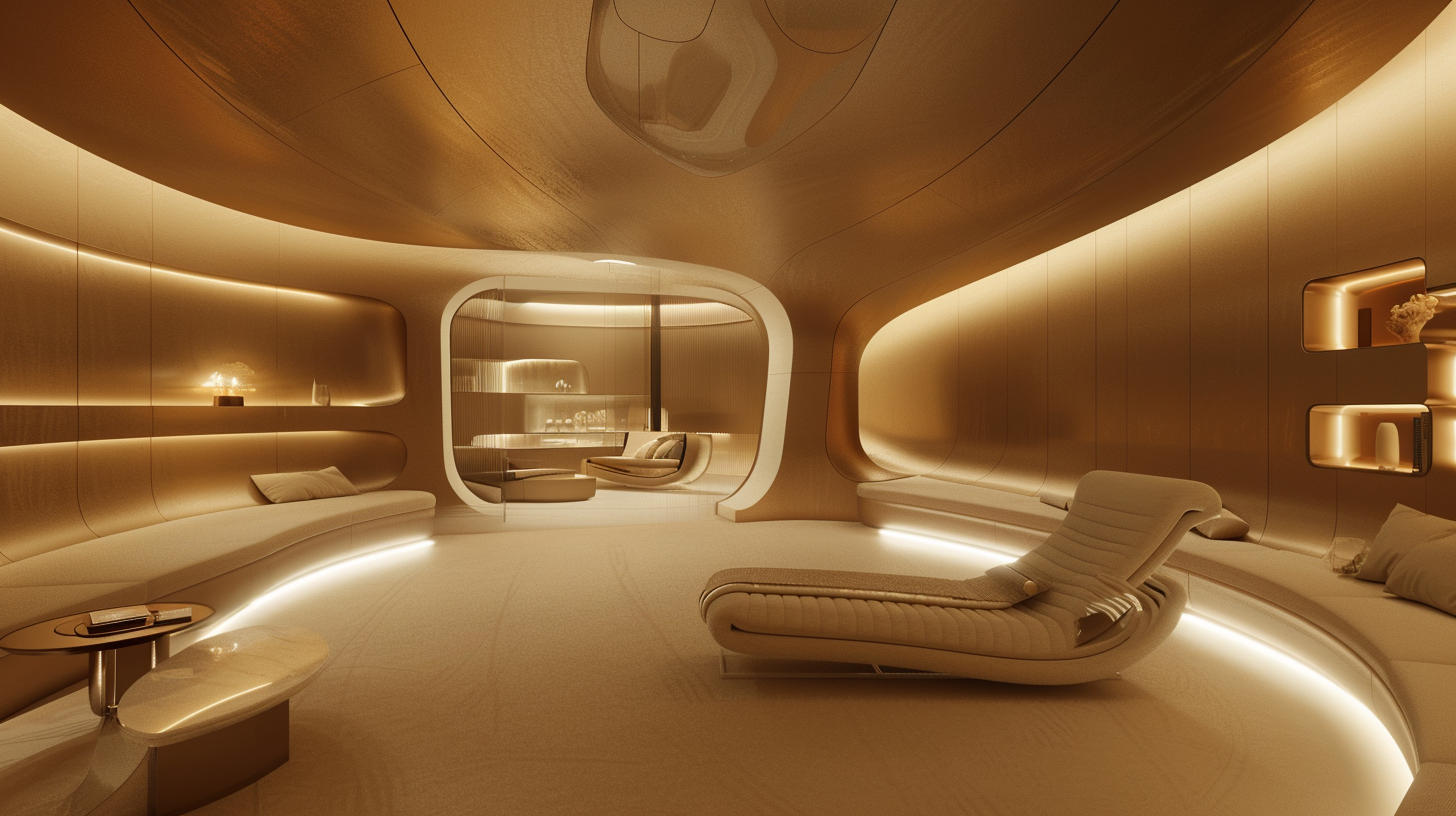
The modern MedSpa operates as a hybrid entity. Unlike a traditional physician’s office, where the environment is purely functional, a MedSpa must leverage its physical space as a marketing tool. Supporting data indicates that 70% of MedSpa clients cite ‘ambiance’ as a key factor in their decision to return to a facility, a metric equal in weight to the actual treatment results. For the facility manager, this means the environment must perform two functions simultaneously: it must be a sterile, safe clinical site, and it must be a sanctuary of wellness.
Achieving this requires a “hospitality-first” approach to clinical infrastructure. This involves the “invisible” integration of medical necessities. For instance, rather than having a stainless steel sharps container and biohazard bin prominently displayed, custom cabinetry can be engineered to house these items within specialized pull-outs that meet accessibility standards while remaining hidden from the client’s immediate line of sight. This reduces “clinical anxiety” without compromising the provider’s workflow or safety protocols.
NY/NJ Regulatory Landscape: Navigating Article 28 and Beyond
In the New York and New Jersey metropolitan areas, regulatory oversight is particularly rigorous. In New York, many facilities performing invasive or semi-invasive procedures (such as Level II or Level III office-based surgeries) must look toward Article 28 standards as a benchmark for safety and design. Even for facilities that do not strictly fall under Article 28, adhering to these higher standards is a strategy for future-proofing the business against evolving legislation.
Key regulatory considerations for medical spa interior design requirements in NY and NJ include:
- Hand-Washing Stations: New York regulations often require specific sink placements within procedure rooms. These must be hands-free (sensor-operated) and feature non-porous backsplashes.
- Ventilation and Air Quality: Laser suites and surgical rooms require specific Air Changes per Hour (ACH) and high-efficiency particulate air (HEPA) filtration. In New Jersey, ensuring that HVAC systems prevent the cross-contamination of air between procedure rooms and waiting areas is a primary concern for facility managers.
- ADA Compliance: Beyond basic accessibility, this includes the height of reception desks, the width of corridors for stretcher or wheelchair clearance, and the configuration of restrooms.
- Medical Gas Storage: If nitrous oxide or other gases are used for sedation, specific fire-rated storage and manifold systems must be integrated into the architectural plan.
Clinical Workflow vs. Client Flow: The Science of Movement
Efficiency in a MedSpa is measured by how effectively staff can move between “clean” and “dirty” utility areas without crossing paths with clients who are seeking a serene experience. A well-designed floor plan separates the “Front of House” (FOH) and “Back of House” (BOH) functions.
The Client Journey
The client’s journey should be linear and intuitive. Upon entry, the transition from the bustling streets of Manhattan or Newark into the spa should be marked by a sensory shift—subdued acoustics and a curated visual palette. However, once the client moves from the consultation room to the procedure room, the design must shift to support clinical efficacy. A common pitfall is a “mazy” layout that causes client confusion; instead, use architectural lighting or flooring changes to subtly guide guests through the space.
The Provider Efficiency
For the practitioner, the design must prioritize ergonomics and the “Golden Triangle” of clinical movement: the patient chair, the supply station, and the waste/sink area. Minimizing the number of steps a provider takes during an injectable or laser session increases the facility’s throughput and reduces provider fatigue. Specialized Spa & Wellness Center Design in Bronx, NY demonstrates how localized supply storage within each treatment room can significantly enhance operational ROI.
Materiality: Hygiene without “Hospital Vibes”
The selection of finishes is where the conflict between luxury and compliance is most apparent. Healthcare environments require surfaces that can withstand EPA-approved hospital-grade disinfectants, which are often corrosive to standard luxury materials like marble, silk, or untreated wood.
To solve this, designers utilize “clinical-grade luxury” materials:
- Non-Porous Countertops: While Carrara marble is beautiful, it is too porous for a medical environment. High-grade engineered quartz or sintered stone provides the same aesthetic while offering a non-porous surface that inhibits bacterial growth.
- Performance Fabrics: Traditional velvet or linen is a liability in a room where blood-borne pathogens may be present. Modern healthcare textiles use antimicrobial, moisture-barrier technology to mimic the hand-feel of high-end fabrics while allowing for bleach-solution cleaning.
- Seamless Flooring: In procedure rooms, New York health codes often require seamless flooring with integral coved bases (where the floor material continues 4-6 inches up the wall). This eliminates the 90-degree corner where dust and microbes accumulate. Using luxury vinyl tile (LVT) with heat-welded seams allows for a wood-grain or stone appearance that remains fully sanitizable.
Lighting Design for Aesthetics and Precision
Lighting is the most powerful tool in a MedSpa’s design arsenal, serving two masters: clinical accuracy and atmospheric relaxation. A single overhead fluorescent light is insufficient and detrimental to the client experience.
A sophisticated lighting plan utilizes three layers:
- Ambient Lighting: Soft, recessed lighting or indirect LED coves that provide a general glow and set the mood in lounges and hallways.
- Task Lighting: High-CRI (Color Rendering Index) lighting in procedure rooms. Providers need to see true skin tones and vascularity. Dimmable LED panels allow the room to transition from a bright clinical setting during an injectable procedure to a dim, relaxing environment for a facial.
- Accent Lighting: Used to highlight architectural features or retail products. In NY and NJ MedSpas, retail sales often account for 20-30% of revenue; lighting these products correctly is essential for the bottom line.
Technical Requirements and Aesthetic Solutions
The following table outlines how technical medical spa interior design requirements are addressed through high-end design solutions:
| Room Type | Clinical Requirement | Aesthetic Solution |
|---|---|---|
| Injectables Room | Sharps disposal, bright light for precision | Custom millwork to hide bins, dimmable LED task lighting with high CRI |
| Laser Suite | Specialized ventilation, Laser safety signage | Hidden HVAC returns integrated into ceiling coffers, tasteful backlit signage integration |
| Recovery Lounge | Easy-clean, antimicrobial seating | High-performance antimicrobial vinyls with woven textile textures |
| Consultation Room | Acoustic privacy (HIPAA compliance) | Sound-dampening wall panels upholstered in luxury fabrics, drop-seals on doors |
Acoustic Isolation: The Silent Luxury
One of the most overlooked aspects of medical spa interior design requirements is acoustic privacy. Under HIPAA, patient consultations must remain private. Furthermore, the sound of a high-powered laser or a vacuum-assisted device in one room can ruin the relaxation of a client receiving a massage in the next. Managers must ensure that wall assemblies include sound-attenuating batts and that “flanking paths” (the gaps above suspended ceilings) are sealed with plenum barriers. A luxury environment is, above all, a quiet one.
Frequently Asked Questions
Q: Do med spas need hospital-grade flooring?
A: Yes, in procedure rooms, seamless non-porous flooring is generally required by health departments in NY and NJ to prevent pathogen buildup. However, you do not need to use “clinical-looking” sheet vinyl; modern luxury LVT or specialized porcelain tiles can mimic wood or stone while meeting these standards when installed with the correct grouting or welding techniques.
Q: How do I handle medical waste without ruining the spa aesthetic?
A: The most effective method is through integrated cabinetry. Design specific “drop zones” in the millwork where sharps containers and biohazard bags are housed. These can be accessed via a small, spring-loaded flap that keeps the bins out of sight but allows for one-handed disposal by the provider.
Q: Is Article 28 compliance mandatory for all MedSpas in New York?
A: Not all. It primarily applies to facilities seeking licensure as a Diagnostic and Treatment Center. However, many of the physical plant standards (room sizes, ventilation, and finish requirements) are considered “best practice” and are often looked for during general medical board inspections.
The Competitive Edge of Design
For healthcare administrators in New York and New Jersey, the physical environment is an extension of the clinical care provided. A facility that feels clinical and cold may provide excellent medical results, but it will struggle with client retention. Conversely, a beautiful space that fails to meet medical spa interior design requirements for hygiene and safety risks regulatory fines and compromised patient outcomes.
By focusing on “cleanable luxury”—the use of high-performance materials, hidden clinical infrastructure, and strategic lighting—MedSpa owners can create a space that satisfies both the Department of Health and the most discerning luxury clientele. Leveraging experience in navigating NY State medical regulations ensures that your facility is not just beautiful, but compliant and operationally efficient.
Ready to Transform Your Practice?
Combining medical-grade compliance with world-class hospitality aesthetics requires a specialist approach. Let us help you navigate the complexities of NY and NJ regulations while building a space your clients will love.