Furniture, fixtures, and equipment procurement is consistently where commercial interior projects experience the most budget surprises and schedule delays. The reasons are predictable: lead times that extend beyond what was planned, substitution decisions made under pressure that create installation conflicts, and procurement processes that are not integrated with the construction schedule. Here is how high-performing projects manage the process.
Specifications as procurement documents
FF&E specifications should be treated as procurement documents from the moment they are issued. This means: manufacturer, model, finish, and dimension are confirmed before the specification is issued; approved equivalent substitutions are defined upfront with clear approval criteria; and lead time is verified at the time of specification, not when the purchase order is placed. Projects that specify and verify lead times simultaneously avoid the most common procurement failure: discovering at construction start that a specified product has a 16-week lead time and the schedule allows for 8.
Supply chain risk in 2026
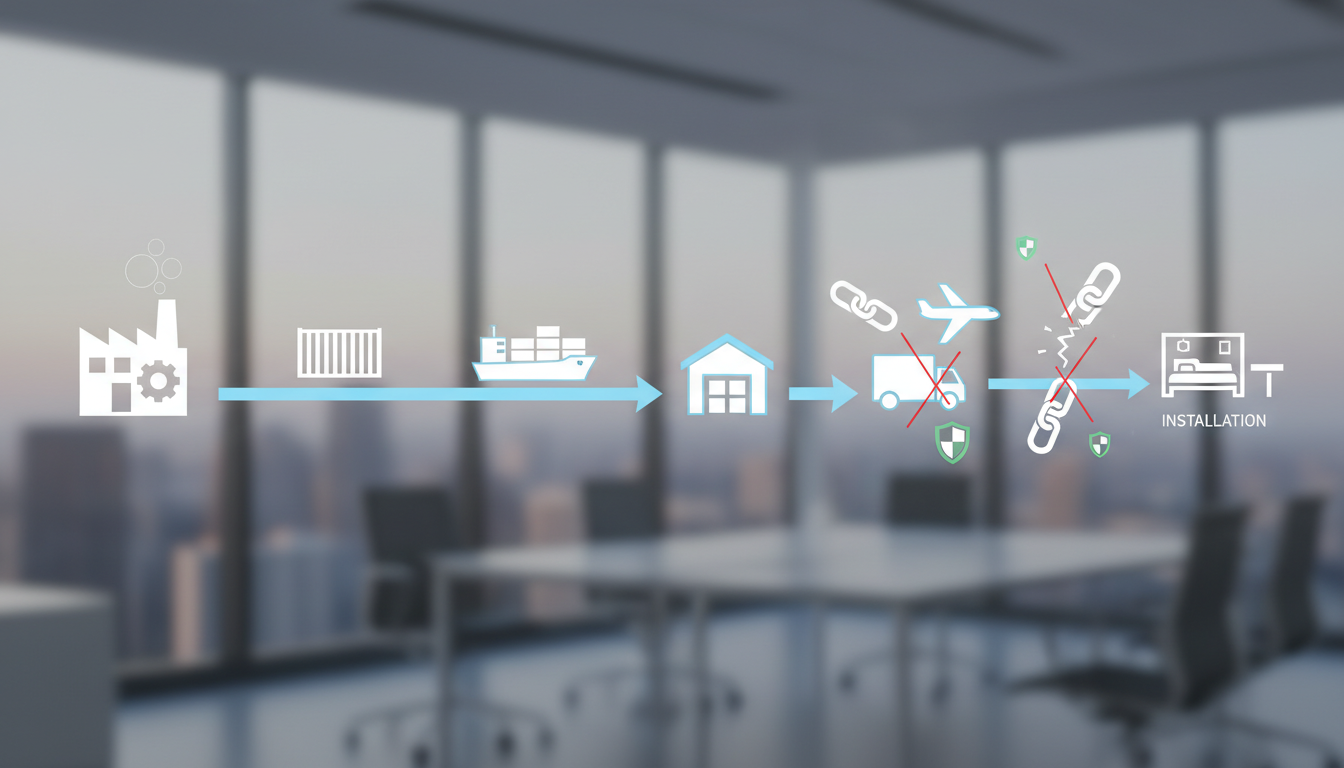
The supply chain disruptions that began in 2020 introduced a new procurement reality that has partially normalized but not fully resolved. Lead times for custom commercial furniture remain longer and more variable than pre-2020 baselines. The practical response: identify long-lead items at schematic design, maintain approved alternative specifications for high-risk items, and build schedule contingency around delivery verification.
Coordination with construction schedule
FF&E delivery and installation must be coordinated with the construction schedule in detail. Furniture arrives in a sequence determined by assembly requirements and space access. The furniture installer needs a clean, finished, climate-controlled space. The GC needs the furniture schedule to sequence final floor and wall protection. A well-run procurement process produces a phased delivery schedule that the GC can build their substantial completion timeline around.
Receiving and inspection
Each piece should be inspected against the purchase order at delivery, with damage documented photographically immediately. Claims against manufacturers and freight carriers require timely documentation — damage discovered during installation that was not documented at delivery creates complicated warranty conversations. The receiving and inspection protocol should be defined in the procurement specification, not improvised on delivery day.
DIG Interior Design Solutions manages FF&E procurement for commercial projects in New York and New Jersey. Contact us to discuss your project.