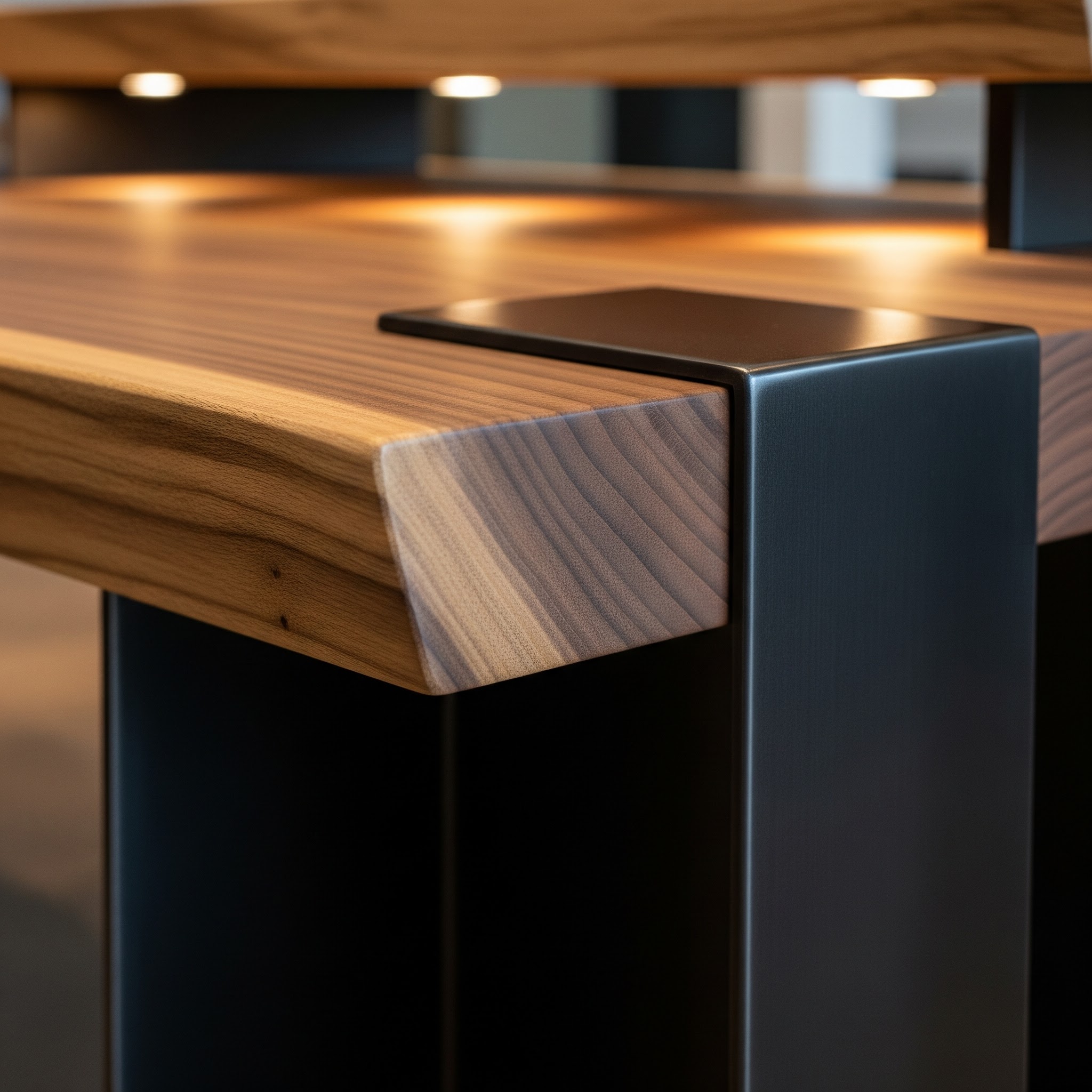
The combination of wood and metal is a timeless design pairing, but in commercial interiors, it represents a functional alliance between durability and aesthetics. At DIG, our material selection process is rigorous, ensuring that these elements can withstand high traffic while maintaining the intended design narrative.
The Role of Metal: Structure and Edge
Metal acts as the skeleton of commercial design. In retail and hospitality projects like Tabernacle Steakhouse, metal finishes (brass, blackened steel, copper) provide:
- Durability: Metal kick-plates and corner guards protect vulnerable joinery from wear and tear.
- Definition: Slim metal profiles in shelving or partitions define space without blocking sightlines.
The Role of Wood: Texture and Humanity
Wood introduces organic texture that softens the industrial edge of metal. However, specifying wood for commercial use requires technical expertise:
- Veneer vs. Solid: For cabinetry and wall panels, high-quality veneers offer stability and cost-effectiveness, while solid wood is reserved for high-touch areas like handrails or bar tops.
- Finish Ratings: We ensure all wood surfaces are sealed with commercial-grade finishes resistant to alcohol, cleaning solvents, and heat.
The Intersection
The magic happens in the joinery—where wood meets metal. Whether it’s a live-edge walnut conference table on a steel base or a brass-inlaid oak reception desk, this material mix signals quality. It tells the user that the space is solid, permanent, and thoughtfully crafted.