Workplace amenities have become a central part of office design strategy. Cafes, lounges, wellness rooms, game areas, and hospitality-inspired spaces are often positioned as tools to improve culture, attract talent, and encourage office attendance.
Some of these spaces become heavily used and operationally valuable. Others sit mostly empty after the initial excitement fades.
The difference rarely comes down to aesthetics. It comes down to whether the amenity aligns with how employees actually work and move through the office.
When amenities are designed around real behavior, they support the workplace. When they’re designed around trends or assumptions, they become expensive square footage with limited return.
Usage Depends on Integration, Not Visibility
One of the biggest misconceptions in workplace design is that prominent amenities automatically drive engagement. In reality, highly visible spaces are often the least used if they interrupt workflow or feel performative.
We frequently see large lounges or social spaces placed at the center of the office because they photograph well or signal culture. Operationally, employees may avoid them because they feel too exposed or disconnected from daily work patterns.
The amenities that perform best are usually integrated naturally into circulation and workflow. Employees use them because they are convenient—not because they are being encouraged to.
Accessibility drives usage more consistently than visibility.
Cafes Work When They Function Like Real Cafes
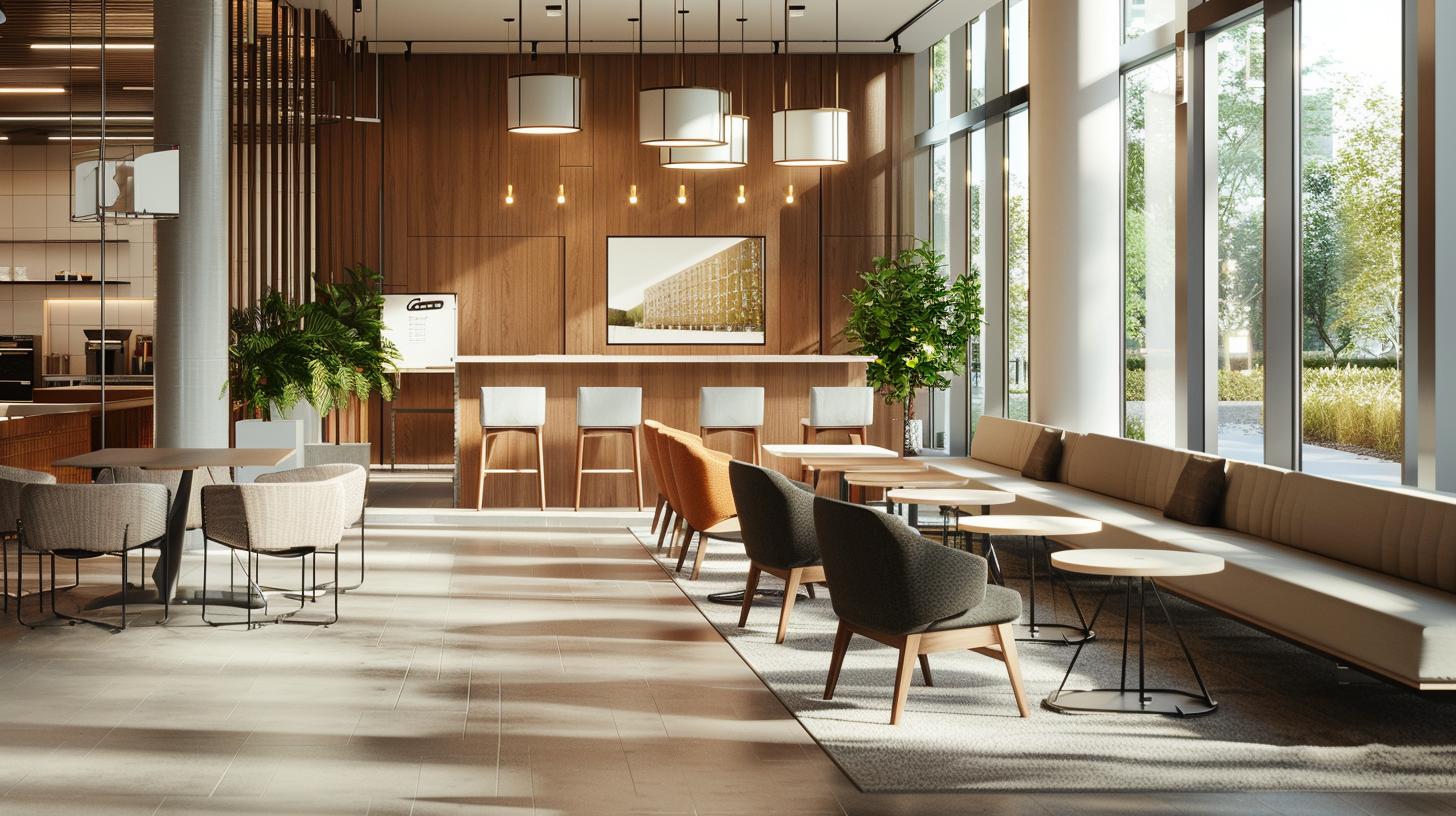
Office cafes are one of the most common workplace amenities, but many underperform because they are designed more as visual statements than functional environments.
Where cafes succeed is when they support multiple behaviors throughout the day. Morning coffee, informal meetings, solo work, quick conversations, and transitional downtime all contribute to consistent use.
Where they fail is when they are oversized, overly formal, or disconnected from natural traffic patterns.
Employees gravitate toward spaces that feel easy to occupy. If a cafe feels staged or overly curated, usage tends to drop after the novelty wears off.
The best workplace cafes operate less like amenities and more like extensions of how people already work.
Large Game Areas Are Often Overestimated
Game rooms and entertainment-focused amenities became common in workplace design as companies tried to reinforce culture and attract talent.
In practice, these spaces are often among the least utilized areas in the office.
The issue is not that employees dislike them—it’s that they rarely align with daily work behavior. Large game areas can feel disconnected from the operational rhythm of the office, particularly in professional environments.
They also tend to create visibility pressure. Employees may hesitate to use highly exposed recreational spaces during the workday, even when encouraged to do so.
As a result, these environments often become symbolic rather than functional.
Wellness Spaces Need Clear Purpose
Wellness rooms and recovery spaces have become more common as organizations place greater emphasis on employee wellbeing. These spaces can provide real value—but only when their purpose is clearly defined.
Generic wellness spaces with unclear use cases often become underutilized or repurposed informally.
Where these rooms work best is in supporting specific needs: quiet decompression, focused recharge, nursing accommodations, or private reset space.
Design clarity influences behavioral clarity. Employees are more likely to use spaces when they understand how and when they are intended to function.
Small Informal Spaces Consistently Outperform Large Formal Ones
One of the clearest workplace patterns is that small, flexible spaces tend to outperform large formal environments.
Employees regularly use:
– Small breakout areas
– Two-to-four-person meeting rooms
– Quiet touchdown spaces
– Casual seating integrated into circulation paths
These spaces support the way collaboration and focus actually happen throughout the day.
Large boardrooms and oversized collaboration hubs, by contrast, are often used less frequently than anticipated.
The issue is not capacity—it’s mismatch. Most workplace interaction is short, informal, and small-scale.
Designing around that reality produces better utilization and stronger return on investment.
Location Is Often More Important Than the Amenity Itself
The placement of an amenity often determines whether it succeeds.
Spaces positioned along natural circulation paths or near primary work zones tend to see consistent use. Amenities isolated from daily workflow—even well-designed ones—often struggle to attract regular occupancy.
This is particularly true in hybrid environments where employees are more intentional about how they spend time in the office.
People gravitate toward spaces that reduce friction, not spaces that require a behavioral shift to justify using them.
ROI Comes From Operational Value, Not Novelty
Many workplace amenities are evaluated based on perception rather than measurable impact. The assumption is that more amenities automatically improve culture or attendance.
In reality, the most valuable amenities are the ones that support operational behavior consistently over time.
A small, heavily used cafe provides more value than a large social space that sits empty. Quiet recharge rooms that reduce stress during the workday may have more impact than highly visible entertainment zones.
Return on investment comes from utilization and operational support—not novelty.
Designing Around Real Behavior Patterns
The workplaces that perform best are not necessarily the ones with the most amenities. They are the ones where amenities align with how employees actually work, interact, and move throughout the day.
That requires observing behavior patterns rather than designing around assumptions or trends.
When amenities support real workflows, they become part of the office ecosystem. When they don’t, they become symbolic features with limited long-term value.
The difference is rarely visual. It’s behavioral.