
What is Biophilic Design
Biophilic design represents a revolutionary approach to workplace architecture that systematically incorporates natural elements into built environments, addressing humanity’s innate biological connection to nature. In the concrete jungle of New York City, where office workers spend 90% of their time indoors, biophilic design has emerged as a critical strategy for combating the psychological and physiological challenges of urban work life.
The term “biophilia,” literally meaning “love of life,” describes humans’ instinctive bond with nature developed over millions of years of evolution. This connection isn’t merely aesthetic preference—it’s hardwired into our neural pathways, affecting everything from stress hormone production to cognitive function. Brain imaging studies reveal that exposure to natural elements activates the parasympathetic nervous system, reducing cortisol levels and blood pressure while enhancing focus and creativity.
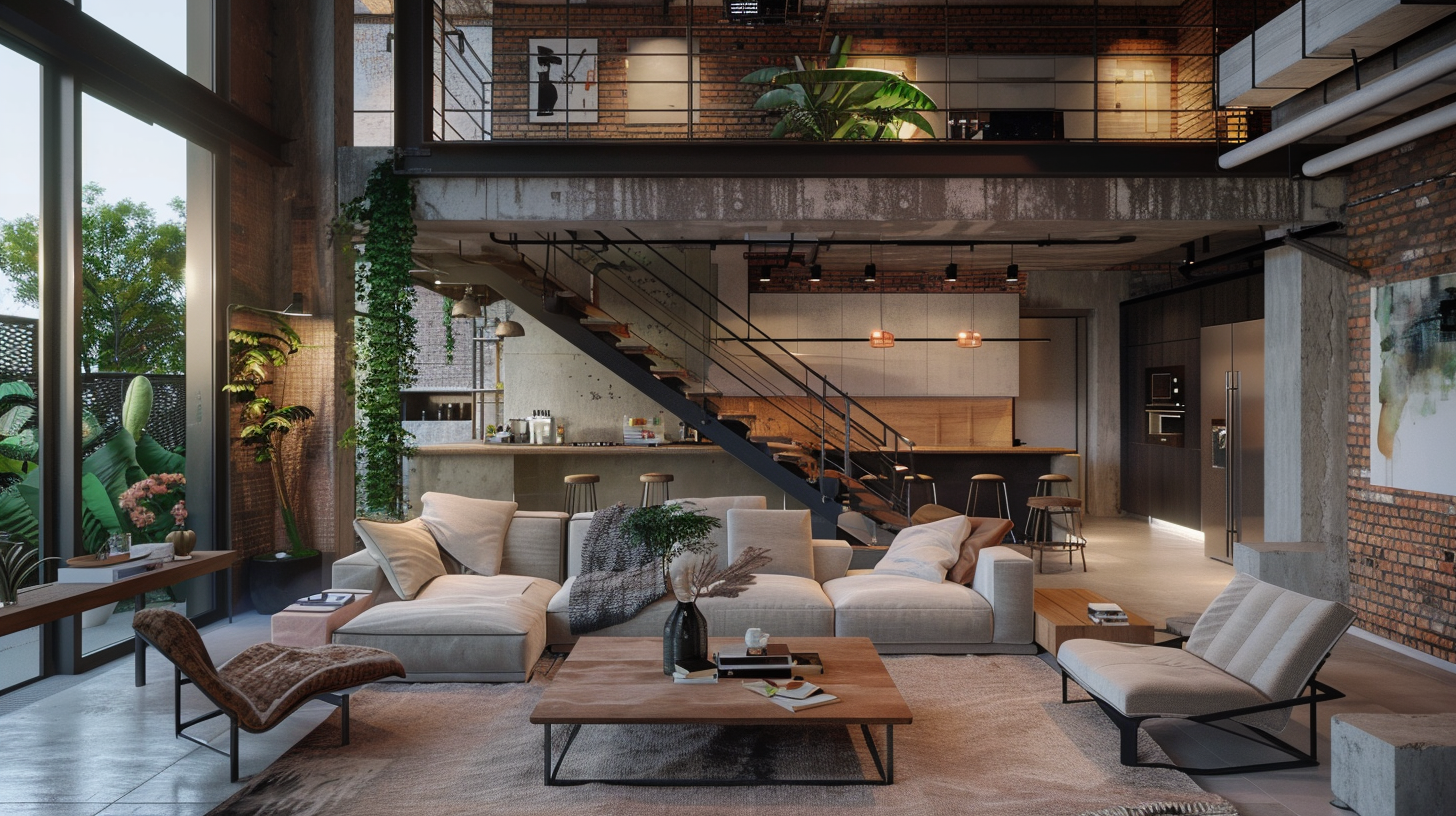
In Manhattan’s high-rise offices, biophilic design bridges the gap between our biological needs and urban reality. It extends far beyond simply adding potted plants to desks. True biophilic design integrates nature through three primary pathways: direct nature incorporation (plants, water, natural light), indirect nature references (natural materials, colors, patterns), and spatial configurations that mimic natural environments.
At DIG Interior Design Solutions, our approach to biophilic design considers NYC’s unique challenges: limited square footage, strict building codes, and extreme seasonal variations. Our portfolio, including projects from Staten Island corporate offices to Manhattan hospitality spaces like Tabernacle Steakhouse, demonstrates how biophilic principles adapt to diverse commercial environments.
Benefits for Employee Wellness
The wellness benefits of biophilic office design deliver measurable improvements in physical health, mental wellbeing, and emotional resilience. Research conducted across Fortune 500 companies reveals that employees working in biophilic environments report 15% higher wellbeing scores and 6% higher productivity compared to those in conventional offices.
Physical Health Improvements
Natural light exposure regulates circadian rhythms, improving sleep quality by 15% according to Cornell University studies. Better sleep translates to stronger immune function, reducing sick days by an average of 2.5 days annually per employee. For a 100-person NYC office, this reduction saves approximately $50,000 in lost productivity yearly.
Indoor plants act as natural air purifiers, removing up to 87% of airborne toxins within 24 hours according to NASA research. Species like snake plants and pothos thrive in low-light conditions common in interior office spaces while requiring minimal maintenance. Living walls increase humidity levels by 5-15%, combating the dry air endemic to NYC’s forced-air heating systems.
Mental Health Benefits
Employees with nature views report 23% less time off sick and 25% better performance on concentration tests. Stress reduction mechanisms operate through multiple pathways—visual exposure to plants reduces sympathetic nervous system activity within three to five minutes, lowering heart rate and blood pressure.
The psychological concept of “attention restoration” explains why brief nature exposure dramatically improves focus. Unlike built environments that demand directed attention, natural elements engage “soft fascination”—capturing attention without depleting cognitive resources. NYC workers taking five-minute breaks in biophilic spaces show 20% improvement in subsequent task performance.
Productivity Impact Studies
Quantifiable productivity improvements from biophilic design justify investment through clear ROI metrics. Multiple peer-reviewed studies demonstrate consistent productivity gains ranging from 6% to 15%, with some specialized tasks showing even greater improvements.
The landmark Human Spaces study surveying 7,600 office workers across 16 countries found that employees in environments with natural elements reported 15% higher wellbeing and 6% higher productivity. When applied to NYC salary averages of $85,000, a 6% productivity gain equals $5,100 per employee annually. For a 200-person Manhattan firm, this translates to over $1 million in annual productivity value.
Harvard’s COGfx study placed knowledge workers in controlled environments varying in green building features including biophilic elements. Participants in enhanced green conditions showed 61% better cognitive performance on complex tasks, 44% better crisis response, and 38% better strategic thinking compared to conventional environments.
Task-specific improvements reveal biophilic design’s broad impact. Call center workers with nature views process calls 6-7% faster with 50% lower error rates. Software developers in biophilic environments complete debugging tasks 15% faster. Financial analysts show 12% improvement in data analysis accuracy when working in spaces with living plants.
Implementation Strategies
Successfully implementing biophilic design in NYC offices requires strategic planning that addresses spatial constraints, building limitations, and budget realities. Begin with comprehensive space analysis identifying opportunities for biophilic integration. Evaluate natural light availability, document existing ventilation patterns, and assess structural capacity for living walls or water features.
Strategic Plant Selection and Placement
Not all plants suit NYC’s challenging office environments. Low-light tolerance is essential for interior spaces. Our proven performers include pothos for hanging applications, ZZ plants for floor placement, and snake plants for desk areas. These species tolerate fluorescent lighting, irregular watering, and temperature fluctuations common in commercial buildings.
Position large plants between workstations to create natural privacy screens. Install living walls in reception areas for impressive first impressions while improving air quality. Place desktop plants within peripheral vision to provide micro-restorative moments without demanding attention.
Natural Light Optimization
Daylight remains biophilic design’s most powerful element. Light shelves bounce natural light deeper into floor plates, extending daylight zones by 40%. Strategic desk orientation ensures maximum employees receive natural light exposure during peak productivity hours. When natural light proves insufficient, full-spectrum LED systems mimicking daylight’s color temperature provide alternative benefits.
Maintenance Program Development
Sustainable biophilic design requires realistic maintenance planning. Professional maintenance services cost $200-500 monthly for typical 5,000 square foot offices. Alternatively, assign plant care to interested employees with proper training. Our clients achieve best results with hybrid approaches: professional monthly service supplemented by employee watering.
Plant Selection for NYC Climate
NYC’s unique microclimate—USDA Hardiness Zone 7b with urban heat island effects—creates specific challenges for office plant selection. Indoor environments compound these challenges with artificial lighting and controlled temperatures.
Low-Light Champions
Most Manhattan offices provide 50-250 foot-candles of artificial light. The ZZ plant tolerates near-darkness while requiring water only monthly, perfect for windowless conference rooms. Snake plants survive on fluorescent light alone while removing benzene and formaldehyde. Pothos adapts to any light level while growing quickly enough to provide immediate impact.
Window Zone Opportunities
Perimeter spaces within 10 feet of windows support more demanding species. Fiddle leaf figs create dramatic statements in executive offices with bright indirect light. Monstera deliciosa brings tropical ambiance, thriving with weekly watering. Bird of paradise makes bold statements in lobbies with south-facing windows.
Seasonal Adaptation
NYC’s extreme seasonal variations demand adaptive management. Winter heating drops humidity below 30%, stressing tropical plants. Group plants together to create humidity microclimates. Summer air conditioning creates cold drafts damaging tropical species. Position plants away from vents and adjust watering for increased evaporation.
Natural Light Optimization
Maximizing natural light in NYC offices requires creative solutions to overcome urban density challenges. Professional daylight modeling reveals opportunities invisible to casual observation, accounting for seasonal sun angles and reflection from neighboring buildings.
Light shelves installed above eye level bounce daylight toward ceilings, extending useful daylight zones from 15 to 25 feet from windows. Window film technologies balance daylight admission with glare control. Interior glazing systems extend daylight penetration while maintaining acoustic privacy.
Light-colored surfaces amplify available daylight through inter-reflection. Ceilings painted with 90% reflectance white paint bounce light deeper into spaces. When natural light proves insufficient, human-centric lighting systems adjust color temperature throughout the day, achieving 60% of natural light’s circadian benefits.
Water Features & Natural Materials
Water elements and natural materials complete the biophilic experience by engaging multiple senses. Water features deliver multisensory benefits through sight, sound, and humidity enhancement. The sound of flowing water masks distracting conversations while improving speech privacy ratings by 20%.
Tabletop fountains offer entry-level water integration requiring minimal investment. Wall-mounted water features create dramatic focal points while preserving floor space. Our Tabernacle Steakhouse project successfully integrated a stunning water wall creating ambiance translatable to corporate settings.
Natural materials provide warmth and texture. Reclaimed wood from NYC buildings offers sustainability credentials. Stone elements ground spaces with permanence and stability. Cork offers unique properties combining visual warmth with acoustic absorption. Varying textures throughout offices creates rich sensory experiences preventing monotony.
Cost-Benefit Analysis
Understanding financial implications enables informed decision-making. Basic biophilic enhancements cost $5-15 per square foot, including desktop plants and improved lighting. Mid-level implementations at $20-40 per square foot add living walls and water features. Premium transformations exceeding $50 per square foot incorporate architectural modifications.
For a typical 10,000 square foot Manhattan office, basic implementation costs $50,000-150,000. This includes 100-150 plants ($3,000-5,000), professional installation ($2,000-3,000), and natural material accents ($10,000-20,000). Living walls cost $100-175 per square foot installed.
Ongoing maintenance ranges from $0.50-2.00 per square foot annually. Energy savings partially offset costs—improved daylight utilization reduces lighting energy by 15-25%, saving $0.75-1.25 per square foot annually.
Productivity improvements deliver the greatest returns. Conservative 6% gains on $85,000 average NYC salaries equal $5,100 per employee annually. For 100 employees, this generates $510,000 yearly value—recovering typical investments within 3-6 months. Healthcare cost reductions provide additional returns through reduced sick days saving $2,000 per employee annually.
Explore Biophilic Design Options for your NYC office with detailed ROI projections.
Case Examples
Financial Services Firm – Downtown Manhattan
A 50,000 square foot trading floor renovation integrated biophilic elements without disrupting operations. Preserved moss walls provided visual relief without distraction. Strategic plant placement created natural wayfinding. The $400,000 implementation delivered: 18% reduction in stress levels, 12% decrease in sick days, and 8% improvement in trade execution accuracy.
Tech Startup – Brooklyn Navy Yard
A 15,000 square foot industrial space transformation featured a 300-square-foot living wall as centerpiece. Flexible workspace zones incorporated different biophilic elements supporting various work modes. Total implementation cost $275,000 achieved 22% improvement in creativity metrics and 30% reduction in project completion times.
Law Firm – Midtown Manhattan
A prestigious firm integrated subtle biophilic elements maintaining professional atmosphere. Wood paneling replaced synthetic finishes. Stone accent walls provided natural texture. Plant integration focused on reception areas and associate floors. The $450,000 implementation delivered 15% reduction in associate turnover and 20% improvement in workplace satisfaction.
Moving Forward
Transforming your NYC office with biophilic design begins with assessment through a biophilic lens. Start small with pilot programs testing concepts before major investments. Desktop plant programs cost under $50 per employee while delivering measurable improvements.
Partner with experienced professionals understanding both biophilic principles and NYC’s unique challenges. At DIG Interior Design Solutions, our portfolio spanning corporate, healthcare, and hospitality sectors provides cross-industry insights. Our nationally certified principal brings decades of experience creating inspiring spaces.
Consider phased implementation spreading costs while maintaining momentum. Measure and communicate results to maintain support. Track metrics including sick days, productivity indicators, and satisfaction scores. The future of NYC office design inevitably includes biophilic elements as wellness becomes non-negotiable.
Explore Biophilic Design Options today and discover how DIG Interior Design Solutions can transform your NYC office into a thriving, nature-connected workspace that boosts employee wellness and productivity by 15% or more.
DIG Interior Design Solutions specializes in biophilic office design throughout New York City. From successful projects in Staten Island and the Bronx to our award-winning Tabernacle Steakhouse, we bring proven expertise in creating spaces where people and nature harmoniously coexist.